Introduction
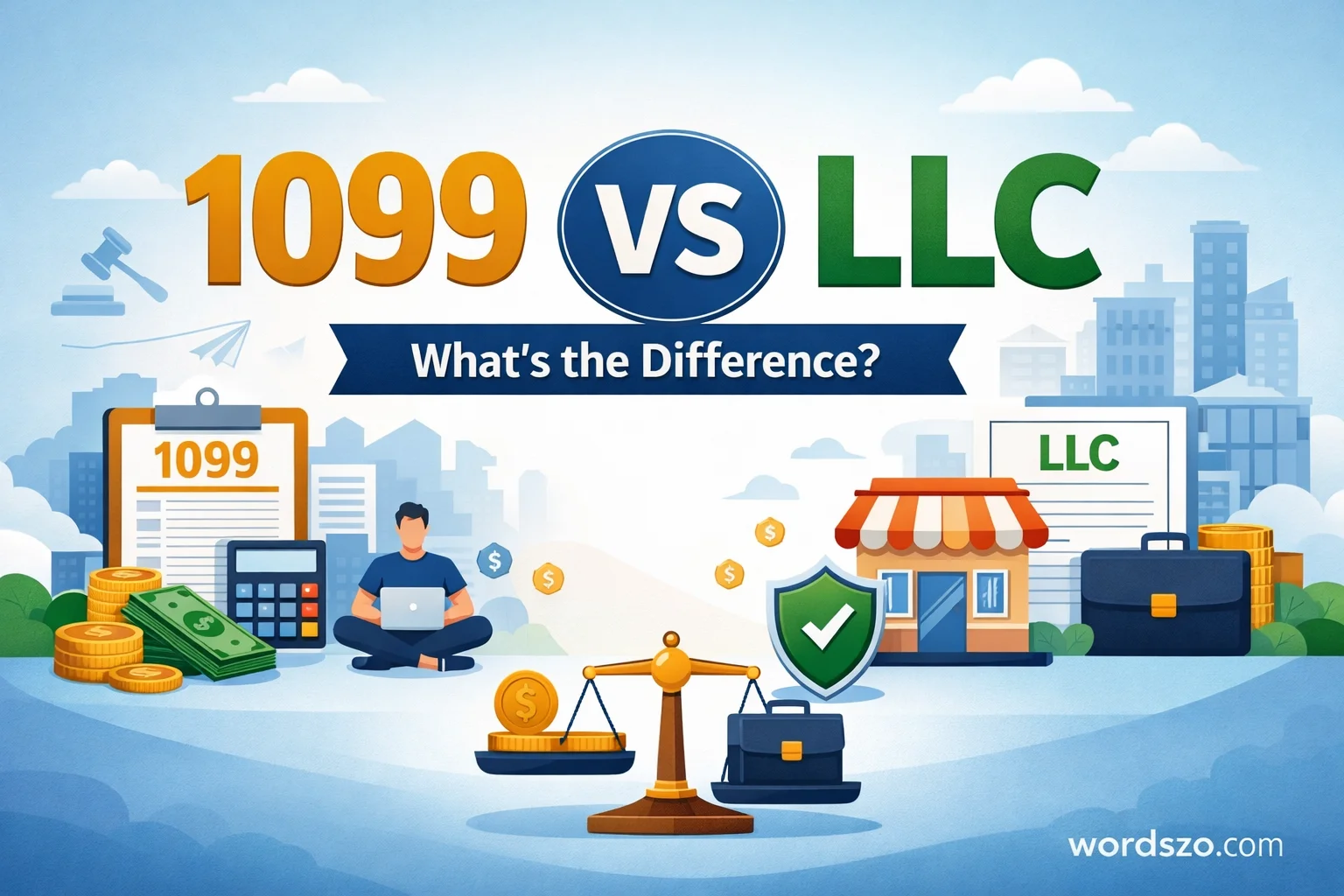
If you’re starting freelance work, launching a side hustle, or moving into self-employment, chances are you’ve heard people casually say things like, “I’m a 1099 now” or “Just open an LLC.” That’s where the confusion begins. Many people assume 1099 vs LLC is a comparison between two business types. In reality, they’re not even the same kind of thing.
A 1099 relates to how you’re taxed, while an LLC relates to how your business is legally structured. Because both are commonly discussed in freelancing, contracting, and small business circles, they often get mixed up.
Although they look/sound similar, they serve completely different purposes.
Understanding the difference between 1099 vs LLC can save you money, protect your assets, and help you make smarter business decisions from day one. Let’s break it down clearly and simply.
What Is a 1099?
A 1099 refers to a tax classification, not a business entity. In the United States, the IRS uses Form 1099-NEC to report income paid to independent contractors, freelancers, and self-employed individuals.
Clear Meaning
A 1099 worker is not an employee. Instead of receiving a W-2, you receive a 1099 form showing how much income you earned from a client.
How It’s Used
When you’re paid as a contractor:
- No taxes are withheld from your pay
- You’re responsible for self-employment taxes
- You file income using Schedule C
This is why people often say, “I work on 1099.”
Where It’s Used
- United States only
- Governed by IRS tax rules
- Common in freelancing, consulting, gig work, and contract services
Examples in Sentences
- “I switched from W-2 to 1099 this year.”
- “All my clients pay me on a 1099 basis.”
- “Being 1099 means I handle my own taxes.”
Short Historical Note
The 1099 form has existed since the early 20th century as a way for the IRS to track non-employee compensation. Over time, it became central to the modern gig economy.
Important: A 1099 does not create a business or provide legal protection.
What Is an LLC?
An LLC (Limited Liability Company) is a legal business structure registered with a state.
Clear Meaning
An LLC separates you personally from your business, helping protect your personal assets if the business faces lawsuits or debt.
How It’s Used
An LLC can:
- Run a business
- Sign contracts
- Open a business bank account
- Hire employees
- Choose how it’s taxed
Where It’s Used
- United States (state-level registration)
- Governed by state laws
- Common for small businesses, startups, freelancers, and online businesses
Examples in Sentences
- “I formed an LLC for my design business.”
- “The LLC owns the website and brand.”
- “My LLC is taxed as a sole proprietorship.”
Spelling & Usage Notes
- Always capitalized: LLC
- Not interchangeable with tax status
- Can exist with or without 1099 income
Regional Notes
LLC rules vary slightly by state, but the core concept is consistent nationwide.
Key Differences Between 1099 and LLC
Quick Breakdown
- 1099 = tax form / income type
- LLC = legal business structure
- You can be 1099 without an LLC
- You can have an LLC and still receive 1099s
Comparison Table
| Feature | 1099 | LLC |
|---|---|---|
| Type | Tax classification | Legal business entity |
| Purpose | Reports income | Limits liability |
| Issued By | IRS / Clients | State government |
| Legal Protection | ❌ None | ✅ Yes |
| Can Hire Employees | ❌ No | ✅ Yes |
| Required to Operate | ❌ No | ❌ No (but recommended) |
| Tax Flexibility | ❌ Limited | ✅ Multiple options |
| Common Users | Freelancers | Small businesses |
This table alone clears up most 1099 vs LLC confusion.
Real-Life Conversation Examples
Dialogue 1
A: “I’m thinking of becoming an LLC instead of 1099.”
B: “Those aren’t the same thing.”
🎯 Lesson: 1099 is tax-related; LLC is legal structure.
Dialogue 2
A: “Do I need an LLC to get paid on 1099?”
B: “No, but it can help protect you.”
🎯 Lesson: You can be 1099 without an LLC.
Dialogue 3
A: “My client asked if I’m an LLC.”
B: “They probably mean how you’re set up legally.”
🎯 Lesson: Clients often confuse tax status with structure.
Dialogue 4
A: “I formed an LLC, so I’m not 1099 anymore, right?”
B: “You can still receive 1099s as an LLC.”
🎯 Lesson: An LLC doesn’t replace 1099 income reporting.
When to Use 1099 vs LLC
Use 1099 When:
- You’re freelancing or contracting
- You don’t have a registered business
- You want minimal setup
- You’re testing a side hustle
Memory Trick:
1099 = How you get paid
Use an LLC When:
- You want liability protection
- You earn consistent income
- You want tax flexibility
- You plan to grow or hire
Memory Trick:
LLC = Legal safety shield
1099 vs LLC for US Businesses
This comparison is US-specific. Other countries use different systems and terms.
Fun Facts & History
- The rise of the gig economy made 1099 work more common than ever.
- Many Fortune 500 companies started as single-member LLCs.
- An LLC can choose to be taxed as an S-Corp to save on self-employment taxes.
Conclusion
The debate around 1099 vs LLC isn’t about choosing one over the other—it’s about understanding how they work together. A 1099 defines how your income is reported, while an LLC defines how your business is legally protected. You can operate as a 1099 contractor without an LLC, but forming an LLC often adds credibility, flexibility, and peace of mind. Once you understand the distinction, the confusion disappears.
Next time someone uses these two terms, you’ll know exactly what they mean!