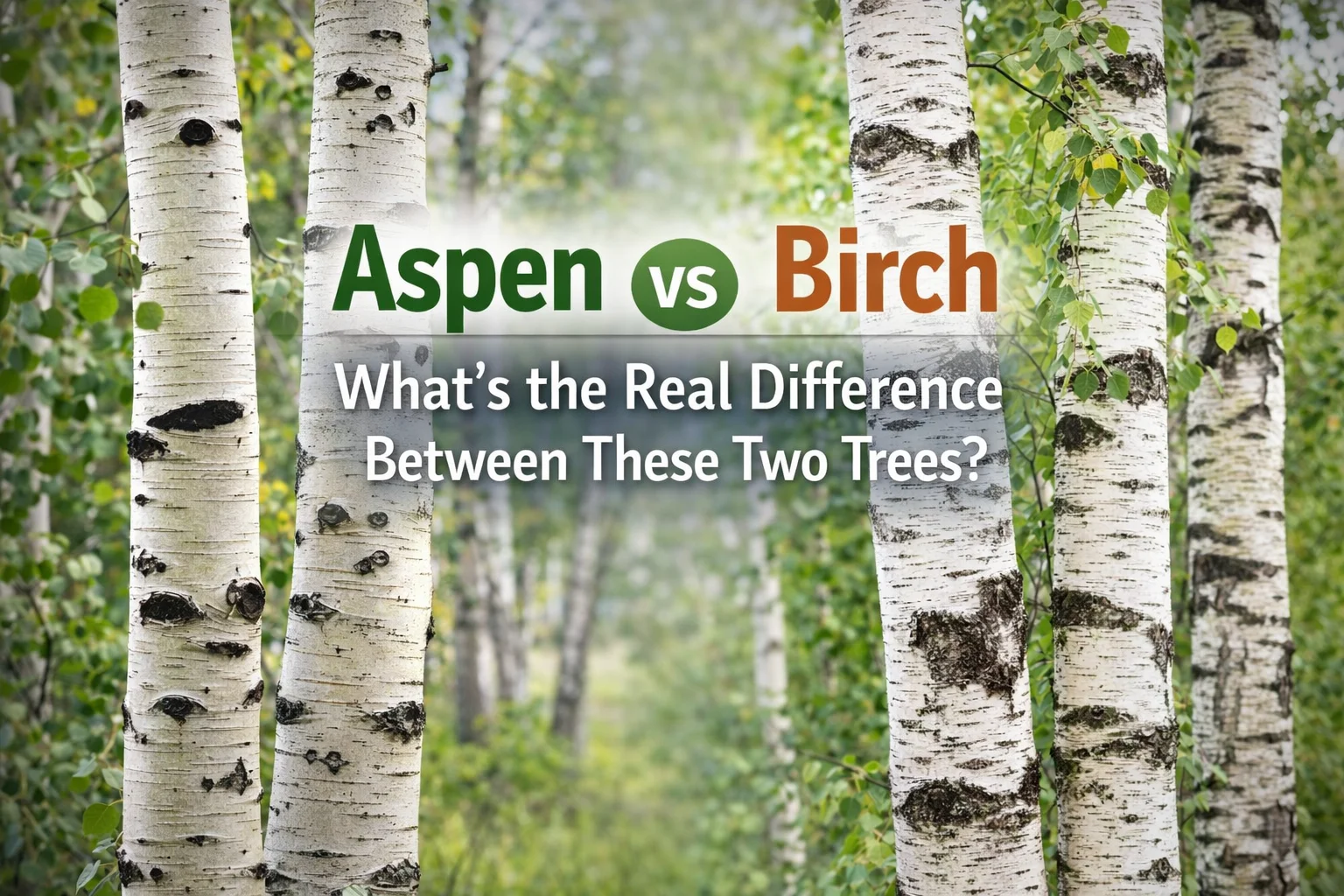
Introduction
If you’ve ever walked through a forest, planned a woodworking project, or shopped for furniture or firewood, you may have come across aspen and birch. At first glance, these two trees look remarkably similar. Both have light-colored bark, grow in cool climates, and are widely used in construction and furniture. Because of this, many people assume they are the same—or at least interchangeable.
That assumption leads to confusion in landscaping, carpentry, interior design, and even ecology discussions. The truth is, while aspen vs birch comparisons are common, these trees have distinct characteristics, uses, and strengths. Although they look/sound similar, they serve completely different purposes.
In this guide, we’ll break down the differences between aspen and birch in simple, conversational English. You’ll learn how to identify them, where they’re used, and which one is right for your needs—whether you’re a homeowner, woodworker, or nature enthusiast 🌳.
What Is Aspen?
Meaning and Definition
Aspen refers to a group of fast-growing deciduous trees belonging to the Populus genus. The most common species is the quaking aspen (Populus tremuloides), famous for its leaves that tremble in the slightest breeze.
How It’s Used
Aspen wood is known for being:
- Lightweight
- Soft
- Pale in color
- Easy to work with
Because of these traits, aspen is often used in:
- Furniture frames
- Sauna interiors
- Pulp and paper production
- Matchsticks
- Wooden pallets
- Interior paneling
In aspen vs birch discussions, aspen is usually considered the softer and more flexible option.
Where It’s Found
Aspen trees are widespread in:
- North America (especially the US and Canada)
- Northern Europe
- Parts of Asia
In fact, quaking aspen is one of the most widely distributed tree species in North America.
Examples in Sentences
- Aspen trees create stunning golden landscapes in autumn.
- This sauna is lined with aspen wood because it stays cool.
- Aspen grows quickly compared to many hardwoods.
Short Historical or Usage Note
Aspen has been used for centuries by Indigenous communities for shelter and tools. Its rapid growth and ability to regenerate from roots make it ecologically important and economically affordable.
What Is Birch?
Meaning and Definition
Birch is a deciduous hardwood tree from the Betula genus. It is well-known for its distinctive white or silvery bark and strong, fine-grained wood.
Common species include:
- Paper birch
- Silver birch
- Yellow birch
How It’s Used
Birch wood is valued for being:
- Harder and stronger than aspen
- Smooth-grained
- Durable
- Visually attractive
It’s commonly used in:
- Furniture
- Plywood
- Flooring
- Cabinets
- Musical instruments
- Decorative veneers
In aspen vs birch comparisons, birch is often chosen for strength and appearance.
Where It’s Found
Birch trees are native to:
- Europe
- Northern Asia
- North America
They thrive in cooler climates and are often found alongside aspen in mixed forests.
Examples in Sentences
- Birch plywood is popular in modern furniture design.
- The birch tree’s bark peels naturally.
- This table is made from solid birch wood.
Regional or Grammatical Notes
The term birch is universally used across English-speaking regions, with no spelling differences between US and UK English.
Key Differences Between Aspen and Birch
Quick Bullet Points
- Aspen wood is softer; birch is harder
- Aspen grows faster; birch grows more slowly
- Birch is more durable for furniture
- Aspen is often cheaper
- Birch has a more decorative grain
Comparison Table
| Feature | Aspen | Birch |
|---|---|---|
| Tree Genus | Populus | Betula |
| Wood Hardness | Soft | Medium to hard |
| Color | Pale white to light yellow | Creamy white to light brown |
| Grain Pattern | Straight, subtle | Fine, decorative |
| Durability | Lower | Higher |
| Common Uses | Saunas, pulp, pallets | Furniture, flooring |
| Cost | Generally cheaper | Usually more expensive |
| Growth Speed | Fast | Moderate |
Real-Life Conversation Examples
Dialogue 1
A: Should I use aspen or birch for furniture?
B: Birch is better if you want durability.
🎯 Lesson: Birch is stronger than aspen.
Dialogue 2
A: Why is aspen popular in saunas?
B: Because it stays cool and doesn’t splinter easily.
🎯 Lesson: Aspen handles heat better than birch.
Dialogue 3
A: These woods look the same to me.
B: They look similar, but birch is much harder.
🎯 Lesson: Appearance can be misleading in aspen vs birch.
Dialogue 4
A: Which wood is cheaper?
B: Aspen is usually more budget-friendly.
🎯 Lesson: Aspen is cost-effective for large projects.
When to Use Aspen vs Birch
Use Aspen When:
✔️ You need lightweight wood
✔️ Budget is a concern
✔️ Working on saunas or interior panels
✔️ You want easy machining
Examples:
- Sauna walls
- Drawer interiors
- Pulp-based products
Use Birch When:
✔️ Strength and durability matter
✔️ Appearance is important
✔️ Making furniture or cabinets
✔️ You want long-term performance
Examples:
- Dining tables
- Plywood sheets
- Hardwood flooring
Simple Memory Trick 🧠
👉 Aspen = Affordable & Soft
👉 Birch = Beautiful & Strong
This makes remembering aspen vs birch much easier.
US vs UK Usage
There is no difference in terminology or meaning between American and British English. Both regions use aspen and birch the same way.
Fun Facts or History
1. Aspen Forests Are Connected
Aspen trees often grow from a single root system, making an entire forest technically one living organism.
2. Birch Bark Was Nature’s Paper
Historically, birch bark was used for writing, canoe building, and roofing due to its water resistance.
Conclusion
The aspen vs birch debate comes down to purpose. Aspen is lightweight, affordable, and easy to work with, making it ideal for interior applications and cost-sensitive projects. Birch, on the other hand, offers strength, durability, and visual appeal, which makes it a favorite for furniture and decorative uses. While these trees may look similar in nature, their wood properties tell a very different story.
Once you understand their differences, choosing between aspen and birch becomes simple and practical. Next time someone uses these two words, you’ll know exactly what they mean! 🌲