Introduction
If you have ever heard someone say, “Just put it in the basement,” and another person reply, “You mean the cellar?”, you are not alone. The confusion between basement vs cellar is extremely common, especially in real estate, construction, and everyday conversation. Many people use these two words interchangeably, assuming they refer to the same type of underground space.
While basements and cellars are both located below ground level, they are not exactly the same. Their structure, purpose, depth, and even regional usage can differ significantly. Although they look/sound similar, they serve completely different purposes.
Understanding the difference between basement vs cellar can help you describe homes more accurately, make better property decisions, and avoid misunderstandings—especially when buying, renting, or renovating a house.
What Is a Basement?
Meaning of Basement
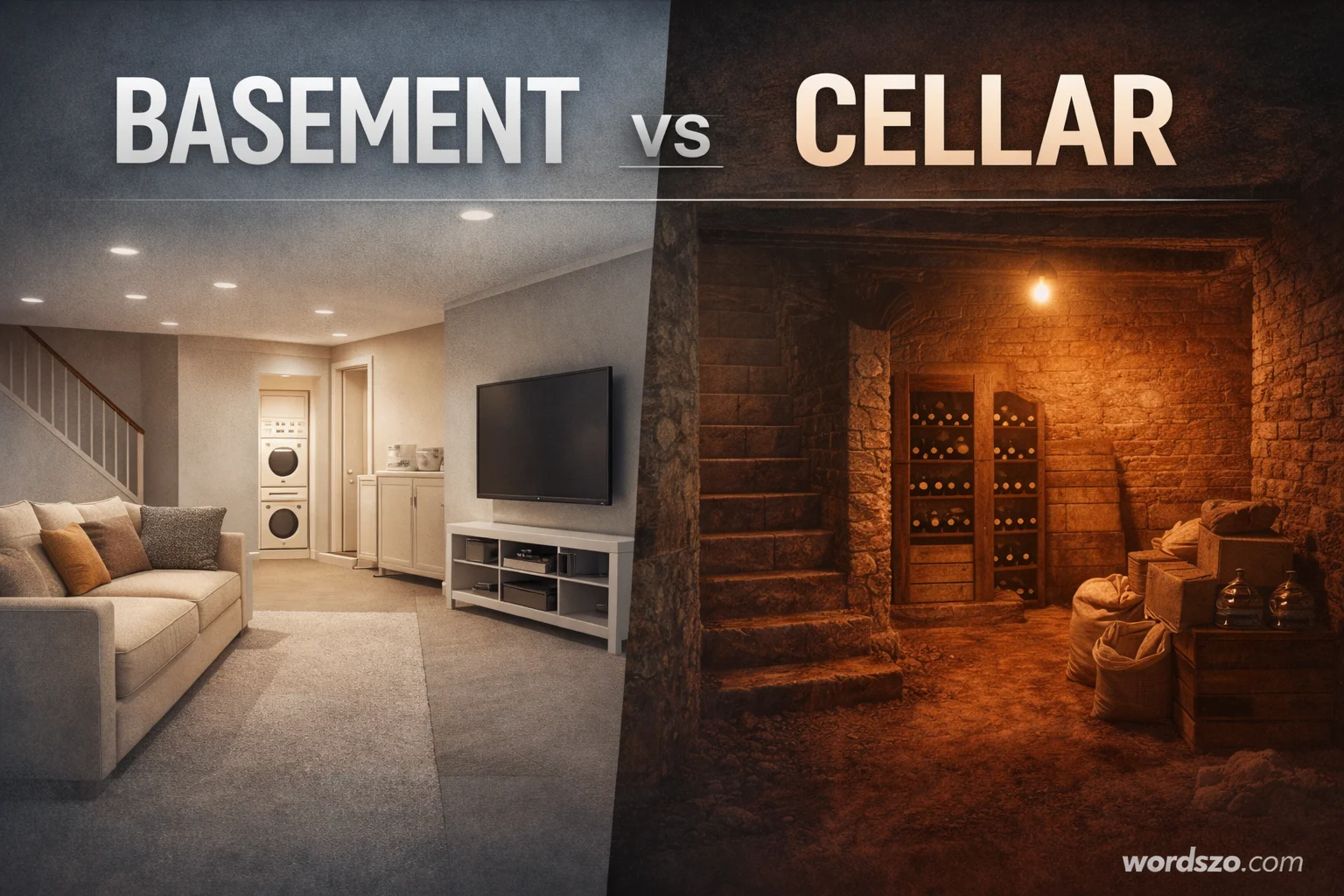
A basement is a fully or partially underground level of a building that is designed as a functional living or utility space. In the basement vs cellar comparison, a basement is typically more finished, accessible, and versatile.
How a Basement Is Used
Basements are commonly used as:
- Living rooms or lounges
- Bedrooms or guest rooms
- Home offices
- Gyms or entertainment rooms
- Storage and laundry areas
Modern homes often include basements as planned living spaces.
Where Basements Are Common
Basements are especially common in:
- United States
- Canada
- Northern Europe
They are built to meet building codes, including ceiling height, ventilation, and safety standards.
Examples in Sentences
- “They converted the basement into a home office.”
- “The kids play in the basement during winter.”
- “Our basement has proper lighting and heating.”
These examples show how basements function as usable spaces in the basement vs cellar discussion.
Short Historical Note
Basements became popular with modern construction techniques that allowed proper insulation, drainage, and ventilation. Over time, they evolved from storage-only areas into fully livable extensions of the home.
What Is a Cellar?
Meaning of Cellar
A cellar is an underground space primarily used for storage, often built deeper into the ground than a basement. In the basement vs cellar comparison, a cellar is usually less finished and more utility-focused.
How a Cellar Is Used
Cellars are traditionally used for:
- Food storage
- Wine storage
- Root vegetables
- Coal or fuel storage (historically)
They are not typically designed for regular living.
Where Cellars Are Common
Cellars are more commonly referenced in:
- UK and British English
- Older European homes
- Rural or historic buildings
Cellars may have dirt floors, limited lighting, and minimal ventilation.
Examples in Sentences
- “The wine is kept in the cellar.”
- “They store potatoes in the cellar.”
- “The old house has a damp cellar.”
These examples highlight the storage-based role of a cellar in the basement vs cellar comparison.
Historical and Usage Note
The word cellar comes from the Latin cellarium, meaning storeroom. Before modern refrigeration, cellars were essential for preserving food due to their naturally cool temperature.
Key Differences Between Basement and Cellar
Understanding basement vs cellar is easiest when the differences are clearly outlined.
Bullet Point Differences
- A basement is often livable; a cellar is usually for storage
- Basements have proper flooring and ceilings
- Cellars are often unfinished or partially finished
- Basements meet modern building codes
- Cellars are typically found in older structures
- Basements are brighter and better ventilated
- Cellars are cooler and darker
Comparison Table: Basement vs Cellar
| Feature | Basement | Cellar |
|---|---|---|
| Primary Purpose | Living or utility space | Storage |
| Finish Level | Often finished | Usually unfinished |
| Lighting | Good natural or artificial light | Minimal lighting |
| Ventilation | Proper ventilation | Limited ventilation |
| Building Code | Must meet standards | Often exempt or older |
| Common Usage | Living rooms, bedrooms | Food or wine storage |
| Regional Use | Common in US | Common in UK |
Real-Life Conversation Examples
Dialogue 1
A: “Is the extra bedroom in the cellar?”
B: “No, it’s in the basement—it’s fully finished.”
🎯 Lesson: Basements are suitable for living; cellars usually are not.
Dialogue 2
A: “Why is it so cold down there?”
B: “That’s the cellar, not the basement.”
🎯 Lesson: Cellars are designed to stay cool.
Dialogue 3
A: “The house listing says basement apartment.”
B: “That means it’s livable, not just storage.”
🎯 Lesson: Basement implies usability.
Dialogue 4
A: “Where do you keep the wine?”
B: “In the cellar, it’s perfect for aging.”
🎯 Lesson: Cellars are ideal for storage.
When to Use Basement vs Cellar
Use “Basement” When:
- Referring to a livable space
- Talking about modern homes
- Describing finished or renovated areas
- Writing real estate listings in the US
Examples:
- “Finished basement with bathroom”
- “Basement apartment available for rent”
Use “Cellar” When:
- Referring to storage
- Talking about older or traditional homes
- Describing wine or food storage
- Writing in British English contexts
Examples:
- “Wine cellar”
- “Root cellar”
Simple Memory Trick
- Basement = Living
- Cellar = Storage
US vs UK Usage
This is where basement vs cellar becomes especially important.
- US English:
“Basement” is far more common and often replaces “cellar” entirely. - UK English:
“Cellar” is widely used, while “basement” often refers to larger, commercial or modern underground spaces.
Fun Facts or History
1. Wine Cellars Are Still Popular
Even modern luxury homes include cellars, specifically designed for wine storage.
2. Basement Apartments Increase Property Value
A finished basement can significantly increase a home’s market value, unlike a traditional cellar.
Conclusion
The difference between basement vs cellar comes down to purpose, finish, and usability. A basement is typically a livable, functional part of a home, while a cellar is mainly used for storage and preservation. Although both are underground spaces, they are designed for very different needs. Knowing the distinction helps in real estate, construction, and everyday communication. Once you understand this difference, you will never mix them up again.
Next time someone uses these two words, you’ll know exactly what they mean!