
Introduction
You’re reading a restaurant menu, scrolling through a recipe blog, or watching a cooking show, and suddenly you see branzino… but wait—wasn’t it bronzino? 🤔 You’re not alone. These two words confuse food lovers, home cooks, and even writers because they look nearly identical and sound almost the same when spoken out loud. Add regional spelling habits and casual usage into the mix, and the confusion grows fast.
The truth is, only one of these words is officially correct in culinary language. The other is a common spelling variation that sneaks into menus, blogs, and conversations worldwide. Although they look/sound similar, they serve completely different purposes.
In this guide, you’ll learn what branzino really means, why bronzino exists, how each term is used, and how to avoid mistakes—whether you’re writing recipes, ordering food, or publishing SEO content.
What Is “Branzino”?
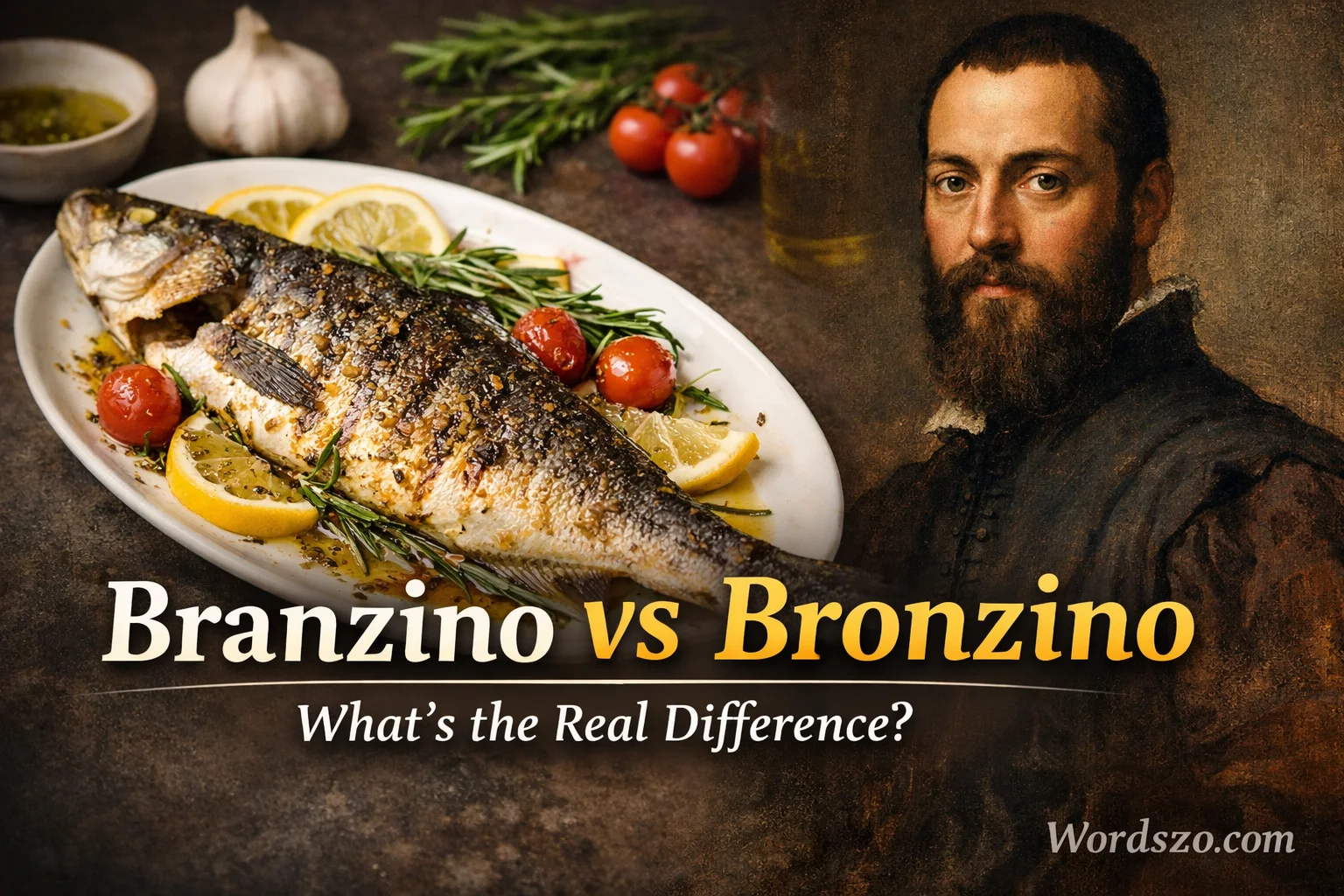
Branzino is the correct and internationally recognized culinary term for a type of fish known in English as European sea bass.
Meaning
➡️ Branzino refers to Dicentrarchus labrax, a mild, white-fleshed saltwater fish prized in Mediterranean cuisine.
How It’s Used
- Used as a noun
- Common in menus, recipes, cooking shows, and food writing
- Refers specifically to the fish, usually whole and grilled or baked
Where It’s Used
- Italy (original term)
- United States (fine dining & culinary media)
- UK, Europe, and global food culture
Branzino is widely accepted as the standard spelling in professional kitchens and food publications.
Examples in Sentences
- “The restaurant is famous for its grilled branzino with lemon and herbs.”
- “I’m cooking whole branzino tonight for dinner.”
- “Mediterranean diets often feature branzino for its lean protein.”
Historical / Usage Note
The word branzino comes directly from Italian, where it has been used for centuries to describe European sea bass. As Italian cuisine spread globally, the name traveled with it—unchanged and officially adopted.
What Is “Bronzino”?
Bronzino is a common misspelling or informal variation of branzino.
Meaning
➡️ Bronzino usually means the same fish but is not the standard or correct spelling.
How It’s Used
- Used casually or accidentally
- Often appears in:
- Online recipes
- Restaurant menus
- Search queries
- Not recognized as the official culinary term
Spelling & Usage Differences
The confusion happens because:
- “Bronzino” looks more English-friendly
- People associate “bronze” with fish color
- Pronunciation sounds similar in conversation
Where It’s Used
- Informal writing
- User-generated content
- Non-professional menus
- SEO searches (common typo keyword)
Examples in Sentences
- “I ordered bronzino, but the menu spelled it differently.”
- “Is bronzino the same as branzino?”
- “Some blogs mistakenly write bronzino instead of branzino.”
Regional or Grammar Notes
- Not Italian
- Not a separate fish
- Considered incorrect in professional food writing
Key Differences Between Branzino and Bronzino
Quick Bullet Summary
- Branzino is the correct culinary term
- Bronzino is a misspelling or informal variant
- Both refer to European sea bass
- Professional chefs and food editors use branzino only
- Bronzino appears mainly due to spelling confusion
Comparison Table
| Feature | Branzino | Bronzino |
|---|---|---|
| Correct spelling | ✅ Yes | ❌ No |
| Culinary standard | ✅ International | ❌ Informal |
| Origin | Italian | Misspelling |
| Meaning | European sea bass | Intended same meaning |
| Used in menus | ✅ Professional menus | ❌ Occasionally incorrect |
| SEO keyword usage | Primary keyword | Secondary/typo keyword |
Real-Life Conversation Examples
Dialogue 1
A: “Is bronzino different from branzino?”
B: “No, branzino is the correct name.”
🎯 Lesson: Bronzino is just a spelling mistake.
Dialogue 2
A: “Why does this menu say branzino, not bronzino?”
B: “Because that’s the proper Italian spelling.”
🎯 Lesson: Professional menus use branzino.
Dialogue 3
A: “I Googled bronzino recipes.”
B: “You’ll get better results searching branzino.”
🎯 Lesson: Correct spelling improves accuracy and SEO.
Dialogue 4
A: “The waiter corrected my pronunciation.”
B: “Yeah, it’s branzino, not bronzino.”
🎯 Lesson: Spoken confusion leads to spelling confusion.
When to Use Branzino vs Bronzino
Use “Branzino” When:
✔️ Writing recipes or food blogs
✔️ Creating restaurant menus
✔️ Publishing SEO content
✔️ Referring to European sea bass
✔️ Writing for US, UK, or global audiences
Memory Trick:
👉 If it’s Italian food, trust the Italian spelling.
Use “Bronzino” When:
✔️ Rarely—only when discussing the confusion itself
✔️ Mentioning common misspellings for SEO coverage
SEO Tip:
Use branzino as your main keyword and bronzino as a secondary reference.
Fun Facts or History
🐟 Fun Fact #1:
Branzino is often served whole, including the head and tail—something that surprises first-time diners in Mediterranean restaurants.
🇮🇹 Fun Fact #2:
In Italy, branzino may also be called spigola depending on the region—but never bronzino.
Conclusion
The difference between branzino vs bronzino is simpler than it looks. Branzino is the correct, authentic Italian term for European sea bass and is universally accepted in professional cooking and food writing. Bronzino, on the other hand, is a common misspelling that appears due to pronunciation habits and informal usage. While both usually point to the same fish, only one belongs in recipes, menus, and SEO-optimized content. Once you know this distinction, it’s easy to avoid mistakes and sound confident in the kitchen—or on the page. Next time someone uses these two words, you’ll know exactly what they mean! 😊