
Introduction
If you are learning Spanish or traveling to a Spanish-speaking country, you have probably heard people use both coche and carro to mean “car.” That is where the confusion starts. Are they the same word? Is one more correct than the other? Or does it depend on where you are?
The confusion around coche vs carro comes from regional usage rather than grammar rules. Both words refer to vehicles, but their meaning, tone, and acceptance vary greatly depending on the country. Although they look/sound similar, they serve completely different purposes.
Understanding the difference between coche vs carro will help you sound more natural, avoid awkward misunderstandings, and adapt your Spanish to different regions with confidence.
What Is “Coche”?
Meaning of Coche
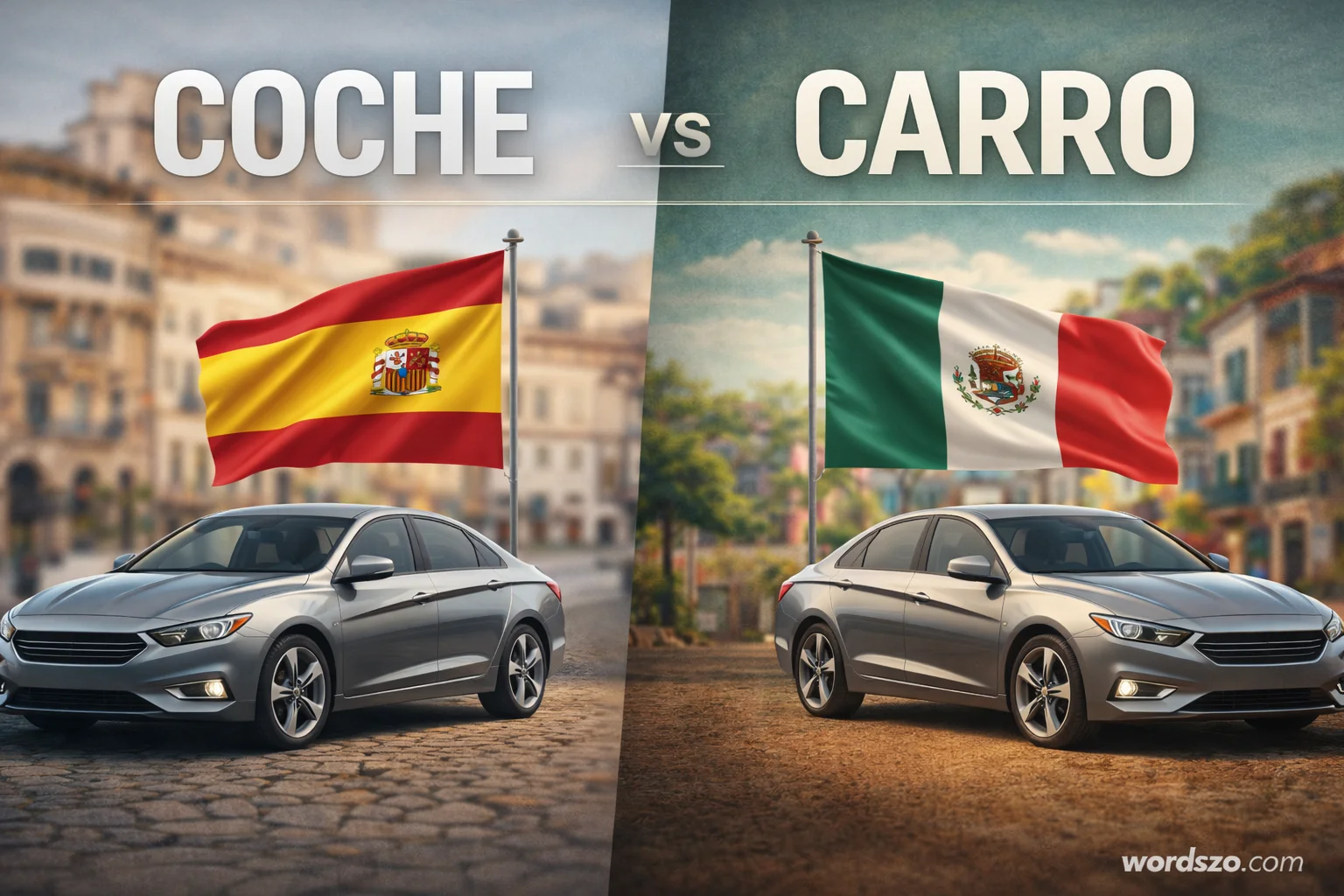
Coche is a Spanish word that means car, specifically a passenger vehicle used for personal transportation. In the coche vs carro comparison, coche is generally considered more formal and neutral.
How “Coche” Is Used
Coche is commonly used in:
- Everyday conversation
- News and media
- Formal writing
- Driving and transportation contexts
It almost always refers to a motor vehicle, not a cart or wagon.
Where “Coche” Is Used
Coche is most commonly used in:
- Spain
- Parts of Europe
- Formal or international Spanish
In Spain, coche is the standard and preferred word for car.
Examples in Sentences
- “Voy al trabajo en coche.”
- “El coche está estacionado afuera.”
- “Compraron un coche nuevo.”
These examples show how coche fits naturally into standard Spanish, especially in the coche vs carro debate.
Historical or Usage Note
The word coche originally referred to horse-drawn carriages. Over time, its meaning evolved to describe modern automobiles, especially in European Spanish.
What Is “Carro”?
Meaning of Carro
Carro can also mean car, but its meaning is more flexible and region-dependent. In the coche vs carro comparison, carro may refer to:
- A car
- A cart
- A wagon
- A shopping trolley (in some regions)
How “Carro” Is Used
Carro is commonly used in:
- Informal conversation
- Everyday speech
- Regional Spanish dialects
Its meaning depends heavily on context.
Where “Carro” Is Used
Carro is widely used in:
- Latin America
- Mexico
- Colombia
- Central America
- Parts of South America
In many Latin American countries, carro is the most common word for car.
Examples in Sentences
- “Mi carro no arranca.”
- “Dejé el carro en el estacionamiento.”
- “Vamos en mi carro.”
In these regions, carro sounds completely natural in the coche vs carro comparison.
Regional and Grammatical Notes
In Spain, carro usually means a cart or wagon, not a car. Using carro for a vehicle in Spain may sound incorrect or confusing.
Key Differences Between Coche and Carro
Understanding coche vs carro becomes much easier when you compare them clearly.
Bullet Point Differences
- Coche is standard in Spain
- Carro is common in Latin America
- Coche almost always means a car
- Carro can mean car, cart, or wagon
- Coche sounds more formal
- Carro sounds more casual
- Coche is safer for international Spanish
- Carro depends heavily on region
Comparison Table: Coche vs Carro
| Feature | Coche | Carro |
|---|---|---|
| Primary Meaning | Car | Car / cart / wagon |
| Common Region | Spain | Latin America |
| Formal Usage | Yes | Mostly informal |
| Meaning Consistency | Very clear | Context-dependent |
| Use in Spain | Preferred | Rare for cars |
| Use in Latin America | Understood | Preferred |
| Risk of Confusion | Low | Medium |
Real-Life Conversation Examples
Dialogue 1
A: “¿Dónde dejaste el coche?”
B: “En el garaje.”
🎯 Lesson: In Spain, coche is the natural choice.
Dialogue 2
A: “Mi carro se descompuso.”
B: “¿Necesitas ayuda?”
🎯 Lesson: In Latin America, carro is normal.
Dialogue 3
A: “Tengo un carro nuevo.”
B: “¿Eres de México?”
🎯 Lesson: Word choice often reveals regional background.
Dialogue 4
A: “¿Carro o coche?”
B: “Depende del país.”
🎯 Lesson: Regional context matters in coche vs carro.
When to Use Coche vs Carro
Use “Coche” When:
- Speaking Spanish from Spain
- Writing formal or academic content
- Teaching Spanish internationally
- Wanting to avoid confusion
Examples:
- “El coche necesita gasolina.”
- “Viajan en coche.”
Use “Carro” When:
- Speaking Latin American Spanish
- Conversing informally
- Talking with locals in Latin America
- Following regional speech patterns
Examples:
- “El carro está viejo.”
- “Manejo mi carro todos los días.”
Simple Memory Trick
- Spain = Coche
- Latin America = Carro
US vs UK Spanish?
Unlike English, Spanish does not change spelling by country, but word preference changes a lot. The coche vs carro distinction is one of the clearest examples of regional vocabulary differences in Spanish.
Fun Facts or History
1. Carro Is Older Than Coche
Carro dates back to ancient times and originally referred to wheeled vehicles used for transport.
2. Shopping Cart Confusion
In many countries, carro can also mean a shopping cart, which can confuse Spanish learners.
Conclusion
The difference between coche vs carro is not about correctness—it is about region and context. Coche is the standard word for car in Spain and formal Spanish, while carro is widely used across Latin America in everyday speech. Both are correct, but choosing the right one helps you sound natural and culturally aware. Once you understand where and how each word is used, the confusion disappears completely.
Next time someone uses these two words, you’ll know exactly what they mean!