Introduction
Have you ever held a sparkling wine glass and wondered—is this crystal or just glass? You’re not alone. The terms crystal vs glass are often used interchangeably, especially in home décor, dining, and gifting. Because they look so similar, many people assume they’re the same material.
But here’s the truth: while both may appear alike, they are made differently and serve different purposes.
Although they look/sound similar, they serve completely different purposes.
In this guide, we’ll break down crystal vs glass in simple, clear language—covering what each one is, how they’re used, their key differences, and how to choose the right one.
What Is “Crystal”?
Crystal (often called lead crystal) is a high-quality form of glass that contains added minerals—traditionally lead oxide or modern alternatives like barium or zinc.
Meaning
➡️ Crystal = premium glass enhanced with minerals for clarity, brilliance, and weight
How It’s Used
Crystal is commonly used for:
- Luxury drinkware (wine glasses, whiskey tumblers)
- Decorative items (vases, chandeliers)
- Fine dining and formal settings
Where It’s Used
- High-end homes
- Hotels and restaurants
- Special occasions and gifts
Examples in Sentences
- “She served wine in elegant crystal glasses.”
- “The chandelier is made of sparkling crystal.”
- “Crystal reflects light beautifully.”
Short Historical Note
Crystal became popular in Europe during the 17th century when glassmakers discovered that adding lead increased sparkle and clarity. Today, many brands use lead-free crystal for safety.
In crystal vs glass, crystal represents the premium, decorative version.
What Is “Glass”?
Glass is a basic material made from sand (silica), soda ash, and limestone, melted at high temperatures.
Meaning
➡️ Glass = a standard, everyday material used for countless practical purposes
How It’s Used
Glass is used for:
- Drinking glasses and bottles
- Windows and mirrors
- Everyday kitchenware
- Electronics and screens
Where It’s Used
- Homes worldwide
- Offices and buildings
- Industrial and commercial settings
Examples in Sentences
- “He drank water from a glass.”
- “The window is made of strong glass.”
- “Glass is widely used in construction.”
Usage Note
Glass is more affordable and durable, making it ideal for daily use.
In crystal vs glass, glass represents the practical, everyday option.
Key Differences Between Crystal and Glass
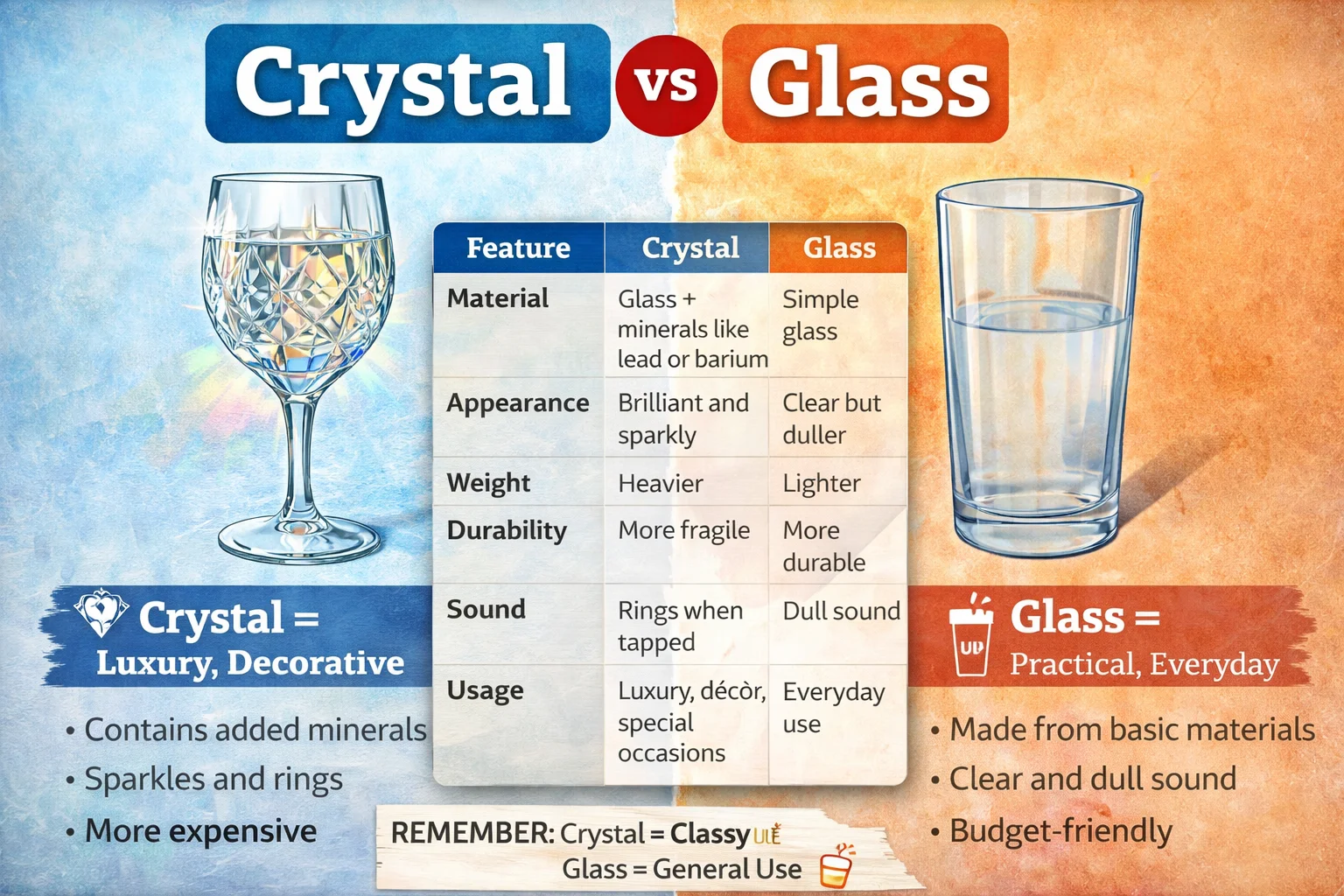
🔑 Quick Differences
- Crystal = premium, decorative
- Glass = basic, practical
- Crystal contains added minerals
- Glass is made from simple materials
- Crystal is heavier and more brilliant
- Glass is lighter and more durable
- Crystal is more expensive
- Glass is budget-friendly
📊 Comparison Table
| Feature | Crystal | Glass |
|---|---|---|
| Material | Glass + minerals (lead/barium/zinc) | Sand (silica), soda ash, limestone |
| Appearance | Highly clear and sparkly | Clear but less brilliant |
| Weight | Heavier | Lighter |
| Durability | More fragile | More durable |
| Price | Expensive | Affordable |
| Sound | Rings when tapped | Dull sound |
| Usage | Luxury, décor, fine dining | Everyday use |
| Cutting/Design | Intricate patterns possible | Simpler designs |
Real-Life Conversation Examples
Dialogue 1
A: “Is this crystal or glass?”
B: “It’s crystal—you can tell by the sparkle.”
🎯 Lesson: Crystal has more brilliance than glass.
Dialogue 2
A: “Why is this glass so heavy?”
B: “Because it’s actually crystal.”
🎯 Lesson: Crystal is heavier than regular glass.
Dialogue 3
A: “Can I use crystal every day?”
B: “You can, but it’s more fragile.”
🎯 Lesson: Crystal is delicate compared to glass.
Dialogue 4
A: “Why is crystal more expensive?”
B: “It’s made with special materials and craftsmanship.”
🎯 Lesson: Crystal costs more due to quality and design.
Dialogue 5
A: “I just need something practical.”
B: “Then go for regular glass.”
🎯 Lesson: Glass is better for everyday use.
When to Use Crystal vs Glass
Understanding crystal vs glass comes down to purpose and lifestyle.
✅ Use “Crystal” When:
- You want luxury and elegance
- Hosting formal dinners or events
- Buying premium gifts
- Displaying decorative items
Example:
- “We used crystal glasses for the wedding.”
✅ Use “Glass” When:
- You need durability and practicality
- Everyday drinking or cooking
- Budget-friendly options
- Safe use around kids
Example:
- “These glass cups are perfect for daily use.”
🧠 Simple Memory Trick
- Crystal = Classy ✨
- Glass = General use 🥤
This makes crystal vs glass easy to remember!
🌍 Regional Notes
- Both terms are used globally
- “Crystal” may refer to lead-free crystal in modern markets
- Usage doesn’t change by region, but quality standards may vary
Fun Facts & Insights
🔔 1. Crystal “Rings” When Tapped
If you gently tap crystal, it produces a clear ringing sound, unlike regular glass.
✨ 2. Crystal Refracts Light Better
Crystal bends light more than glass, creating that signature sparkle and rainbow effect.
Conclusion
The difference between crystal vs glass lies in quality, composition, and purpose. Crystal is a premium version of glass, enhanced with minerals to create brilliance, weight, and elegance—perfect for special occasions and décor. Glass, on the other hand, is practical, durable, and affordable, making it ideal for everyday use.
Both materials have their place, depending on your needs and lifestyle. Once you understand the difference, choosing between them becomes simple.
Next time someone uses these two words, you’ll know exactly what they mean!