Introduction
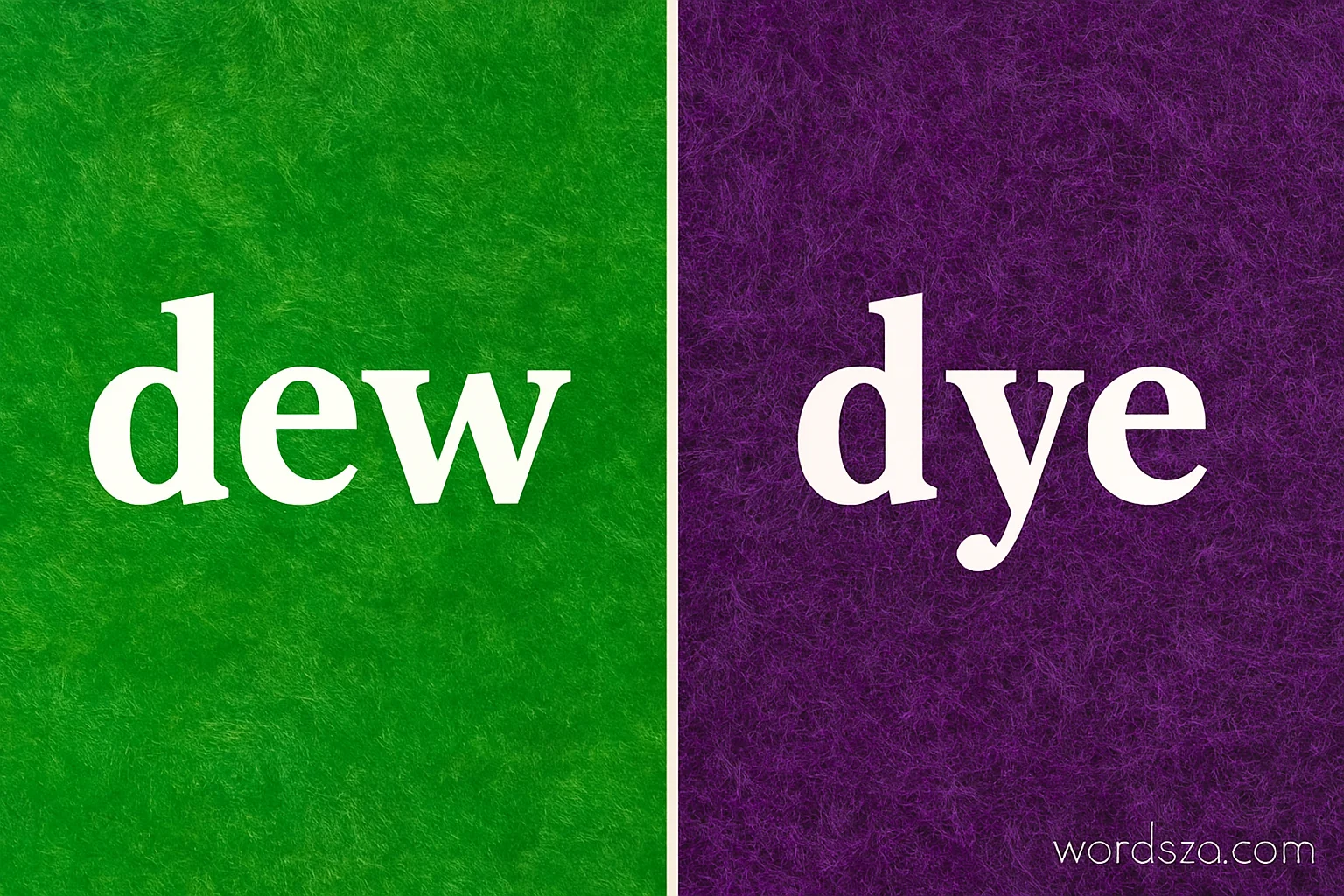
English can be tricky, especially when two words sound exactly the same but mean completely different things. Dew and dye are a perfect example. They are homophones, which means they sound alike when spoken, yet their meanings have nothing in common. This often causes confusion in writing, spelling tests, and even professional content. Although they look/sound similar, they serve completely different purposes. One refers to a natural phenomenon, while the other is linked to color and transformation. Understanding the difference between dew vs dye will help you write clearly and avoid embarrassing mistakes.
What Is Dew?
Dew is a noun that refers to tiny drops of water that form on cool surfaces, usually in the early morning or late night.
Meaning
➡️ Dew is moisture that forms when warm air touches a cool surface.
Usage
- Used in weather, nature, and poetic writing
- Common in both American and British English
Examples
- “The grass was wet with morning dew.”
- “Flowers sparkle with dew at sunrise.”
Usage Note
The word dew comes from Old English dēaw, meaning moisture or dampness.
What Is Dye?
Dye can be both a noun and a verb, and it refers to a substance used to change color.
Meaning
➡️ Dye means to color something or the coloring substance itself.
Usage
- Used in fashion, art, textiles, and hair care
- Can describe both action and material
Examples
- “She used blue dye on the fabric.”
- “He plans to dye his hair.”
Key Differences Between Dew and Dye
Bullet Points
- Dew relates to moisture and nature
- Dye relates to color and change
- Dew is always a noun
- Dye can be a noun or a verb
Comparison Table
| Feature | Dew | Dye |
|---|---|---|
| Part of Speech | Noun | Noun / Verb |
| Meaning | Water droplets | Coloring substance |
| Usage | Nature, weather | Hair, fabric, art |
| Pronunciation | Same | Same |
Real-Life Conversations
Dialogue:
A: “My shoes are wet.”
B: “Probably morning dew.”
🎯 Lesson: Dew is natural moisture.
Dialogue:
A: “Did you color your shirt?”
B: “Yes, I used fabric dye.”
🎯 Lesson: Dye changes color.
Conclusion
The difference between dew vs dye is simple once you know it. Dew refers to natural moisture, while dye refers to color and transformation. Remembering this distinction helps avoid confusion in both writing and speech. Next time someone mixes them up, you’ll know exactly which one to use.