Introduction
If you’ve ever heard someone use discharge and cum as if they mean the same thing, you’re not alone. These two words often get mixed up in casual conversations, online forums, and even search queries. The confusion usually happens because both involve bodily fluids, and many people don’t learn the proper medical terms growing up.
Although they look/sound similar, they serve completely different purposes. One is a clinical, health-related term, while the other is an informal slang word. Understanding the difference isn’t just about correct language—it’s about health awareness, communication, and safety. In this guide, we’ll clearly explain discharge vs cum, how each term is used, when it’s appropriate, and why mixing them up can lead to misunderstanding. By the end, you’ll know exactly what each word means and how to use it correctly.
Section 1: What Is “Discharge”?
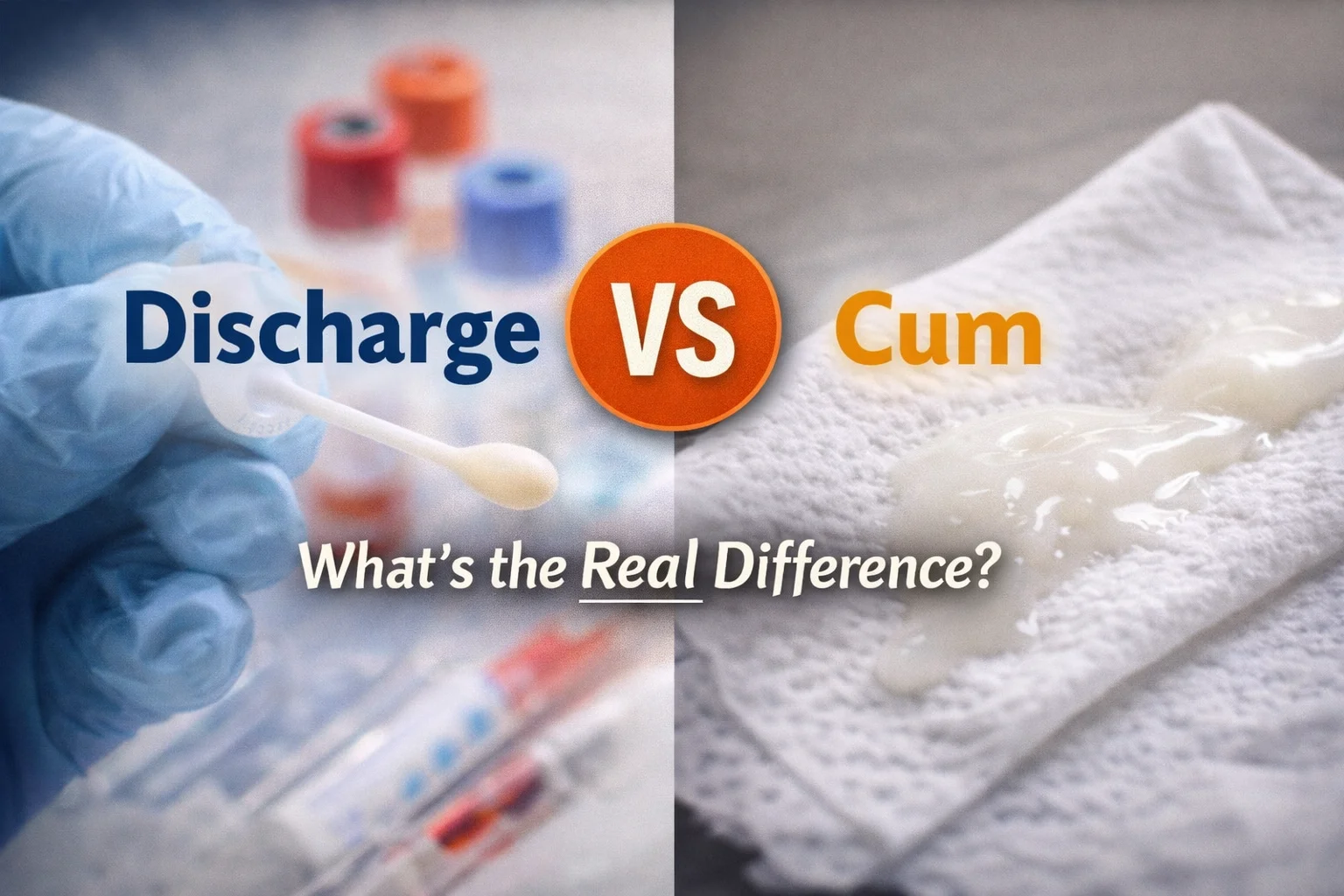
Discharge is a medical and biological term used to describe fluids released naturally or unnaturally from the body. In the discharge vs cum comparison, discharge is the broader and more clinical term.
Clear Meaning
Discharge refers to any fluid that comes out of the body, especially from areas like:
- The vagina
- The penis
- Wounds or infections
- Glands or tissues
It can be normal and healthy or a sign of an underlying condition, depending on color, smell, consistency, and timing.
How It’s Used
Doctors, nurses, and healthcare professionals use “discharge” to:
- Describe normal bodily functions
- Diagnose infections
- Explain symptoms
Where It’s Used
- Medical settings worldwide
- Health education
- Clinical writing and reports
There are no regional spelling differences between US and UK English.
Examples in Sentences
- “Vaginal discharge can change during the menstrual cycle.”
- “The doctor examined the unusual discharge.”
- “Penile discharge may indicate an infection.”
Short Usage Note
The word “discharge” has been used in medicine for centuries and comes from Old French, meaning to release or unload. Its meaning has always been neutral and descriptive, not slang or explicit.
Section 2: What Is “Cum”?
Cum is an informal slang term commonly used to refer to semen released during ejaculation. In the discharge vs cum discussion, this term is non-medical and casual.
Clear Meaning
Cum typically refers to:
- Semen released during sexual climax
- A colloquial substitute for medical terms like semen or ejaculate
How It’s Used
- Casual conversations
- Internet slang
- Informal writing
It is not used in professional, academic, or medical contexts.
Spelling and Usage Differences
- “Cum” is slang
- Medical alternatives include semen, ejaculate, or seminal fluid
- Doctors do not use “cum” in diagnosis or reports
Examples in Sentences
- “He used a slang word instead of the medical term.”
- “The article avoided using cum for clarity.”
- “Healthcare professionals prefer precise language.”
Regional Notes
“Cum” is understood globally due to the internet, but it remains informal everywhere and is avoided in educational or clinical writing.
Key Differences Between Discharge and Cum
Quick Comparison Points
- Discharge is a medical term; cum is slang
- Discharge can be normal or abnormal
- Cum refers specifically to semen
- Discharge applies to all genders
- Cum is never used in healthcare settings
Comparison Table
| Feature | Discharge | Cum |
|---|---|---|
| Type | Medical term | Slang term |
| Usage | Clinical & educational | Informal only |
| Applies To | Multiple bodily fluids | Semen only |
| Used by Doctors | Yes | No |
| Health Indicator | Sometimes | Not diagnostic |
| Professional Writing | Appropriate | Inappropriate |
Real-Life Conversation Examples
Dialogue 1
A: “The doctor asked about discharge.”
B: “Yeah, that’s a medical term, not slang.”
🎯 Lesson: Discharge is used in healthcare, not casual slang.
Dialogue 2
A: “Is discharge the same as cum?”
B: “No, discharge is broader and more medical.”
🎯 Lesson: One is clinical, the other is informal.
Dialogue 3
A: “Why didn’t the article use the word cum?”
B: “Because it’s not appropriate for health content.”
🎯 Lesson: Professional writing avoids slang.
Dialogue 4
A: “Should I tell the doctor exactly what I noticed?”
B: “Yes—use clear medical terms.”
🎯 Lesson: Accurate language helps diagnosis.
When to Use Discharge vs Cum
Use “Discharge” When:
- Talking to a doctor or nurse
- Writing medical or health content
- Describing symptoms
- Discussing reproductive health
Memory Trick:
👉 Discharge = Doctor’s word
Use “Cum” When:
- In casual conversation only
- Among peers in informal settings
- Never in professional or medical writing
Memory Trick:
👉 Cum = Casual slang
US vs UK Writing
Both US and UK English:
- Use discharge medically
- Avoid cum in formal writing
No regional differences apply here.
Fun Facts or History
- The term discharge has been used in medical texts since the 14th century.
- Modern healthcare strongly promotes clear, non-slang language to avoid misdiagnosis and confusion.
Conclusion
Understanding discharge vs cum is mainly about context and correctness. Discharge is a neutral, medical term used to describe bodily fluids and potential health conditions. Cum, on the other hand, is an informal slang word that has no place in medical, academic, or professional discussions. Knowing the difference helps improve communication, reduces embarrassment, and supports better health decisions. Whether you’re reading health content or speaking to a doctor, choosing the right word matters. Next time someone uses these two words, you’ll know exactly what they mean! 😊