Introduction
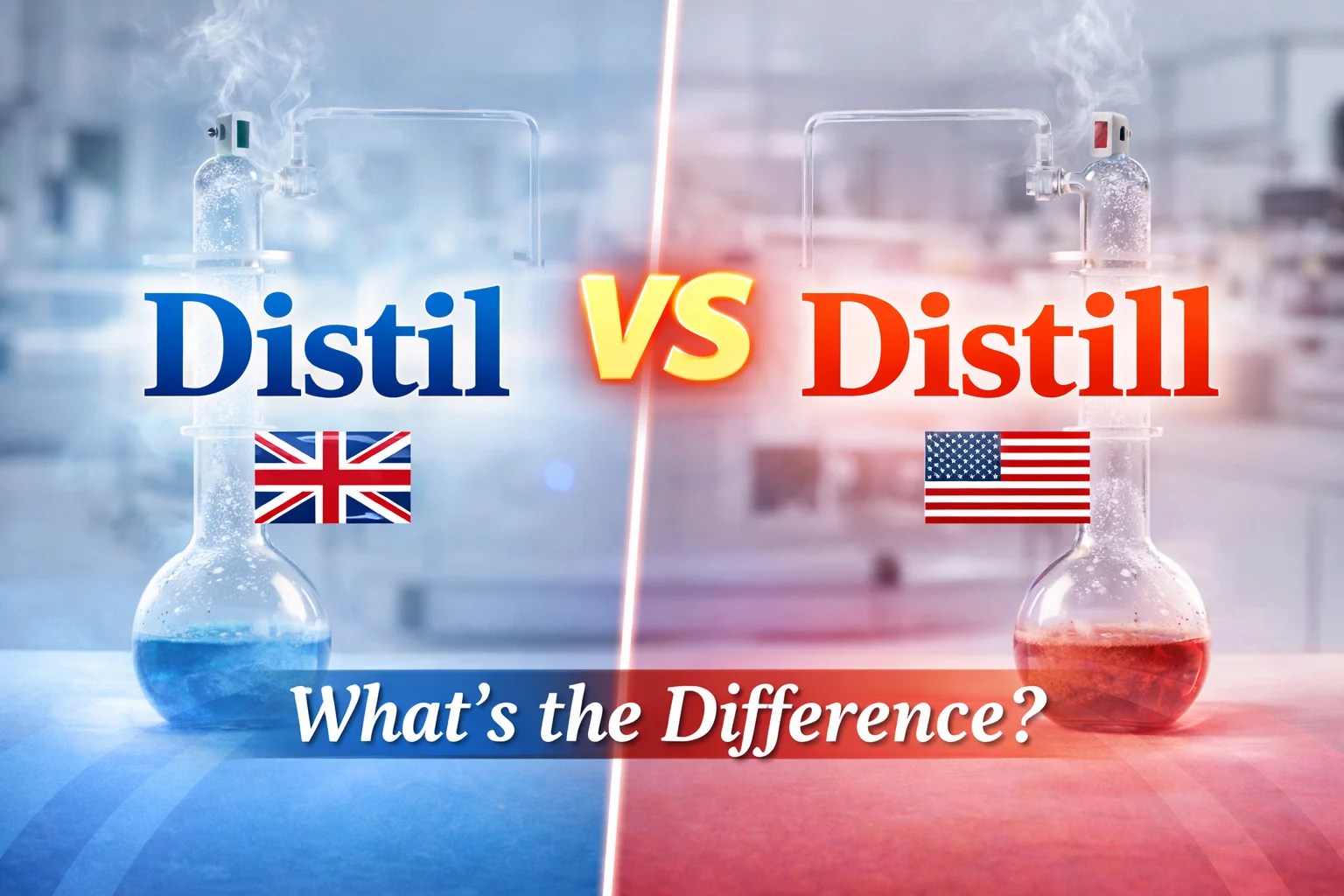
English spelling can be tricky, especially when two words look almost identical but have subtle differences. A perfect example is distil vs distill. At first glance, they seem interchangeable—and in many cases, they actually are. That’s exactly why people often get confused about which one to use.
The confusion usually comes from regional spelling differences, particularly between British and American English. Both words carry the same meaning and pronunciation, but their usage depends on where (and how) you’re writing.
Although they look similar, they serve completely different purposes.
In this guide, you’ll learn the exact difference between distil vs distill, how each is used, regional preferences, examples, and simple rules to avoid mistakes.
What Is “Distil”?
Distil is the British English spelling of the word.
Meaning of Distil
➡️ Distil means:
- To purify a liquid by heating and cooling (like making distilled water)
- To extract the essential meaning from something (ideas, information)
Where “Distil” Is Used
In the distil vs distill comparison, distil is used in:
- United Kingdom
- Australia
- New Zealand
- India
- Pakistan
- Other Commonwealth countries
Examples in Sentences
- “They distil water to remove impurities.”
- “The book helps distil complex ideas into simple concepts.”
- “This process is used to distil alcohol.”
Historical Note
“Distil” comes from the Latin distillare, meaning “to drip down.” British English retained the shorter -il ending as part of its traditional spelling system.
What Is “Distill”?
Distill is the American English spelling of the same word.
Meaning of Distill
➡️ Distill has the exact same meaning as “distil”:
- To purify a liquid
- To extract the most important parts of something
Where “Distill” Is Used
In distil vs distill, distill is used in:
- United States
- International content targeting a global or American audience
Examples in Sentences
- “They distill whiskey using traditional methods.”
- “The article helps distill key points quickly.”
- “We need to distill this information into a summary.”
Usage Notes
- American English often doubles consonants (like “ll”)
- This follows patterns seen in words like “travel → traveling” vs British “travelling”
Key Differences Between Distil and Distill
Bullet Point Differences
- Distil = British English spelling
- Distill = American English spelling
- Both have identical meanings and pronunciation
- The difference is purely regional spelling preference
- British English often uses shorter endings, American English uses double letters
Comparison Table
| Feature | Distil | Distill |
|---|---|---|
| Spelling Style | British English | American English |
| Meaning | Purify or extract essence | Same meaning |
| Usage Region | UK, Commonwealth countries | USA, global (US-focused) |
| Pronunciation | Same | Same |
| Letter Pattern | Single “l” | Double “ll” |
| Example | “Distil water” | “Distill water” |
Real-Life Conversation Examples
Dialogue 1
A: “Should I write distil or distill?”
B: “Depends—are you using British or American English?”
🎯 Lesson: Choose spelling based on your audience.
Dialogue 2
A: “My editor changed ‘distil’ to ‘distill’.”
B: “You’re probably writing for a US audience.”
🎯 Lesson: American English prefers “distill.”
Dialogue 3
A: “Do they mean different things?”
B: “No, just different spellings.”
🎯 Lesson: Meaning stays the same.
Dialogue 4
A: “Which one should I use for my blog?”
B: “Pick one style and stay consistent.”
🎯 Lesson: Consistency matters in writing.
Dialogue 5
A: “I always mix these up.”
B: “Just remember: British = shorter, American = double letters.”
🎯 Lesson: Simple spelling rule helps.
When to Use Distil vs Distill
Understanding distil vs distill is all about choosing the right audience.
Use “Distil” When:
✔️ Writing in British English
✔️ Targeting audiences in UK or Commonwealth countries
✔️ Following British spelling conventions
Examples:
- “Distil the main ideas.”
- “They distil essential oils.”
Use “Distill” When:
✔️ Writing in American English
✔️ Targeting a US or global audience
✔️ Following modern SEO or international style guides
Examples:
- “Distill the key insights.”
- “They distill spirits in large batches.”
Simple Memory Trick
- Distil = British (shorter)
- Distill = American (double ‘l’)
Fun Facts or History
1. Distillation Is an Ancient Process
The process of distillation dates back thousands of years and was used in ancient Egypt and Mesopotamia for perfumes and medicines.
2. Both Spellings Are Correct
Unlike many spelling debates, distil vs distill is not about right or wrong—it’s about region and style consistency.
Conclusion
The difference between distil vs distill is simple once you understand the rule. Both words mean the same thing—whether you’re purifying liquids or simplifying ideas. The only real difference lies in spelling: distil is used in British English, while distill is preferred in American English.
So, the best choice depends on your audience and writing style. Stay consistent, and you’ll never go wrong.
Next time someone uses these two words, you’ll know exactly what they mean!