Introduction
Leg pain can be scary—especially when it comes out of nowhere. Many people immediately jump to worst-case scenarios, while others brush it off as a minor nerve issue. Two conditions that are frequently confused are DVT and sciatica because both can cause leg pain, discomfort, and difficulty walking. The problem? One is a medical emergency, and the other is usually a nerve-related condition. Although they look/sound similar, they serve completely different purposes. Understanding DVT vs sciatica can help you recognize warning signs early, avoid dangerous delays, and seek the right treatment at the right time. In this guide, we’ll clearly explain what each condition is, how they feel, how doctors tell them apart, and when you should seek urgent care.
What Is “DVT”?
DVT stands for Deep Vein Thrombosis. It is a condition where a blood clot forms in a deep vein, usually in the leg.
Clear Meaning
DVT occurs when blood flow slows or becomes blocked, allowing a clot to form deep inside the body.
How It’s Used
DVT is used as a medical term in clinical, hospital, and emergency settings.
Where It’s Used
The term DVT is used globally in medical English, with no spelling or regional differences.
Common Symptoms
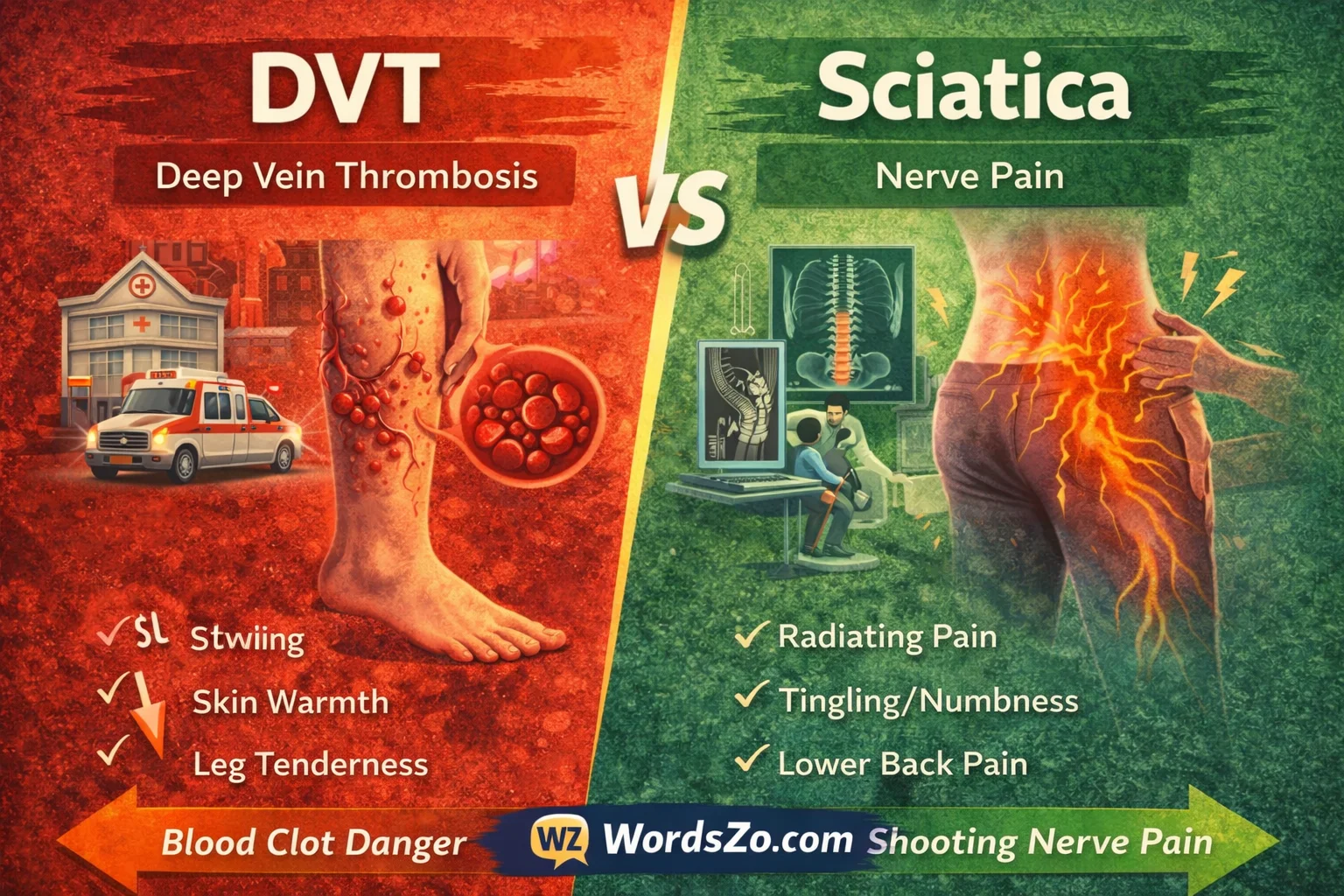
- Swelling in one leg
- Pain or tenderness (often in the calf)
- Warmth in the affected area
- Skin redness or discoloration
Examples in Sentences
- “The doctor ruled out DVT after an ultrasound.”
- “Prolonged sitting increases the risk of DVT.”
- “Sudden leg swelling may indicate DVT.”
Short Medical Note
DVT is dangerous because the clot can break loose and travel to the lungs, causing a pulmonary embolism, which can be life-threatening.
In the DVT vs sciatica comparison, DVT represents a vascular emergency.
What Is “Sciatica”?
Sciatica is a condition caused by irritation or compression of the sciatic nerve, the longest nerve in the body.
Clear Meaning
Sciatica refers to nerve pain that radiates from the lower back down the leg.
How It’s Used
The word sciatica is used as a diagnosis and symptom description in both medical and everyday language.
Where It’s Used
Sciatica is universally recognized across US, UK, and global English.
Common Symptoms
- Sharp or burning pain down one leg
- Tingling or numbness
- Pain that worsens with sitting
- Lower back or hip discomfort
Examples in Sentences
- “Her leg pain was caused by sciatica, not a clot.”
- “Sitting too long aggravates sciatica.”
- “Physical therapy helped relieve his sciatica.”
Regional or Usage Notes
Sciatica is not life-threatening, but it can be painful and chronic if untreated.
In DVT vs sciatica, sciatica represents a neurological condition.
Key Differences Between DVT and Sciatica
Quick Bullet Points
- DVT involves blood clots
- Sciatica involves nerve compression
- DVT causes swelling and warmth
- Sciatica causes shooting or burning pain
- DVT can be life-threatening
- Sciatica is usually manageable with therapy
Comparison Table (Mandatory)
| Feature | DVT | Sciatica |
|---|---|---|
| Affected System | Blood vessels | Nervous system |
| Main Cause | Blood clot | Nerve compression |
| Pain Type | Aching, tender | Sharp, shooting |
| Swelling | Common | Rare |
| Skin Warmth | Yes | No |
| Medical Urgency | Emergency | Usually non-urgent |
| Risk Level | High | Low to moderate |
This table highlights why confusing DVT vs sciatica can be dangerous.
Real-Life Conversation Examples
Dialogue 1
A: “My leg hurts—could it be sciatica?”
B: “Is it swollen and warm?”
🎯 Lesson: Swelling points toward DVT, not sciatica.
Dialogue 2
A: “The pain shoots down my leg when I sit.”
B: “That sounds like sciatica.”
🎯 Lesson: Radiating pain suggests nerve involvement.
Dialogue 3
A: “My calf hurts after a long flight.”
B: “You should check for DVT.”
🎯 Lesson: Travel increases DVT risk.
Dialogue 4
A: “Physical therapy helped my leg pain.”
B: “Then it was likely sciatica.”
🎯 Lesson: Sciatica responds well to movement therapy.
When to Suspect DVT vs Sciatica
Suspect DVT When:
- One leg is suddenly swollen
- Pain is deep and persistent
- Skin feels warm or red
- Pain appears after surgery or long travel
Memory Trick:
👉 DVT = Danger in the Veins.
Suspect Sciatica When:
- Pain starts in the lower back
- Pain shoots down the leg
- Sitting worsens symptoms
- Tingling or numbness is present
Memory Trick:
👉 Sciatica = Shooting nerve pain.
US vs UK Medical Usage
There are no regional differences in the medical definitions of DVT vs sciatica.
Fun Facts or Medical Insights
- DVT is often silent. Some people have minimal pain but serious risk.
- Sciatica isn’t a disease. It’s a symptom caused by underlying spine issues.
These insights help clarify DVT vs sciatica confusion.
Conclusion
The difference between DVT vs sciatica is critical. DVT is a serious blood clot condition that requires immediate medical attention, while sciatica is a nerve-related issue that is usually manageable with proper care. Although both can cause leg pain, their symptoms, risks, and treatments are very different. Recognizing warning signs—like swelling and warmth versus shooting nerve pain—can save lives. If you’re ever unsure, it’s always safer to seek medical evaluation. Next time someone mentions these two conditions, you’ll know exactly what they mean!