Introduction
Have you ever complimented someone’s style and wondered whether to say they have flair or panache? You’re not alone. These two words are often used interchangeably because both describe style, confidence, and personality. You’ll hear them in fashion, writing, performance reviews, and even everyday conversations. Because they sound equally elegant and expressive, many people assume they mean the same thing.
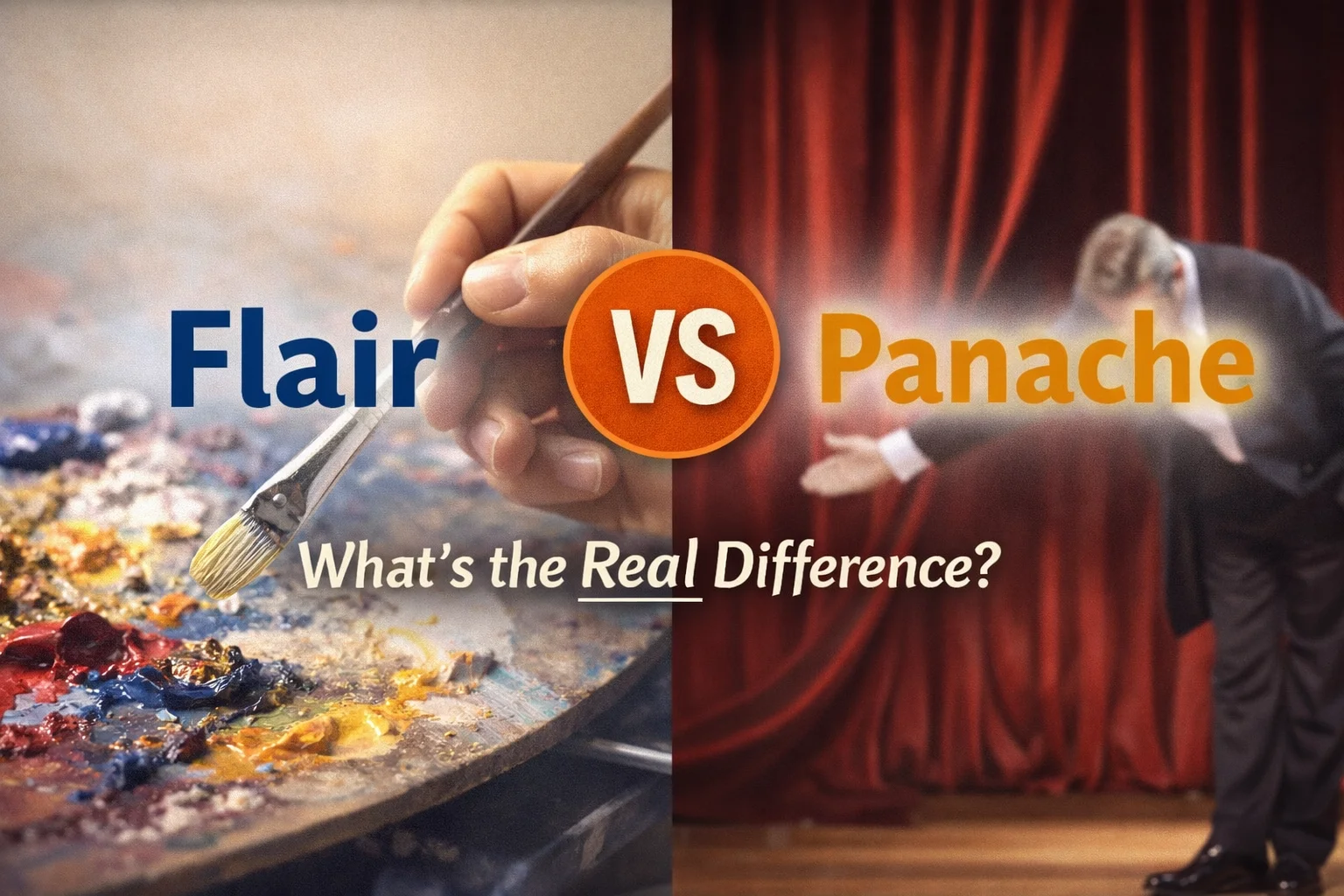
Although they look/sound similar, they serve completely different purposes. One focuses on natural talent and creativity, while the other emphasizes bold confidence and dramatic expression. Understanding the difference between flair vs panache helps you sound more precise, polished, and confident in both writing and speech. In this guide, we’ll break down each term, compare them clearly, and show you exactly when—and how—to use each one correctly.
Section 1: What Is “Flair”?
Flair refers to a natural ability, talent, or instinctive style that makes someone stand out. In the flair vs panache comparison, flair is about innate creativity and skill, not showiness.
Clear Meaning
Flair means having a special natural talent or an effortless sense of style in doing something.
How It’s Used
Flair is commonly used to describe:
- Creative skills
- Artistic ability
- Personal style
- Professional talent
It often suggests that the ability comes naturally, without forced effort.
Where It’s Used
- British English ✔️
- American English ✔️
- Academic, professional, and casual contexts
There are no grammar or spelling differences across regions.
Examples in Sentences
- “She has a real flair for design.”
- “He writes with flair and originality.”
- “The chef brings creative flair to every dish.”
Short Historical Note
The word flair comes from French, meaning to sense or to smell. Over time, it evolved to mean an instinctive talent or intuitive ability.
Section 2: What Is “Panache”?
Panache describes confidence, boldness, and dramatic style, often shown through expressive behavior. In the flair vs panache debate, panache is about how something is presented, not just talent.
Clear Meaning
Panache means doing something with confidence, flamboyance, and a sense of drama.
How It’s Used
Panache is often associated with:
- Bold performances
- Confident leadership
- Dramatic personal style
- Charismatic actions
It emphasizes attitude and presentation more than skill itself.
Spelling and Usage Differences
- Same spelling in US and UK English
- Pronounced puh-nash
- Always used as a noun
Examples in Sentences
- “He delivered the speech with great panache.”
- “She entered the room with confidence and panache.”
- “The performance lacked skill but made up for it with panache.”
Regional or Grammatical Notes
Panache is slightly more formal and appears more often in descriptive or literary writing, though it’s still common in conversation.
Key Differences Between Flair and Panache
Quick Comparison Points
- Flair is about natural talent
- Panache is about confident expression
- Flair feels effortless
- Panache feels bold and dramatic
- Flair focuses on what you can do
- Panache focuses on how you do it
Comparison Table
| Feature | Flair | Panache |
|---|---|---|
| Core Meaning | Natural talent or style | Confident, dramatic expression |
| Focus | Ability | Presentation |
| Tone | Effortless | Bold and showy |
| Usage | Skill-based contexts | Performance or personality |
| Formality | Neutral | Slightly formal |
| Common Fields | Art, writing, creativity | Leadership, performance |
Real-Life Conversation Examples
Dialogue 1
A: “She designs clothes so easily.”
B: “Yeah, she has real flair.”
🎯 Lesson: Flair highlights natural talent.
Dialogue 2
A: “Did you see how he presented that idea?”
B: “Pure panache.”
🎯 Lesson: Panache focuses on confident delivery.
Dialogue 3
A: “He’s talented, but very quiet.”
B: “That’s flair without panache.”
🎯 Lesson: Talent doesn’t always include boldness.
Dialogue 4
A: “She’s not the best singer, but wow.”
B: “That’s panache making the difference.”
🎯 Lesson: Panache can elevate performance.
When to Use Flair vs Panache
Use “Flair” When:
- Talking about natural ability
- Describing creative talent
- Referring to intuitive skill
- Writing resumes or portfolios
Memory Trick:
👉 Flair = Talent you’re born with
Use “Panache” When:
- Describing bold confidence
- Talking about dramatic delivery
- Emphasizing charisma
- Writing reviews or profiles
Memory Trick:
👉 Panache = Performance with attitude
US vs UK Writing
Both US and UK English:
- Use flair and panache identically
- No spelling or grammatical differences
Fun Facts or History
- Panache originally meant a decorative plume worn on helmets, symbolizing bravery and confidence.
- Someone can have panache without flair, or flair without panache—they’re not mutually exclusive.
Conclusion
The difference between flair vs panache comes down to talent versus expression. Flair is about having a natural ability or creative instinct, while panache is about showing confidence, boldness, and dramatic style. Both are positive qualities, but they highlight different strengths. Knowing which word to use helps you communicate more clearly and sound more polished—whether you’re writing professionally or speaking casually. Next time someone uses these two words, you’ll know exactly what they mean! 😊