Introduction
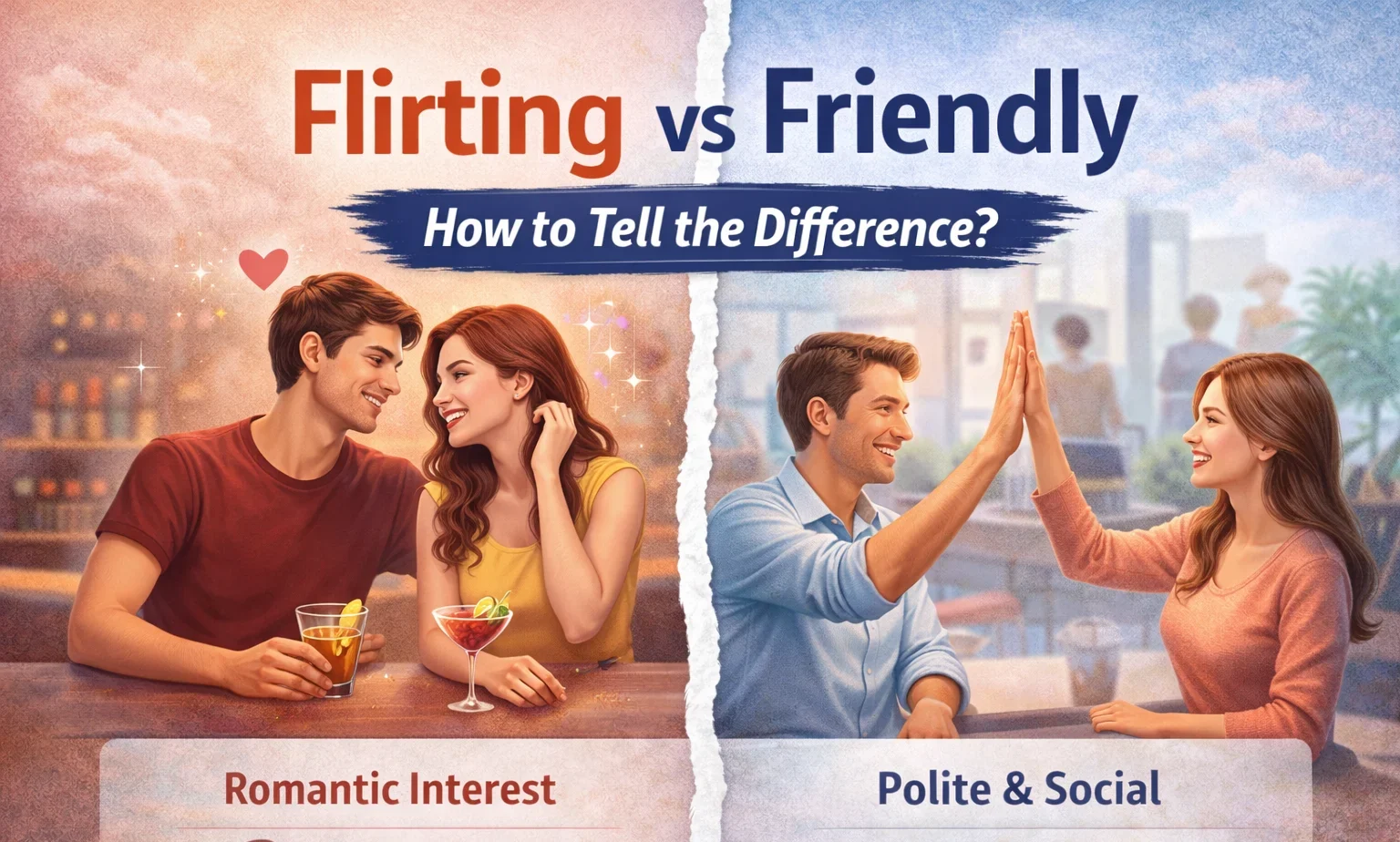
Have you ever walked away from a conversation wondering, “Were they flirting with me… or were they just being nice?” You’re not alone. The confusion between flirting and friendly behavior is one of the most common social misunderstandings in everyday life. A smile, a compliment, or a casual joke can mean very different things depending on context, tone, and intent.
This confusion often leads to awkward moments, mixed signals, or even damaged relationships—especially at work, in friendships, or while dating. People frequently misread friendliness as romantic interest or mistake flirting for simple politeness.
Although they look/sound similar, they serve completely different purposes.
In this detailed guide, you’ll learn the real difference between flirting vs friendly, how to recognize each behavior, common signs, real-life examples, and how to respond confidently without embarrassment.
What Is Flirting?
Flirting is a form of communication used to show romantic or sexual interest in someone. It is intentional and usually aims to build attraction or test mutual interest.
Clear Meaning
Flirting involves verbal and non-verbal signals meant to suggest attraction, admiration, or desire beyond simple politeness.
In simple terms:
Flirting = showing romantic interest
How It’s Used
Flirting can include:
- Prolonged eye contact
- Compliments about appearance
- Playful teasing
- Light physical touch (when appropriate)
- A warm or suggestive tone
Flirting often feels more personal, focused, and emotionally charged than normal conversation.
Where It’s Commonly Seen
- Dating situations
- Social gatherings
- Online messaging and dating apps
- Early romantic interactions
Flirting is context-sensitive and can be inappropriate in professional environments if misunderstood.
Examples in Sentences
- “He was clearly flirting during the conversation.”
- “She started flirting by complimenting his smile.”
- “That message sounded like flirting, not small talk.”
Short Behavioral Note
Flirting behaviors are influenced by culture, personality, and confidence. What feels like flirting to one person may feel subtle or playful to another, which is why misunderstandings happen so often.
What Is Friendly?
Friendly behavior is about being kind, polite, and approachable—with no romantic intention involved.
Clear Meaning
Being friendly means interacting with others in a warm, respectful, and social way without crossing emotional or romantic boundaries.
In simple terms:
Friendly = being nice without romantic intent
How It’s Used
Friendly behavior often includes:
- Smiling naturally
- Casual conversation
- Supportive comments
- Neutral compliments
- Inclusive body language
Friendliness is usually consistent across many people, not focused on just one individual.
Where It’s Commonly Seen
- Workplaces
- Schools and universities
- Social events
- Customer service settings
- Everyday interactions
Friendly behavior is socially safe and widely accepted.
Examples in Sentences
- “She’s friendly with everyone at work.”
- “He was just being friendly, not flirting.”
- “Her tone was polite and welcoming.”
Short Behavioral Note
Friendly people often get mistaken for flirting because they are expressive, warm, and open. However, friendliness lacks exclusivity and emotional tension.
Key Differences Between Flirting and Friendly
The main difference between flirting vs friendly lies in intent, focus, and emotional tone.
Key Differences (Bullet Points)
- Flirting shows romantic interest; friendly behavior does not
- Flirting feels personal; friendliness feels general
- Flirting focuses on one person
- Friendly behavior is consistent with many people
- Flirting includes subtle attraction signals
- Friendly behavior maintains clear boundaries
Comparison Table
| Feature | Flirting | Friendly |
|---|---|---|
| Intent | Romantic or sexual interest | Polite social interaction |
| Focus | One specific person | Everyone equally |
| Compliments | Personal or appearance-based | General or situational |
| Body Language | Suggestive or playful | Open and neutral |
| Emotional Tone | Intimate or teasing | Warm but casual |
| Risk of Misreading | High | Low |
Real-Life Conversation Examples
Dialogue 1
A: “She kept complimenting my eyes.”
B: “Does she compliment others the same way?”
A: “No, just me.”
🎯 Lesson: Exclusive attention often signals flirting.
Dialogue 2
A: “He smiles at everyone and jokes around.”
B: “That sounds friendly, not flirtatious.”
🎯 Lesson: Consistent behavior with everyone is friendliness.
Dialogue 3
A: “She touched my arm while laughing.”
B: “That could be flirting if it felt intentional.”
🎯 Lesson: Physical cues matter in context.
Dialogue 4
A: “He texts late at night asking personal questions.”
B: “That leans toward flirting.”
🎯 Lesson: Timing and depth suggest intent.
Dialogue 5
A: “I thought she liked me, but she treats everyone the same.”
B: “Then she’s probably just friendly.”
🎯 Lesson: Compare behavior patterns, not moments.
When to Use Flirting vs Friendly
Understanding flirting vs friendly helps you respond appropriately and avoid embarrassment.
Signs It’s Flirting
- They give you special attention
- Compliments focus on looks or personality
- Body language feels intentional
- Conversations become personal quickly
- There’s emotional tension
Use caution: Misreading flirting can lead to awkward situations.
Signs It’s Friendly
- They act the same with others
- Conversations stay light and neutral
- Compliments are general
- No personal boundaries are crossed
- Tone feels safe and respectful
Friendly behavior is not an invitation.
Simple Memory Tricks
- Focused = Flirting
- General = Friendly
Another tip:
If you removed romance from the situation and it still makes sense, it’s probably friendly.
Workplace and Social Boundaries
In professional settings:
- Always assume friendly, not flirting
- Maintain respectful communication
- Avoid interpreting kindness as attraction
This mindset prevents misunderstandings and protects relationships.
Fun Facts & Psychology Insights
1. Friendly People Are Often Misread
Studies show that people who are naturally expressive and warm are more likely to be perceived as flirting—even when they are not.
2. Flirting Is Often Subconscious
Many people flirt without realizing it, especially when they feel comfortable or confident around someone they like.
Conclusion
The difference between flirting vs friendly comes down to intent, focus, and emotional signals. Flirting is personal, intentional, and attraction-based. Friendly behavior is inclusive, polite, and emotionally neutral. Learning to spot these differences helps you navigate social situations with confidence and clarity.
Before jumping to conclusions, always look at patterns, context, and consistency. Misreading friendliness as flirting—or vice versa—can lead to unnecessary confusion.
Next time someone blurs the line between these two, you’ll know exactly what they mean!