Introduction
Black clothes, emotional music, dramatic makeup—at first glance, goth and emo can look almost identical. Because of this visual overlap, many people use the words interchangeably, assuming they describe the same style or mindset. But that assumption couldn’t be more wrong. While both subcultures emerged from music scenes and express deep emotions, their philosophies, aesthetics, and cultural roots are very different. Although they look/sound similar, they serve completely different purposes. Understanding goth vs emo isn’t just about fashion or music—it’s about identity, worldview, and self-expression. In this guide, we’ll break down what goth really means, what emo truly represents, how they differ in history and attitude, and when each term should be used correctly. By the end, you’ll never confuse goth and emo again.
What Is “Goth”?
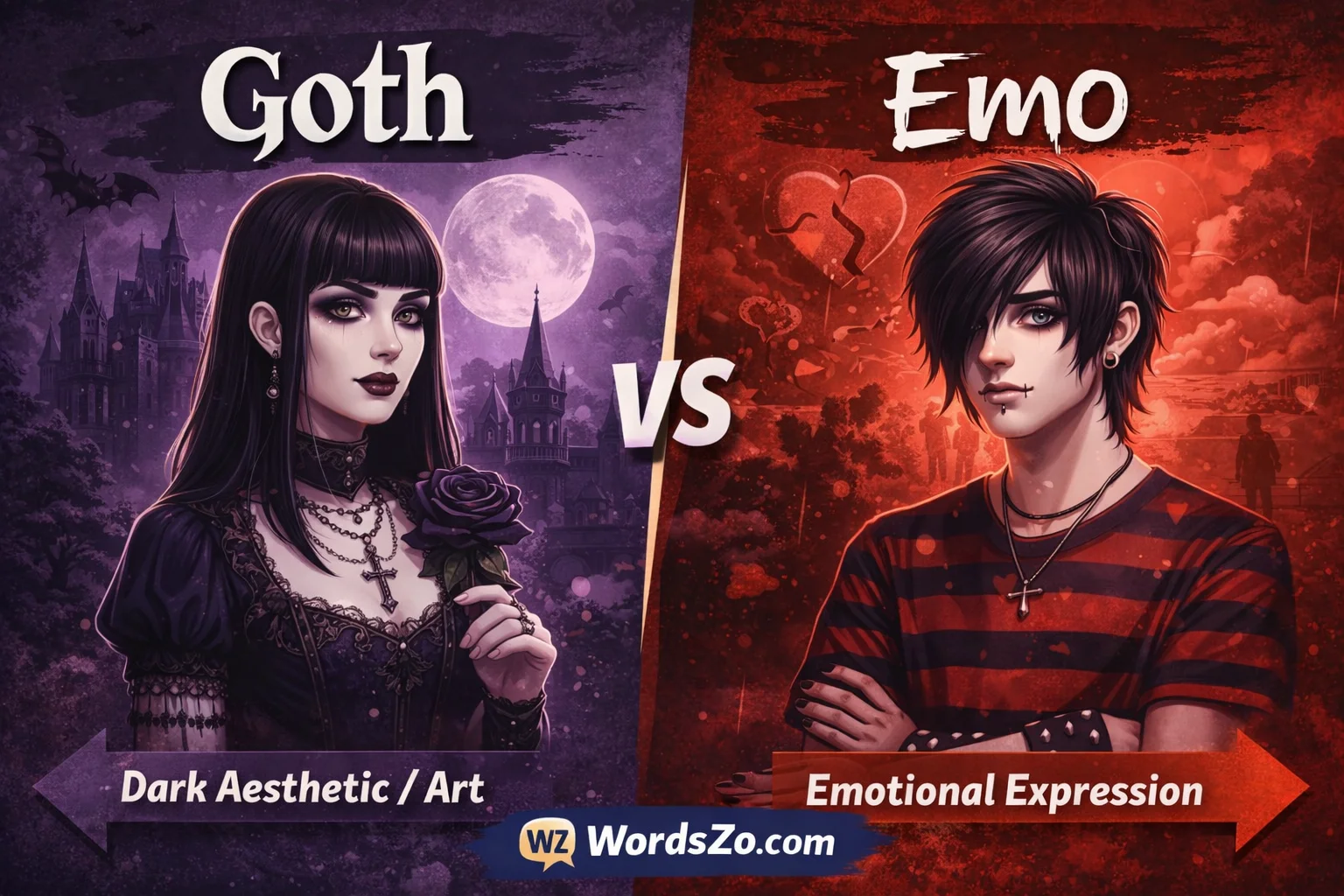
Goth refers to a subculture centered around dark aesthetics, gothic music, and themes of mystery, romanticism, and the macabre. It focuses more on atmosphere and art than raw emotion.
How It’s Used
The word goth is used as a noun (a goth person) and an adjective (goth fashion, goth music). It often describes a long-term identity rather than a phase.
Where It’s Used
Goth culture originated in the UK but spread globally, especially across Europe and North America. There are no spelling or grammatical differences across regions.
Examples in Sentences
- “She identifies as goth and loves gothic literature.”
- “That club plays classic goth music from the ’80s.”
- “His goth style is inspired by Victorian fashion.”
Short Historical or Usage Note
Goth emerged in the late 1970s and early 1980s from the post-punk music scene, with bands like Bauhaus and The Cure. Over time, it evolved into a rich subculture rooted in art, literature, and dark romantic themes.
In the goth vs emo discussion, goth represents depth, darkness, and aesthetic expression.
What Is “Emo”?
Emo is a subculture rooted in emotional expression, vulnerability, and personal feelings. The word comes from “emotional hardcore,” a style of punk music.
How It’s Used
Emo is used as both a noun and an adjective. It often describes a phase, emotional style, or music preference rather than a lifelong identity.
Where It’s Used
Emo culture began in the United States and spread worldwide, especially during the early 2000s. The spelling and usage remain the same globally.
Examples in Sentences
- “He went through an emo phase in high school.”
- “That song has strong emo lyrics.”
- “Her emo style reflects her emotions.”
Regional or Grammatical Notes
Emo is commonly used in casual speech and online culture. It can sometimes be misused as an insult, though originally it described a music-driven movement.
In goth vs emo, emo focuses on feelings, personal struggles, and emotional honesty.
Key Differences Between Goth and Emo
Quick Bullet Points
- Goth is rooted in dark art, culture, and atmosphere
- Emo centers on emotions and personal expression
- Goth fashion is elegant and dramatic
- Emo fashion is casual and emotion-driven
- Goth is usually a long-term identity
- Emo is often a temporary phase
Comparison Table
| Feature | Goth | Emo |
|---|---|---|
| Origin | UK post-punk scene | US punk/hardcore scene |
| Core Focus | Aesthetic, mystery, art | Emotions, feelings, vulnerability |
| Fashion | Victorian, dark, dramatic | Skinny jeans, band tees, hoodies |
| Music Style | Gothic rock, darkwave | Emo rock, pop-punk |
| Identity | Long-term lifestyle | Often a phase |
| Emotional Tone | Romantic, dark, detached | Intense, personal, expressive |
This table clearly shows why goth vs emo should never be used interchangeably.
Real-Life Conversation Examples
Dialogue 1
A: “You wear black—are you emo?”
B: “No, I’m goth. I’m into gothic art and music.”
🎯 Lesson: Black clothing doesn’t automatically mean emo.
Dialogue 2
A: “He listens to sad songs all day.”
B: “Yeah, he’s really into emo music.”
🎯 Lesson: Emo focuses on emotional expression.
Dialogue 3
A: “She’s been goth for years.”
B: “That’s different from emo—it’s more of a lifestyle.”
🎯 Lesson: Goth is often a long-term identity.
Dialogue 4
A: “I was emo in high school.”
B: “Most people grow out of that phase.”
🎯 Lesson: Emo is commonly temporary.
When to Use Goth vs Emo
Use “Goth” When:
- Referring to gothic fashion, music, or art
- Describing a dark, romantic aesthetic
- Talking about a long-standing subculture
- Writing cultural or historical content
Memory Trick: Goth = Gothic art, darkness, atmosphere.
Use “Emo” When:
- Referring to emotional music or lyrics
- Describing expressive or vulnerable behavior
- Talking about youth culture or phases
- Writing about early 2000s music scenes
Memory Trick: Emo = Emotional.
US vs UK Usage
There is no regional difference in meaning or spelling for goth vs emo. Both terms are used globally with the same definitions.
Fun Facts or History
- Goth doesn’t mean depressed. Many goths are emotionally stable and drawn to dark aesthetics, not sadness.
- Emo was never about fashion at first. It started purely as a music genre before evolving into a style.
These facts help clear common myths around goth vs emo.
Conclusion
The difference between goth vs emo lies in purpose, emotion, and identity. Goth is about dark aesthetics, art, and atmosphere, while emo is centered on emotional expression and personal vulnerability. Although they may look similar on the surface, their origins and meanings are very different. Knowing when to use each term correctly helps avoid stereotypes and misunderstandings. Whether you’re writing about music, culture, or fashion, this distinction matters. Next time someone uses these two words, you’ll know exactly what they mean!