Introduction
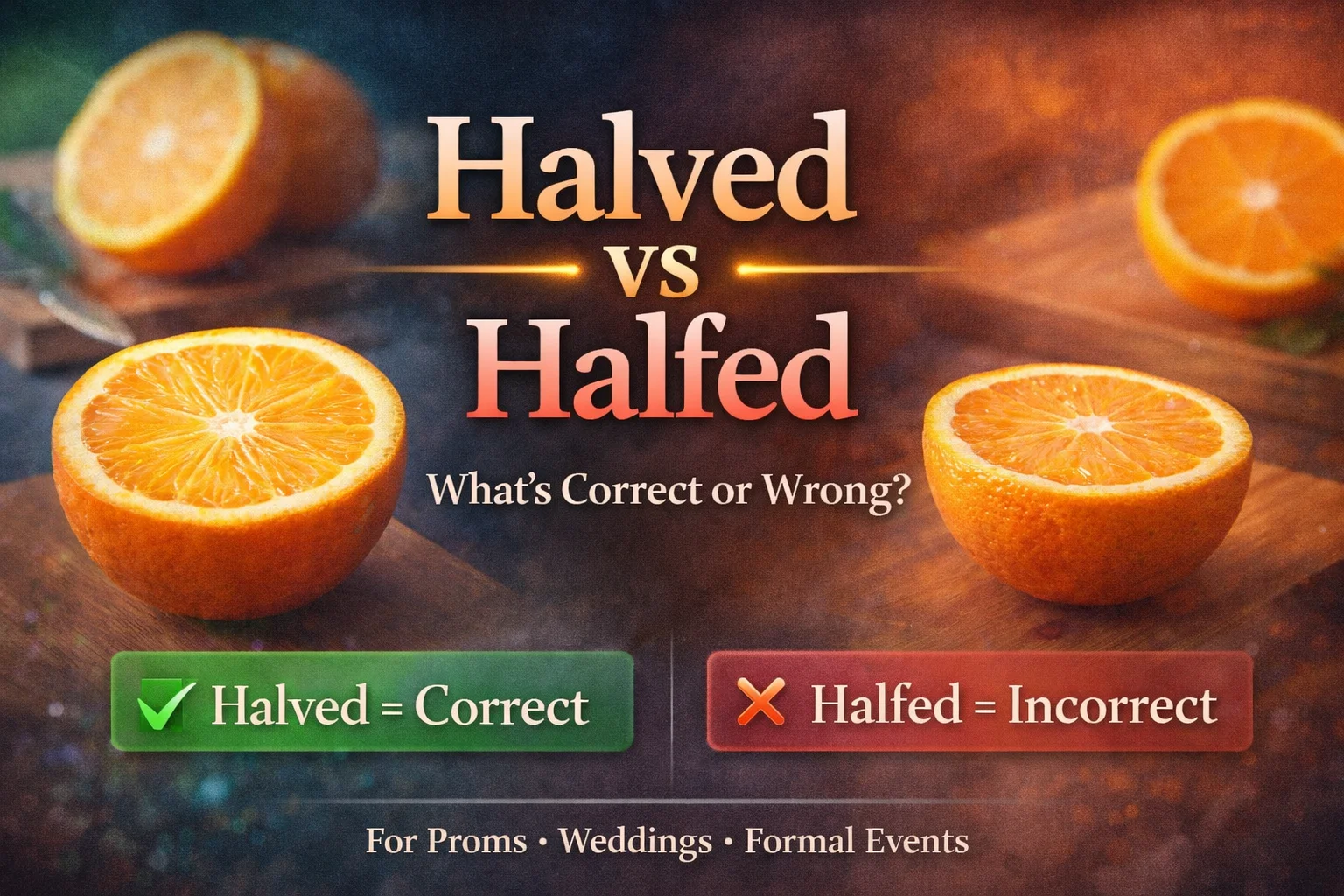
Have you ever written halved vs halfed and paused, unsure which one is correct? You’re not alone. These two words look very similar, and since they both seem like past forms of half, it’s easy to assume either one might work.
Many English learners—and even native speakers—get confused here because English verbs don’t always follow simple rules. Sometimes you just add “-ed,” but other times, the spelling changes in unexpected ways.
Here’s the key point: only one of these words is actually correct in standard English.
Although they look/sound similar, they serve completely different purposes. In fact, one is a proper word, while the other is a common mistake.
In this guide, we’ll break down halved vs halfed, explain the correct usage, provide examples, and give you simple tricks to remember the difference forever.
What Is “Halved”?
The word halved is the correct past tense and past participle of the verb halve.
Meaning of Halved
Halved means:
- To divide something into two equal parts
- To reduce something by 50%
How It’s Used
In the context of halved vs halfed, halved is used in:
- Everyday English
- Academic writing
- Business and financial contexts
- Cooking and measurements
Where It’s Used
- Used globally in both American and British English
- Accepted in formal and informal writing
- Common in spoken English
Examples in Sentences
- “She halved the apple and shared it.”
- “The company’s profits were halved last year.”
- “Cut the potatoes into halved pieces.”
Historical / Grammar Note
The base verb is halve, not half. When forming the past tense:
- halve → halved (drop the “e” + add “-ed”)
This follows standard English verb rules.
What Is “Halfed”?
Now let’s address the confusion in halved vs halfed.
Meaning of Halfed
Halfed is not a correct word in standard English.
It is considered:
- A spelling mistake
- A non-standard or incorrect form
- A misunderstanding of how the verb works
How It’s (Incorrectly) Used
People sometimes write halfed because:
- They assume half is the base verb
- They try to apply the “+ ed” rule incorrectly
Where It Appears
- Informal writing
- Typos or beginner-level English
- AI or auto-correct errors
Examples (Incorrect Usage)
❌ “She halfed the cake.”
✔️ “She halved the cake.”
❌ “The price was halfed.”
✔️ “The price was halved.”
Spelling & Usage Notes
- There is no verb “half” in standard grammar
- The correct verb is “halve”
- Therefore, “halfed” should always be avoided
Key Differences Between Halved and Halfed
Quick Summary
- Halved = correct word
- Halfed = incorrect spelling
- Halved comes from halve
- Halfed comes from misunderstanding
Comparison Table
| Feature | Halved | Halfed |
|---|---|---|
| Correct Spelling | ✔️ Yes | ❌ No |
| Meaning | Divided into two equal parts | No valid meaning |
| Word Type | Verb (past tense of halve) | Not a standard word |
| Usage | Formal & informal English | Incorrect usage |
| Grammar Rule | From “halve” + “-ed” | Incorrect formation |
| Dictionary Status | ✔️ Recognized | ❌ Not recognized |
Real-Life Conversation Examples
Dialogue 1
A: “I halfed the sandwich.”
B: “You mean halved.”
🎯 Lesson: Always use “halved,” not “halfed.”
Dialogue 2
A: “Why is ‘halfed’ wrong?”
B: “Because the verb is ‘halve,’ so it becomes ‘halved.’”
🎯 Lesson: Know the base verb.
Dialogue 3
A: “The budget was halved this year.”
B: “That must have been tough.”
🎯 Lesson: “Halved” is correct in formal contexts.
Dialogue 4
A: “I wrote ‘halfed’ in my essay.”
B: “Better fix it before submission.”
🎯 Lesson: Avoid common spelling mistakes.
Dialogue 5
A: “Is ‘halved’ used in American English too?”
B: “Yes, it’s used everywhere.”
🎯 Lesson: “Halved” is universally correct.
When to Use Halved vs Halfed
Use “Halved” When:
✔️ You mean divided into two parts
✔️ You’re writing in any form of English
✔️ You want correct grammar
Examples:
- “The recipe requires halved tomatoes.”
- “Their workload was halved.”
Avoid “Halfed” Always
❌ Do not use it in:
- Essays
- Blogs
- Professional writing
- Exams
Simple Memory Trick
- Halve → Halved (correct)
- If it doesn’t come from “halve,” it’s wrong
Or:
👉 “VE” stays before “D” → halved
US vs UK Usage
There’s no difference:
- Both US and UK English use “halved”
- “Halfed” is incorrect everywhere
Fun Facts or History
1. “Halve” Is the Real Verb
Many people think half is the verb—but it’s actually “halve.” That’s why the past tense becomes halved.
2. Common Mistake in Writing
“Halfed” is one of the most frequent spelling mistakes in beginner English because it looks logical—but it’s wrong.
Conclusion
The difference between halved vs halfed is straightforward once you understand the rule. Halved is the correct past tense of halve and is used in all types of English, from casual speech to formal writing. On the other hand, halfed is simply incorrect and should never be used.
Remember: English verbs don’t always follow basic patterns, and this is one of those cases where spelling matters.
Stick with halved, and you’ll always be right.
Next time someone uses these two words, you’ll know exactly what they mean!