Introduction
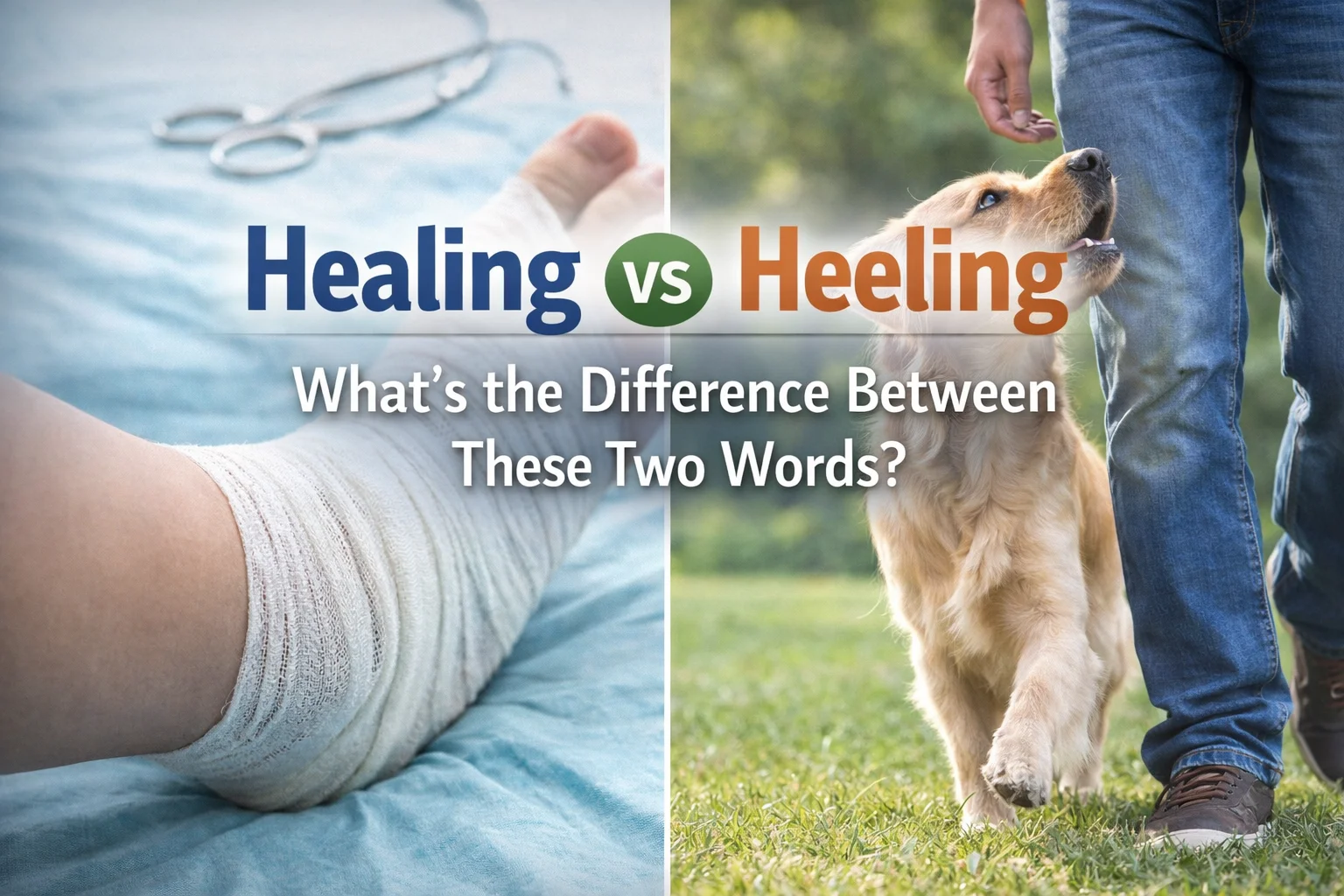
English can be tricky, especially when two words sound exactly the same but mean completely different things. One of the most confusing pairs people often mix up is healing vs heeling. You might see both words used in writing, conversations, or even professional content—and wonder whether they’re interchangeable.
They’re not.
The confusion usually comes from pronunciation. Both words are pronounced hee-ling, which makes it easy to use the wrong spelling without realizing it. Spellcheck won’t always save you either, because both words are technically correct—just in very different contexts. Although they look/sound similar, they serve completely different purposes.
In this guide, we’ll clearly explain healing vs heeling, show how each word is used, provide real-life examples, and give you simple tricks to remember the difference. By the end, you’ll use both words confidently—without second-guessing yourself 😊.
What Is “Healing”?
Meaning
Healing refers to the process of recovery, repair, or restoration—physically, emotionally, or spiritually. It comes from the verb heal, which means to make healthy again or to recover from damage or pain.
How It’s Used
Healing is most commonly used in:
- Medical contexts
- Emotional or mental health discussions
- Spiritual or personal growth topics
- General recovery situations
In the healing vs heeling comparison, healing is by far the more commonly used word in everyday English.
Where It’s Used
Healing is used globally in:
- American English
- British English
- Formal and informal writing
- Scientific, medical, and wellness content
Examples in Sentences
- Time is essential for emotional healing.
- The wound is healing faster than expected.
- Meditation supports mental healing.
- The body has an incredible ability for healing.
Short Historical or Usage Note
The word healing comes from Old English hǣlan, meaning to make whole. This idea of “wholeness” still defines how we use healing today—not just for the body, but for the mind and soul as well.
What Is “Heeling”?
Meaning
Heeling has a completely different meaning depending on context. It comes from the word heel and is used mainly in specialized situations.
The two most common meanings are:
- Dog training – when a dog walks closely beside its owner
- Movement or position – involving the heel of the foot or foot alignment
How It’s Used
Heeling is used when talking about:
- Obedience training for dogs
- Footwork, posture, or sports movements
- Nautical or technical movement terms (less common)
In healing vs heeling, heeling is far more niche and context-specific.
Where It’s Used
You’ll typically see heeling used in:
- Dog training manuals
- Sports or fitness instructions
- Technical or instructional writing
It is used the same way in both US and UK English.
Examples in Sentences
- The dog is heeling perfectly during training.
- Proper heeling improves your walking posture.
- She practiced heeling exercises with her puppy.
Regional or Grammatical Notes
There are no spelling differences between American and British English for heeling. However, its usage is much less frequent than healing, which is why people often confuse the two.
Key Differences Between Healing and Heeling
Quick Bullet Points
- Healing relates to recovery or restoration
- Heeling relates to feet, movement, or dog training
- Healing is common in everyday language
- Heeling is specialized and context-based
- They sound the same but mean entirely different things
Comparison Table
| Feature | Healing | Heeling |
|---|---|---|
| Meaning | Recovery or restoration | Foot position or dog training |
| Common Usage | Very common | Less common |
| Related To | Health, emotions, wellness | Dogs, posture, movement |
| Verb Root | Heal | Heel |
| Pronunciation | Hee-ling | Hee-ling |
| Used in US & UK | Yes | Yes |
| Risk of Confusion | High | High |
Real-Life Conversation Examples
Dialogue 1
A: My ankle is finally heeling.
B: You mean healing, right?
A: Oh wow—yes, definitely healing.
🎯 Lesson: Use healing for recovery, not heeling.
Dialogue 2
A: What is my dog learning today?
B: Basic commands—sit, stay, and heeling.
A: That makes sense.
🎯 Lesson: Heeling is correct in dog training.
Dialogue 3
A: This retreat focuses on emotional heeling.
B: Careful—that should be healing.
A: Good catch!
🎯 Lesson: Emotional recovery always uses healing.
Dialogue 4
A: I’m practicing heeling exercises at the gym.
B: For posture and foot alignment?
A: Exactly.
🎯 Lesson: Heeling relates to foot movement or position.
When to Use Healing vs Heeling
Use “Healing” When:
✔️ Talking about physical recovery
✔️ Referring to emotional or mental wellness
✔️ Writing medical or wellness content
✔️ Discussing spiritual growth
Examples:
- The scar is healing well.
- Grief healing takes time.
Use “Heeling” When:
✔️ Talking about dog obedience training
✔️ Referring to foot placement or posture
✔️ Writing technical or instructional content
Examples:
- The dog is heeling on command.
- Focus on proper heeling during the drill.
Simple Memory Trick 🧠
👉 Healing = Health (both start with H-E-A)
👉 Heeling = Heel (think foot or dog at your heel)
This trick makes healing vs heeling easy to remember every time.
US vs UK Usage
There is no difference between American and British English for healing or heeling. The meanings and spellings are identical in both regions.
Fun Facts or History
1. Same Sound, Different Roots
Even though healing and heeling sound the same, they come from completely different Old English roots—one meaning wholeness, the other meaning foot.
2. Dog Training Popularized “Heeling”
The word heeling became widely recognized due to modern dog obedience training, where the dog must stay close to the handler’s heel.
Conclusion
The difference between healing vs heeling is all about context. Healing refers to recovery—whether physical, emotional, or spiritual—and is used frequently in everyday language. Heeling, on the other hand, is a specialized term related to dog training or foot movement. While they sound identical, their meanings couldn’t be more different.
Once you connect healing with health and heeling with heels or dogs, the confusion disappears.
Next time someone uses these two words, you’ll know exactly what they mean! 😊