Introduction
Have you ever paused while writing and wondered whether the correct word is impassible or impassable? You’re not alone. These two words look almost identical, sound very similar, and even share the same root. Because of that, writers, students, and even native English speakers often mix them up.
The confusion usually comes from the fact that both words suggest something that cannot be passed, yet they are not interchangeable in most contexts. One is common and practical, while the other is rare and more emotional or descriptive.
Although they look/sound similar, they serve completely different purposes.
In this in-depth guide, you’ll learn the exact meaning of impassible vs impassable, how each word is used, where they appear in real English, and how to choose the right one with confidence. By the end, you’ll never second-guess these words again. 😊
What Is “Impassible”?
Meaning
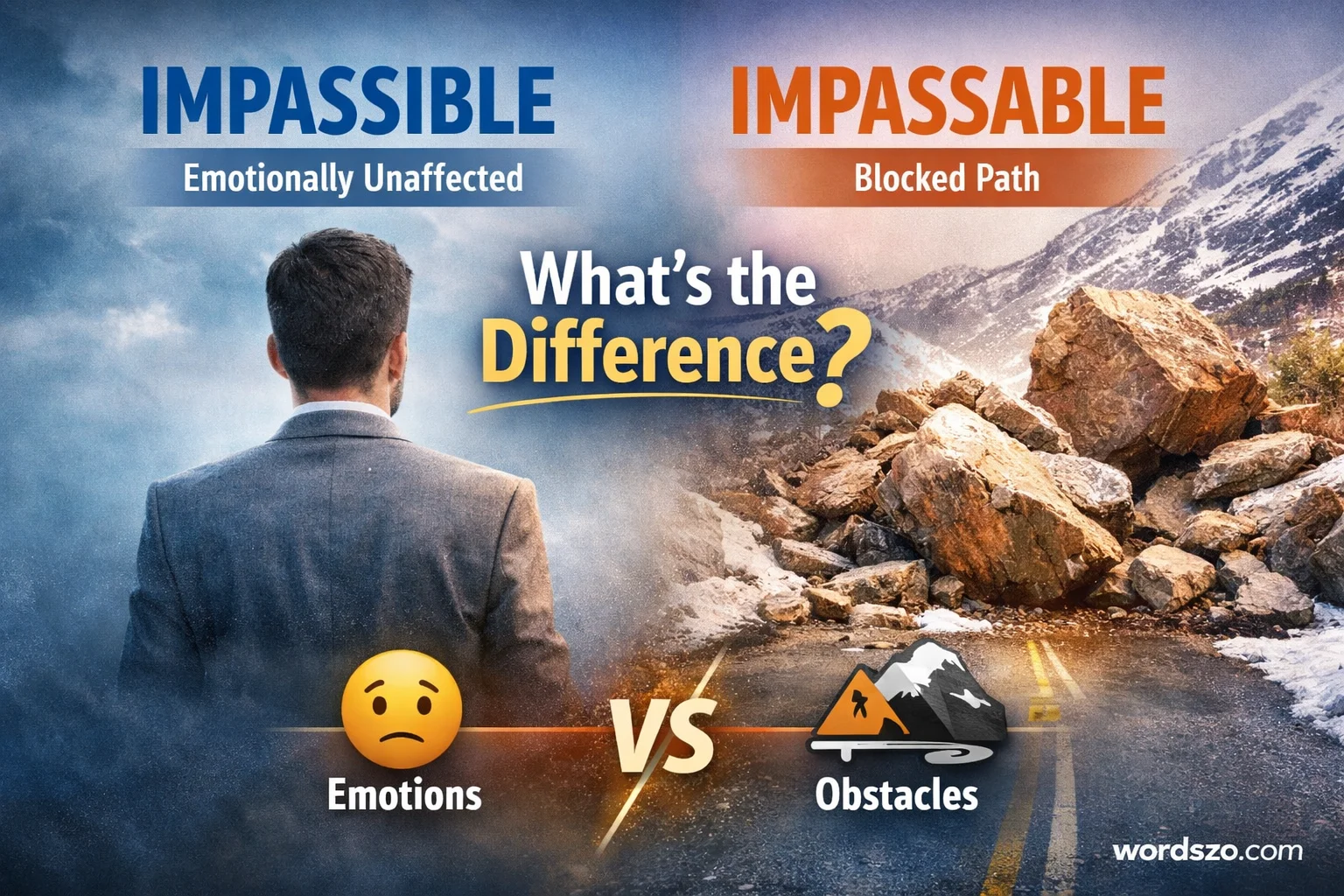
Impassible means unable to feel emotion, not easily affected, or showing no reaction. In rare cases, it can also mean impossible to pass, but this usage is outdated and uncommon in modern English.
In today’s language, impassible almost always describes people, faces, or emotional states, not physical objects.
How It’s Used
- Used mainly as an adjective
- Describes emotional detachment, calmness, or lack of visible reaction
- Often appears in literary, formal, or descriptive writing
Where It’s Used
- More common in British English and formal writing
- Rare in everyday conversation
- Often found in books, essays, and psychological descriptions
Examples in Sentences
- Despite the chaos around him, her expression remained impassible.
- The judge listened with an impassible face.
- He appeared impassible, even after hearing the shocking news.
Historical / Usage Note
The word impassible comes from the Latin impassibilis, meaning incapable of suffering or feeling. Over time, English shifted its usage toward emotional and mental states rather than physical barriers.
👉 Important: In modern English, impassible ≠ blocked path. That meaning is largely obsolete.
What Is “Impassable”?
Meaning
Impassable means impossible to pass through, blocked, or not navigable. It refers to physical obstacles, routes, or conditions that prevent movement.
This is the word most people actually need when talking about roads, mountains, rivers, or paths.
How It’s Used
- Used as an adjective
- Describes physical conditions or barriers
- Common in daily conversation, news, and technical writing
Where It’s Used
- Widely used in both American and British English
- Common in travel, geography, construction, and weather reports
- Accepted universally with no regional spelling differences
Examples in Sentences
- The road became impassable after heavy snowfall.
- Flooding made the bridge completely impassable.
- The mountain pass is impassable during winter.
Regional or Grammar Notes
Unlike impassible, impassable is common, practical, and modern. It is the correct choice whenever you mean physically impossible to pass.
Key Differences Between Impassible and Impassable
Quick Bullet Summary
- Impassible → emotional or psychological state
- Impassable → physical barrier or obstruction
- Impassible is rare and formal
- Impassable is common and practical
- They are not interchangeable in modern English
Comparison Table
| Feature | Impassible | Impassable |
|---|---|---|
| Primary Meaning | Unable to feel or show emotion | Impossible to pass through |
| Usage Type | Emotional / descriptive | Physical / practical |
| Commonness | Rare | Very common |
| Used For | People, faces, reactions | Roads, rivers, paths |
| Modern Usage | Formal / literary | Everyday English |
| Interchangeable? | ❌ No | ❌ No |
Real-Life Conversation Examples
Dialogue 1
A: “The road was impassible after the storm.”
B: “Do you mean impassable?”
A: “Oh, right. Yes, no one could drive through.”
🎯 Lesson: Use impassable for physical barriers.
Dialogue 2
A: “Why did the author describe him as impassible?”
B: “Because he showed no emotion at all.”
A: “That makes sense.”
🎯 Lesson: Impassible describes emotional reactions, not objects.
Dialogue 3
A: “The mountain trail is impassible.”
B: “That sounds poetic, but impassable is the correct word.”
A: “Good catch!”
🎯 Lesson: Modern English prefers impassable for routes.
Dialogue 4
A: “She stayed impassable during the argument.”
B: “You mean impassible.”
A: “Yes, she showed no emotion.”
🎯 Lesson: Emotional calm = impassible.
Dialogue 5
A: “This sentence sounds odd.”
B: “That’s because impassible is very rare.”
A: “I’ll switch to impassable.”
🎯 Lesson: When in doubt about paths or movement, choose impassable.
When to Use Impassible vs Impassable
Use “Impassible” When:
✔️ Describing a person’s emotions or reactions
✔️ Writing literary or formal English
✔️ Referring to emotional detachment or calmness
Examples:
- His face was completely impassible.
- She remained impassible under pressure.
Use “Impassable” When:
✔️ Talking about roads, bridges, paths, or routes
✔️ Describing physical obstacles
✔️ Writing news, blogs, or everyday content
Examples:
- The road is impassable due to snow.
- Flooding made the street impassable.
Simple Memory Trick 🧠
- ImPASSABLE → you cannot PASS
- ImPASSIBLE → emotions don’t PASS through
US vs UK Writing
- Both US and UK English use impassable the same way
- Impassible appears more in British and formal writing
- American English rarely uses impassible
Fun Facts & History
1. Same Root, Different Paths
Both words come from the Latin word passus, meaning to pass. Over time, English split their meanings into emotional (impassible) and physical (impassable) uses.
2. One Is Disappearing
Linguists consider impassible a declining reminder word, meaning it survives mainly in literature and formal contexts, while impassable continues to grow in everyday use.
Conclusion
The difference between impassible vs impassable is simple once you understand their roles. Impassible describes emotional stillness or lack of reaction, while impassable refers to physical barriers that cannot be crossed. Although they share a common origin and similar spelling, their meanings have clearly separated in modern English. For roads, paths, and obstacles, always choose impassable. For people who show no emotion, impassible is your word.
Next time someone uses these two words, you’ll know exactly what they mean! 😊