Introduction
Traditional Japanese clothing has fascinated the world for centuries, and two garments often spark curiosity and confusion: kimono and yukata. At first glance, they may look almost identical — long robes, wide sleeves, elegant designs, and a sash tied around the waist. Because of this visual similarity, many people assume they’re interchangeable or simply different names for the same outfit.
However, that assumption couldn’t be further from the truth. Although they look/sound similar, they serve completely different purposes. From fabric and formality to season and cultural meaning, kimono and yukata are worn in very different situations.
In this detailed guide, we’ll break down kimono vs yukata in simple, conversational English. You’ll learn their meanings, history, real-life usage, key differences, and exactly when to wear each one — without feeling overwhelmed.
What Is “Kimono”?
Meaning of Kimono
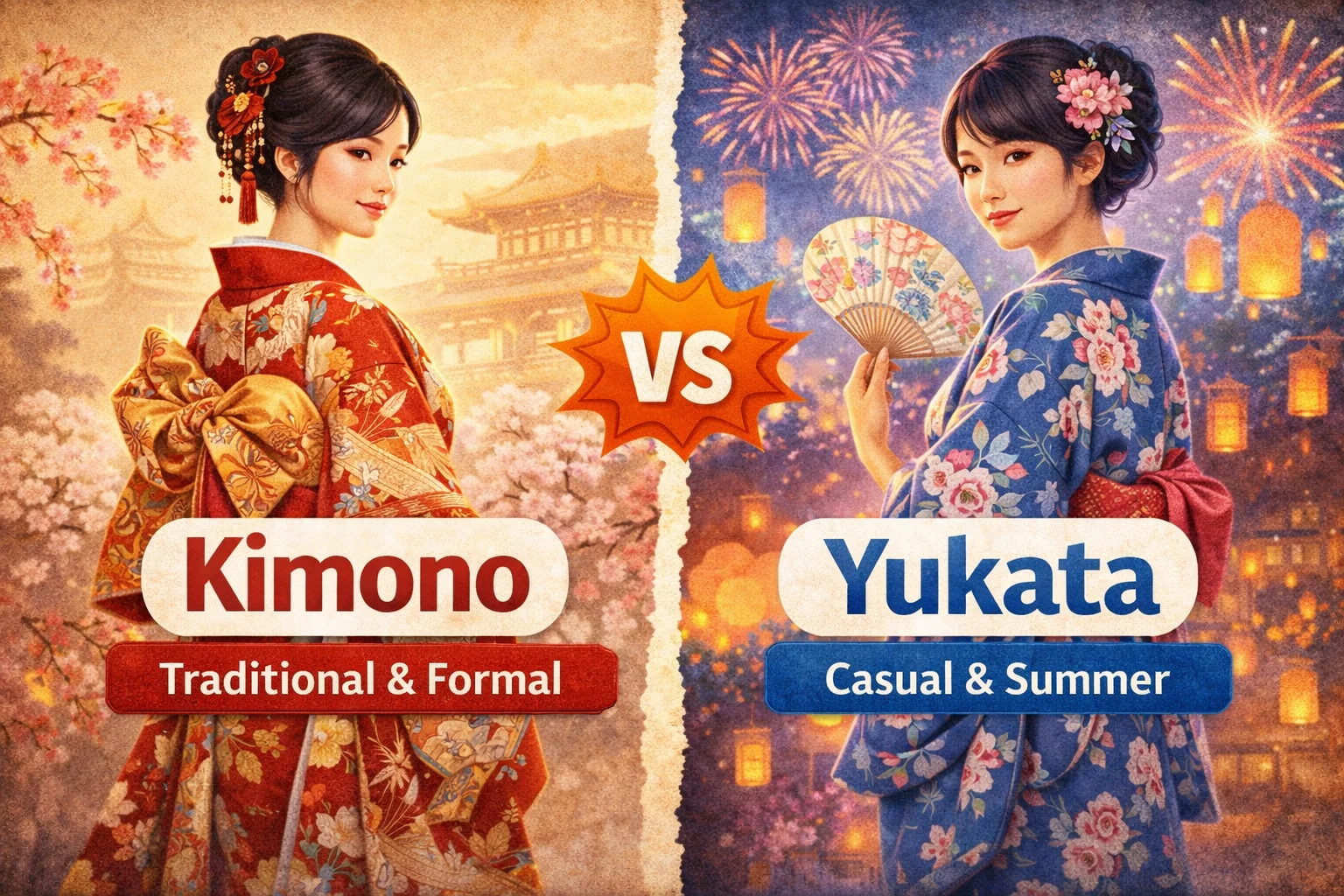
A kimono is a traditional Japanese garment worn for formal and ceremonial occasions. The word kimono literally means “thing to wear” in Japanese, but today it specifically refers to Japan’s most iconic traditional clothing.
Kimonos are typically made from silk or high-quality fabrics and feature intricate patterns, embroidery, and symbolism.
How Kimono Is Used
Kimono are worn for:
- Weddings
- Tea ceremonies
- Graduation ceremonies
- Coming-of-age celebrations
- Traditional performances
- Formal cultural events
They are often layered and require specific undergarments, accessories, and careful dressing techniques.
Where Kimono Is Used
- Primarily worn in Japan
- Used in formal cultural settings
- Seen internationally at traditional festivals, museums, and ceremonies
- Worn by both men and women, with different styles for each
Examples in Sentences
- She wore a beautiful silk kimono to the wedding.
- Kimono are often passed down through generations.
- Learning to wear a kimono properly takes practice.
Short Historical Note
The kimono dates back over 1,000 years, evolving through Japan’s imperial history. Colors, sleeve lengths, and patterns often reflect age, marital status, season, and occasion, making kimono deeply symbolic.
What Is “Yukata”?
Meaning of Yukata
A yukata is a casual, lightweight summer robe traditionally worn during festivals, hot weather, or at Japanese inns. The word yukata originally meant “bathing cloth.”
Unlike kimono, yukata are simple, breathable, and designed for comfort.
How Yukata Is Used
Yukata are commonly worn:
- At summer festivals (matsuri)
- During fireworks events
- At hot spring resorts (ryokan)
- As casual traditional wear in summer
They are usually made from cotton or linen and are much easier to put on.
Where Yukata Is Used
- Worn throughout Japan in summer
- Popular among tourists
- Often provided by hotels and inns
- Suitable for both locals and visitors
Examples in Sentences
- She wore a colorful yukata to the summer festival.
- Guests receive yukata at traditional inns.
- Yukata are perfect for hot weather.
Regional or Usage Note
Yukata are informal and never worn at formal events. Wearing one to a wedding or ceremony would be considered inappropriate in Japanese culture.
Key Differences Between Kimono and Yukata
Quick Summary (Bullet Points)
- Kimono are formal, yukata are casual
- Kimono are worn year-round, yukata mostly in summer
- Kimono use silk or layered fabrics
- Yukata use light cotton
- Kimono require multiple accessories
- Yukata are easy to wear
- Kimono are culturally ceremonial
- Yukata are festive and relaxed
Comparison Table: Kimono vs Yukata
| Feature | Kimono | Yukata |
|---|---|---|
| Formality | Formal | Casual |
| Fabric | Silk, wool, layered textiles | Cotton or linen |
| Season | All seasons | Summer only |
| Complexity | Complex, layered | Simple, single layer |
| Accessories | Many (obi, underlayers) | Few (obi only) |
| Occasions | Weddings, ceremonies | Festivals, inns |
| Cost | Expensive | Affordable |
| Ease of Wearing | Difficult | Easy |
Real-Life Conversation Examples
Dialogue 1
Tourist: “Can I wear a kimono to the festival?”
Local: “A yukata would be better — it’s more casual.”
🎯 Lesson: Festivals call for yukata, not kimono.
Dialogue 2
Friend: “Why is your outfit so heavy?”
You: “It’s a kimono — they have many layers.”
🎯 Lesson: Kimono are formal and layered.
Dialogue 3
Visitor: “The hotel gave me this robe.”
Staff: “That’s a yukata for relaxing.”
🎯 Lesson: Yukata are common at inns.
Dialogue 4
Student: “Can I wear yukata to graduation?”
Teacher: “A kimono would be more appropriate.”
🎯 Lesson: Formal events require kimono.
Dialogue 5
Sibling: “They look the same to me.”
You: “Same style, different purpose.”
🎯 Lesson: Purpose defines kimono vs yukata.
When to Use Kimono vs Yukata
Wear Kimono When:
✔️ Attending formal ceremonies
✔️ Participating in traditional events
✔️ Celebrating milestones
✔️ Respecting cultural traditions
✔️ You want an elegant, classic look
Examples:
- Weddings
- Tea ceremonies
- Cultural performances
Wear Yukata When:
✔️ Attending summer festivals
✔️ Staying at a traditional inn
✔️ Watching fireworks
✔️ Wanting comfort in heat
✔️ Casual cultural experiences
Examples:
- Matsuri festivals
- Ryokan stays
- Summer evening walks
Simple Memory Trick
👘 Kimono = Ceremony
🎆 Yukata = Summer fun
Formal → Kimono
Casual → Yukata
US vs UK Usage
The terms kimono and yukata are used the same way in US and UK English, with no spelling or meaning differences.
Fun Facts & History
1. Sleeve Length Matters
In kimono, longer sleeves often indicate unmarried women, while shorter sleeves are worn by married women.
2. Yukata Became Fashion Statements
Modern yukata now feature bold colors and modern designs, blending tradition with contemporary fashion.
Conclusion
Understanding the difference between kimono vs yukata helps you appreciate Japanese culture more deeply. While both garments share a similar shape, their purpose, formality, fabric, and occasions are completely different. Kimono represent tradition, ceremony, and elegance, while yukata symbolize relaxation, summer, and celebration. Choosing the right one shows cultural respect and enhances the experience of wearing traditional Japanese clothing.
Next time someone uses these two words, you’ll know exactly what they mean!