Introduction
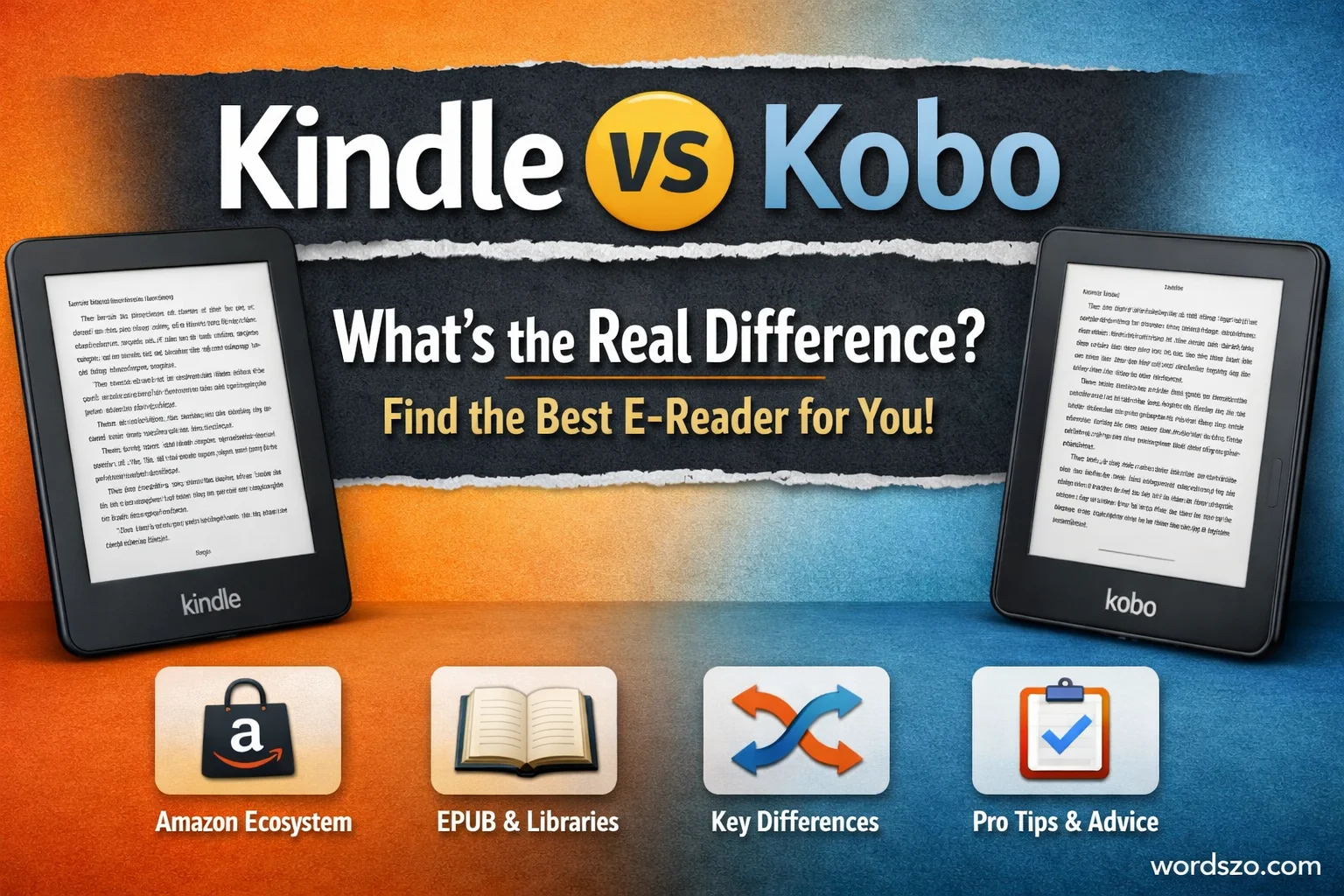
If you’ve ever shopped for an e-reader, you’ve probably paused at the same crossroads: Kindle vs Kobo. At first glance, these two names feel interchangeable. Both are sleek devices, both let you carry thousands of books, and both promise a distraction-free reading experience. No wonder people confuse them. Some even assume “Kindle” is a generic term for all e-readers, while “Kobo” sounds like just another model name.
But here’s the truth: Kindle vs Kobo is not a small or cosmetic difference. These are two distinct e-reader ecosystems with different philosophies, features, and user experiences. Although they look/sound similar, they serve completely different purposes.
In this guide, we’ll break everything down in plain, friendly English—what each one is, how they’re used, and which makes more sense for your reading habits. By the end, the Kindle vs Kobo debate will finally be clear.
Section 1: What Is Kindle?
Kindle is a line of e-readers developed and sold by Amazon. It’s designed to let users buy, download, and read digital books—primarily through the Amazon Kindle Store. When people talk about e-readers, Kindle is often the first name that comes to mind, especially in the US.
Clear Meaning
A Kindle is an electronic reading device that uses E Ink technology to mimic the look of real paper. It’s built specifically for reading eBooks, not browsing the web or using social media.
How It’s Used
In the Kindle vs Kobo comparison, Kindle is known for its deep integration with Amazon. You purchase books directly from Amazon, and they sync automatically across devices.
Common uses include:
- Reading Amazon-purchased eBooks
- Accessing Kindle Unlimited subscriptions
- Syncing highlights, notes, and bookmarks
- Reading across devices (Kindle, phone, tablet, or browser)
Where It’s Used
Kindle dominates in:
- United States
- United Kingdom
- India
- Many global Amazon markets
There are no grammar or spelling variations—it’s always capitalized as Kindle, since it’s a brand name.
Examples in Sentences
- I bought my Kindle because Amazon had a massive book sale.
- She reads every night on her Kindle before bed.
- In the Kindle vs Kobo debate, Kindle wins for Amazon users.
Short Historical Note
Amazon launched the first Kindle in 2007, and it quickly changed how people read. Over time, Kindle became so popular that many people now use “Kindle” to mean any e-reader—even when they’re actually talking about Kobo or another brand.
Section 2: What Is Kobo?
Kobo is an e-reader brand developed by Rakuten, a Japanese technology company. While it may be less famous than Kindle in the US, Kobo has a loyal global following and offers more flexibility for serious readers.
Clear Meaning
A Kobo is an e-reader designed to support multiple eBook formats, including the popular EPUB format. Unlike Kindle, Kobo does not lock users into a single store.
How It’s Used
In the Kindle vs Kobo discussion, Kobo stands out for reader freedom. You can buy books from the Kobo Store, borrow from libraries, or sideload files easily.
Common uses include:
- Reading EPUB and PDF files
- Borrowing library eBooks via OverDrive
- Customizing fonts, margins, and layout
- Reading without being tied to Amazon
Where It’s Used
Kobo is especially popular in:
- Canada
- Europe
- Australia
- Readers who prefer open ecosystems
Like Kindle, Kobo is always capitalized.
Examples in Sentences
- I switched to Kobo because it supports EPUB files.
- My Kobo syncs perfectly with my local library.
- In the Kindle vs Kobo comparison, Kobo feels more flexible.
Regional and Usage Notes
Kobo is often favored outside the US, especially in countries where Amazon’s eBook dominance is weaker. Grammar-wise, there are no spelling variations—just Kobo.
Key Differences Between Kindle and Kobo
When comparing Kindle vs Kobo, the differences go far beyond branding.
Bullet Point Differences
- Kindle is tightly integrated with Amazon
- Kobo supports more file formats
- Kindle uses proprietary formats (AZW, KFX)
- Kobo supports EPUB natively
- Kindle limits library borrowing outside select regions
- Kobo offers built-in OverDrive in many countries
Kindle vs Kobo Comparison Table (Mandatory)
| Feature | Kindle | Kobo |
|---|---|---|
| Parent Company | Amazon | Rakuten |
| Supported Formats | AZW, KFX, MOBI | EPUB, PDF, MOBI |
| Library Borrowing | Limited (region-based) | Built-in OverDrive |
| Store Flexibility | Amazon only | Multiple stores |
| Customization | Basic | Advanced |
| Best For | Amazon users | Open-format readers |
Real-Life Conversation Examples
Dialogue 1
A: I just bought a Kindle, so now I can read EPUB books, right?
B: Not exactly—Kindle doesn’t support EPUB like Kobo does.
🎯 Lesson: Kindle vs Kobo matters when it comes to file formats.
Dialogue 2
A: Is Kobo just another Kindle model?
B: Nope. Different company, different ecosystem.
🎯 Lesson: Kindle and Kobo are separate brands, not variations.
Dialogue 3
A: Why do you prefer Kobo over Kindle?
B: I borrow library books all the time—Kobo makes that easy.
🎯 Lesson: Kobo shines for library readers.
Dialogue 4
A: Everyone calls e-readers Kindles.
B: True, but Kobo users would disagree!
🎯 Lesson: Kindle is often used generically, but it’s a brand.
When to Use Kindle vs Kobo
Practical Usage Rules
Choose Kindle if:
- You already buy books from Amazon
- You want seamless syncing across devices
- You use Kindle Unlimited
Choose Kobo if:
- You want EPUB support
- You borrow from libraries
- You prefer customization
Simple Memory Tricks
- Kindle = Amazon-locked
- Kobo = Open books
US vs UK Usage
In the US, Kindle dominates the Kindle vs Kobo conversation. In the UK and Europe, Kobo has a stronger presence, especially among library users.
Fun Facts or History
- The name “Kobo” is an anagram of “book.”
- Kindle once outsold paperback books on Amazon—a major moment in publishing history.
Conclusion
The Kindle vs Kobo debate isn’t about which device is “better” overall—it’s about which one fits your reading style. Kindle offers a polished, Amazon-centric experience that works beautifully for loyal Amazon users. Kobo, on the other hand, gives readers freedom, flexibility, and wider format support.
Once you understand the ecosystems, the difference becomes obvious. Kindle thrives in convenience, while Kobo excels in openness. Both are excellent tools for book lovers—just built with different priorities in mind.
Next time someone uses these two words, you’ll know exactly what they mean!