Introduction
If you’ve ever followed a traditional recipe, explored ancestral cooking, or researched natural fats, you’ve probably come across the words lard and tallow. At first glance, they seem almost identical. Both are animal fats, both are solid at room temperature, and both have been used for centuries in cooking, skincare, and even soap making. This similarity often leads people to assume they’re interchangeable.
But they’re not.
The confusion usually happens because modern cooking rarely explains where these fats come from or why one works better than the other in certain situations.
Although they look/sound similar, they serve completely different purposes.
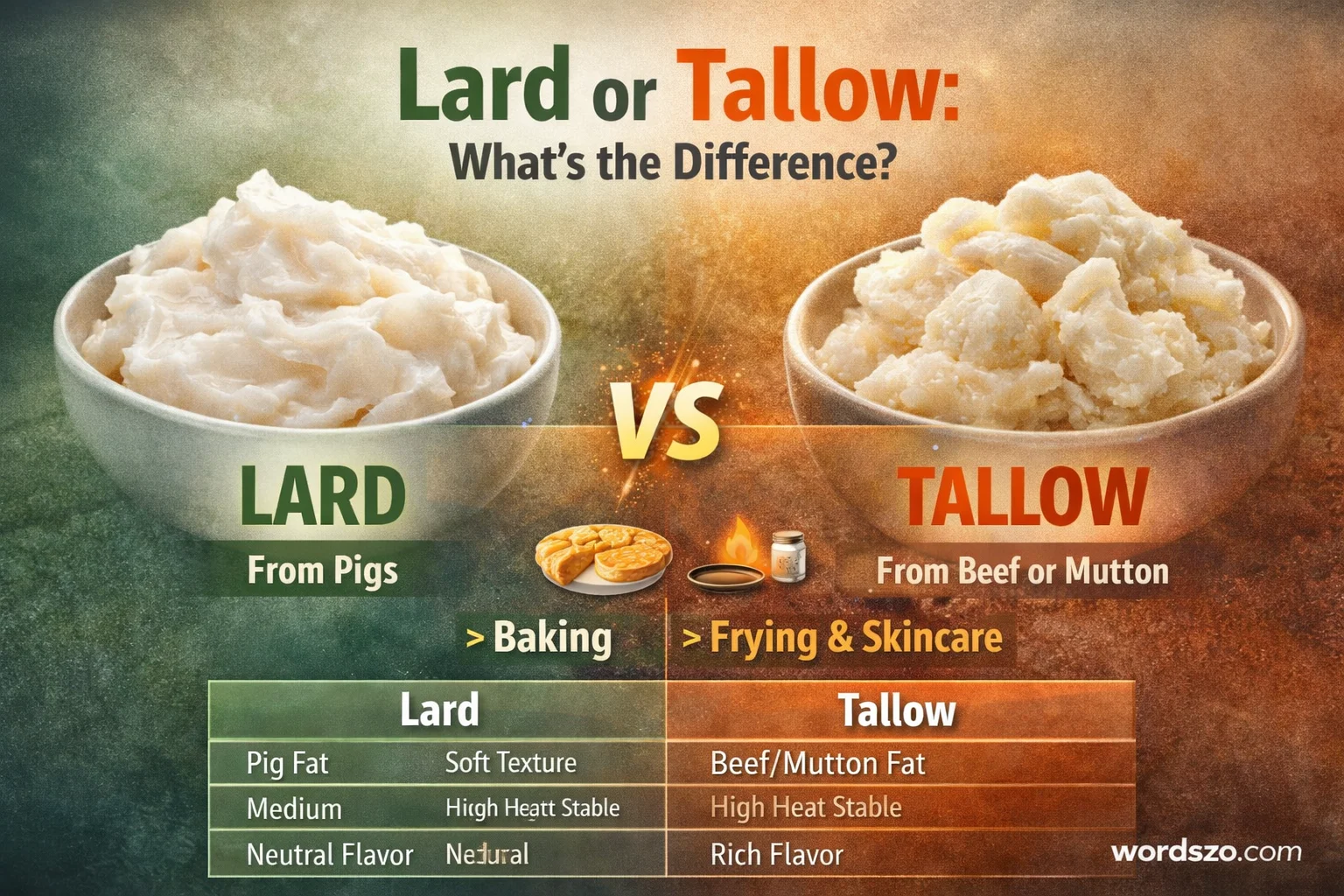
In this guide, you’ll learn the true difference between lard or tallow, how each fat is made, where each one shines, and which is better for cooking, baking, skincare, and health.
What Is “Lard”?
Meaning
Lard is a type of rendered fat made from pork, specifically from the fat of a pig. It is most commonly taken from the belly or back fat and slowly heated to remove impurities, leaving behind a smooth, creamy fat.
How It’s Used
- Used as a cooking fat
- Common in baking, frying, and sautéing
- Valued for its mild flavor and soft texture
Where It’s Used
- Widely used in American, Mexican, European, and Asian cuisines
- Traditional ingredient in pie crusts, biscuits, tortillas, and pastries
- Popular in older, pre-industrial cooking traditions
Examples in Sentences
- Traditional pie crusts are flakier when made with lard.
- She fried the potatoes in lard for extra richness.
- Authentic tortillas often use lard.
Short Historical or Usage Note
Before vegetable oils became common, lard was one of the most widely used household fats. It fell out of favor in the late 20th century due to health misconceptions but has made a strong comeback in traditional and whole-food cooking.
What Is “Tallow”?
Meaning
Tallow is rendered fat made from beef or mutton, most commonly from suet (the hard fat around the kidneys). Once rendered, it becomes a firm, waxy fat with a higher melting point than lard.
How It’s Used
- Used for high-heat cooking
- Common in deep frying
- Widely used in soap making, candles, and skincare
Where It’s Used
- Traditional in British, European, and Middle Eastern cooking
- Historically used for frying foods like potatoes
- Common in non-food uses due to its stability
Examples in Sentences
- French fries cooked in tallow have a rich, savory flavor.
- Beef tallow is ideal for high-temperature frying.
- Many natural soaps are made with tallow.
Regional or Grammar Notes
The word tallow is universally used in both American and British English. It has remained common due to its importance beyond cooking, especially in skincare and manufacturing.
Key Differences Between Lard and Tallow
Quick Bullet Points
- Lard comes from pork
- Tallow comes from beef or mutton
- Lard is softer and milder
- Tallow is firmer and more heat-stable
- Lard excels in baking
- Tallow excels in frying and non-food uses
Comparison Table
| Feature | Lard | Tallow |
|---|---|---|
| Animal Source | Pork | Beef or mutton |
| Texture | Soft and creamy | Firm and waxy |
| Flavor | Mild, slightly porky | Rich, beefy |
| Smoke Point | Medium | High |
| Best For | Baking, sautéing | Frying, soap, skincare |
| Common Uses | Pie crusts, tortillas | Deep frying, candles |
| Shelf Stability | Moderate | Very high |
Real-Life Conversation Examples
Dialogue 1
A: “Can I use tallow instead of lard in this pie?”
B: “You can, but it’ll be firmer and less flaky.”
🎯 Lesson: Lard is better for baking.
Dialogue 2
A: “Why do these fries taste so rich?”
B: “They’re cooked in beef tallow.”
🎯 Lesson: Tallow adds deep savory flavor.
Dialogue 3
A: “Is lard good for high-heat frying?”
B: “Tallow is better—it’s more heat stable.”️
🎯 Lesson: Choose tallow for high temperatures.
Dialogue 4
A: “Why does this soap use tallow?”
B: “It makes the soap harder and longer-lasting.”
🎯 Lesson: Tallow is common beyond cooking.
Dialogue 5
A: “Are lard and tallow the same thing?”
B: “Both are animal fats, but from different animals.”
🎯 Lesson: Source matters.
When to Use Lard or Tallow
Use “Lard” When:
✔️ Baking pastries or pie crusts
✔️ Making biscuits or tortillas
✔️ You want a soft texture and neutral flavor
Examples:
- Lard makes pastries extra flaky.
- Traditional cooking often relies on lard.
Use “Tallow” When:
✔️ Deep frying or high-heat cooking
✔️ Making soap, candles, or skincare products
✔️ You want maximum heat stability
Examples:
- Tallow is ideal for frying potatoes.
- Natural skincare brands use beef tallow.
Simple Memory Trick 🧠
- Lard = Pig = Pastries
- Tallow = Cow = Cooking heat
US vs UK Usage
- Both lard and tallow are used the same way in US and UK English
- Tallow appears more often in British traditional cooking
- Lard is more common in American and Mexican recipes
Fun Facts or History
1. McDonald’s Once Used Tallow
McDonald’s famously cooked its fries in beef tallow until the 1990s, which many say gave them their legendary flavor.
2. Lard Was a Kitchen Staple
Before processed oils, lard was as common in kitchens as butter is today.
Conclusion
The choice between lard or tallow depends on what you’re making and how you plan to use it. Lard, made from pork fat, is softer and ideal for baking and everyday cooking. Tallow, rendered from beef or mutton fat, is firmer, more heat-stable, and perfect for frying and non-food uses. While both are traditional, natural fats, they are not interchangeable in every situation. Understanding their differences helps you cook better, bake smarter, and choose the right fat for the job.
Next time someone uses these two words, you’ll know exactly what they mean!