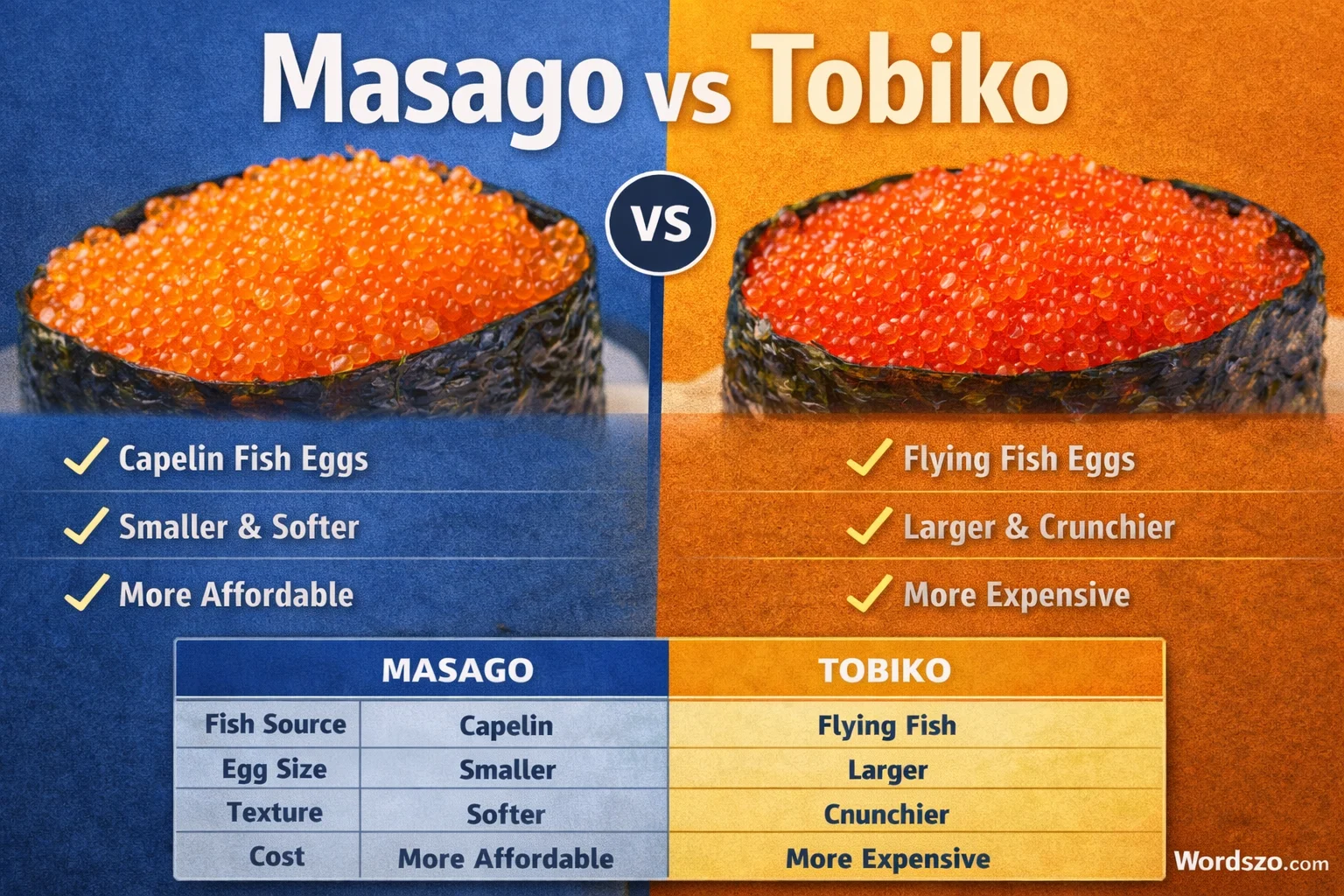
If you love sushi, you’ve probably seen tiny, colorful fish eggs sprinkled over rolls and nigiri. But when it comes to masago vs tobiko, many people assume they’re the same thing. After all, they look similar, taste slightly salty, and often appear in the same dishes.
Although they look/sound similar, they serve completely different purposes.
Understanding the difference between masago vs tobiko helps you order smarter, appreciate texture differences, and even choose the right ingredient for homemade sushi. One is smaller and more affordable. The other is larger, crunchier, and often considered premium.
In this complete guide, we’ll break down masago vs tobiko in simple, clear language — covering taste, texture, cost, nutrition, and real-life usage — so you know exactly what you’re eating next time you order sushi.
What Is Masago?
Masago refers to the edible eggs (roe) of the capelin fish.
🐟 Clear Meaning
Masago comes from the roe of the capelin, a small forage fish found in cold North Atlantic and Arctic waters.
The fish species is known scientifically as Mallotus villosus.
When discussing masago vs tobiko, masago is typically the smaller, softer option.
🍣 How It’s Used
Masago is commonly used in:
- California rolls
- Spicy sushi rolls
- Sushi toppings
- Sushi sauces
It’s often dyed bright orange or red to enhance visual appeal.
Example sentences:
- “The roll is topped with masago.”
- “Masago adds a salty flavor to sushi.”
👅 Taste & Texture
Masago has:
- A mild, slightly salty taste
- A softer texture
- Less crunch
Because it’s smaller, masago feels more delicate in your mouth compared to tobiko.
💰 Cost & Availability
Masago is generally:
- Less expensive
- Widely available
- Used as a substitute for tobiko in many restaurants
In the masago vs tobiko debate, masago wins for affordability.
What Is Tobiko?
Tobiko refers to the roe of flying fish.
🐟 Clear Meaning
Tobiko comes from flying fish species, which are known for their ability to glide above the water’s surface.
The roe used in sushi typically comes from fish in the family Exocoetidae.
When comparing masago vs tobiko, tobiko is larger and crunchier.
🍣 How It’s Used
Tobiko appears in:
- Premium sushi rolls
- Nigiri toppings
- Decorative sushi garnishes
- Specialty fusion dishes
It’s often flavored or dyed in different colors:
- Orange (natural)
- Black (with squid ink)
- Green (with wasabi)
- Red (with chili)
Example sentences:
- “The chef topped the roll with tobiko.”
- “Tobiko gives sushi a satisfying crunch.”
👅 Taste & Texture
Tobiko has:
- A slightly smoky, salty flavor
- A crisp, crunchy pop
- Larger eggs than masago
In the masago vs tobiko comparison, tobiko clearly wins for texture.
💰 Cost & Prestige
Tobiko is generally:
- More expensive
- Considered higher quality
- Used in upscale sushi restaurants
When restaurants want a premium look, they choose tobiko.
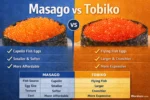
Key Differences Between Masago vs Tobiko
Understanding masago vs tobiko becomes easy when you compare them side by side.
🔹 Quick Differences
- Fish source: Capelin (masago) vs flying fish (tobiko)
- Size: Masago is smaller
- Texture: Tobiko is crunchier
- Cost: Masago is cheaper
- Presentation: Tobiko looks more premium
📊 Masago vs Tobiko Comparison Table
| Feature | Masago | Tobiko |
|---|---|---|
| Fish Source | Capelin | Flying Fish |
| Egg Size | Smaller | Larger |
| Texture | Soft | Crunchy |
| Flavor | Mild & Salty | Smoky & Salty |
| Cost | More Affordable | More Expensive |
| Common Use | Everyday sushi rolls | Premium sushi rolls |
This table makes the masago vs tobiko difference clear and practical.
Real-Life Conversation Examples
🗣 Dialogue 1
Emma: “Is that tobiko on my roll?”
Chef: “Actually, that’s masago.”
🎯 Lesson: Masago is often mistaken for tobiko.
🗣 Dialogue 2
Jake: “Why does this sushi crunch more?”
Friend: “It’s topped with tobiko.”
🎯 Lesson: Tobiko has a firmer texture.
🗣 Dialogue 3
Sophia: “Why is this sushi cheaper?”
Waiter: “It uses masago instead of tobiko.”
🎯 Lesson: Masago is more affordable.
🗣 Dialogue 4
Daniel: “They look the same to me.”
Chef: “Taste the difference in texture.”
🎯 Lesson: Texture is the biggest clue in masago vs tobiko.
When to Use Masago vs Tobiko
Choosing between masago vs tobiko depends on your goal.
✅ Use Masago If:
- You want a budget-friendly option
- You prefer softer texture
- You’re making homemade sushi
- You need large quantities
✅ Use Tobiko If:
- You want a crunchy texture
- You’re serving premium sushi
- Presentation matters
- You prefer a stronger flavor
🧠 Memory Trick
Masago = Mini eggs
Tobiko = Textured crunch
Think: Tobiko “pops” more.
Nutritional Notes
Both masago and tobiko are:
- High in protein
- Rich in omega-3 fatty acids
- Contain vitamin B12
- Relatively low in calories
However, both can be high in sodium due to seasoning.
Fun Facts
✨ Tobiko is often flavored naturally, while masago is more commonly dyed to mimic tobiko’s appearance.
✨ Flying fish can glide over water for distances of up to 200 meters.
Conclusion
The difference between masago vs tobiko comes down to size, texture, and cost. Masago is smaller, softer, and more affordable — making it common in everyday sushi rolls. Tobiko is larger, crunchier, and often considered the premium choice.
Both add color and flavor to sushi, but they deliver slightly different experiences.
Next time someone mentions these two sushi toppings, you’ll know exactly what they mean!