Introduction
If you’ve ever worked on home renovation, interior design, architecture, or construction writing, you may have stumbled upon the terms moldings and mouldings—and wondered which one is actually correct. They look nearly identical, sound exactly the same, and refer to the same physical object, which makes the confusion even more common. Add regional spelling differences to the mix, and even professionals pause before choosing the right word.
Although they look/sound similar, they serve completely different purposes.
The truth is, moldings vs mouldings is not about meaning—it’s about where and how English is used. This guide explains the difference clearly, with real examples, usage rules, and simple memory tricks so you can write with confidence every time.
What Is “Moldings”?
Meaning
Moldings refer to decorative strips or profiles used in architecture and interior design. They are commonly installed around ceilings, walls, doors, windows, and floors to enhance visual appeal.
How It’s Used
The term moldings is the American English spelling. It is used in construction documents, product catalogs, DIY guides, and professional design writing in the United States.
Where It’s Used
- United States
- American construction standards
- US-based product listings and manuals
Examples in Sentences
- “The room feels elegant with crown moldings.”
- “They installed new window moldings last week.”
- “Decorative moldings add character to modern homes.”
Historical or Usage Note
American English simplified many British spellings in the 18th and 19th centuries. As a result, moldings dropped the extra “u” found in British English. In the moldings vs mouldings debate, moldings is the US standard.
What Is “Mouldings”?
Meaning
Mouldings mean the exact same thing as moldings: decorative architectural features used for aesthetic and structural detailing.
How It’s Used
Mouldings is the British English spelling. It appears in UK architecture, heritage restoration, interior design publications, and Commonwealth English writing.
Where It’s Used
- United Kingdom
- Australia
- Canada
- New Zealand
- Other Commonwealth countries
Examples in Sentences
- “Victorian homes often feature ornate mouldings.”
- “The ceiling mouldings were restored carefully.”
- “Plaster mouldings add historical charm.”
Regional and Grammatical Notes
British English retains the “ou” spelling from older French and Latin roots. In moldings vs mouldings, mouldings follows traditional British spelling rules.
Key Differences Between Moldings and Mouldings
Quick Bullet Points
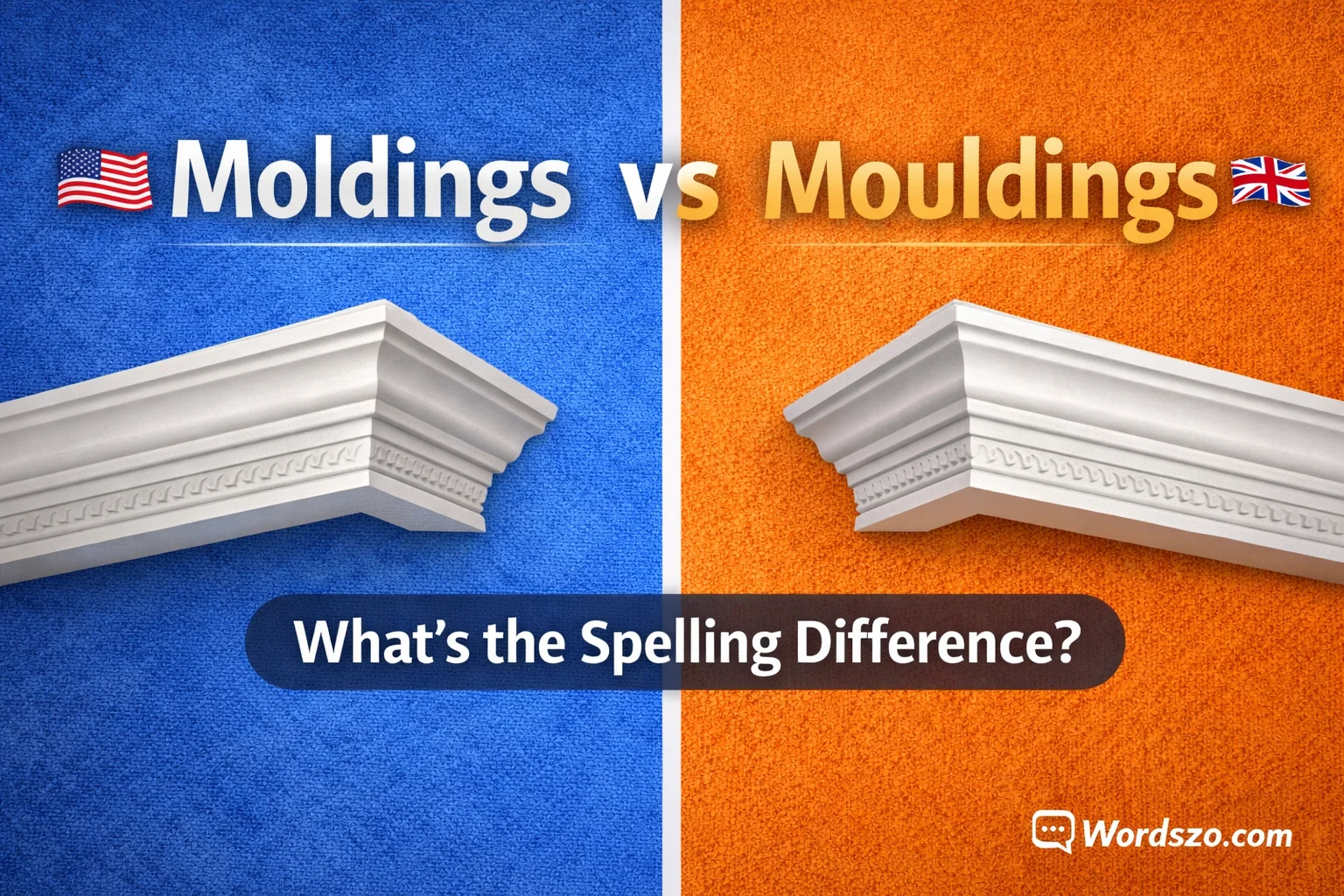
- Moldings = American English spelling
- Mouldings = British English spelling
- Meaning is identical
- Difference is purely regional
- Pronunciation is the same
Comparison Table: Moldings vs Mouldings
| Feature | Moldings | Mouldings |
|---|---|---|
| Meaning | Decorative architectural trim | Decorative architectural trim |
| English Variant | American English | British English |
| Used In | USA | UK & Commonwealth |
| Pronunciation | Same | Same |
| Spelling Style | Simplified | Traditional |
| Correctness | ✔️ Correct | ✔️ Correct |
This table makes the moldings vs mouldings distinction crystal clear.
Real-Life Conversation Examples
Dialogue 1
A: “Why does this catalog spell it ‘mouldings’?”
B: “Because it’s from the UK.”
🎯 Lesson: Spelling depends on region.
Dialogue 2
A: “Is ‘moldings’ wrong?”
B: “Not in American English.”
🎯 Lesson: Both spellings are correct.
Dialogue 3
A: “The contractor wrote mouldings in the invoice.”
B: “He’s probably trained in British standards.”
🎯 Lesson: Professional background influences spelling.
Dialogue 4
A: “Should I change mouldings to moldings?”
B: “Only if your audience is American.”
🎯 Lesson: Match your audience.
Dialogue 5
A: “They sound the same—why two spellings?”
B: “That’s English for you.”
🎯 Lesson: English spelling evolves differently by region.
When to Use Moldings vs Mouldings
Use “Moldings” When:
- Writing for a US audience
- Creating American product listings
- Publishing US-based construction or DIY content
- Following American English style guides
Memory Trick:
Moldings = Made in the USA
Use “Mouldings” When:
- Writing for the UK or Commonwealth
- Referencing historic buildings
- Following British English conventions
- Writing academic or heritage content
Memory Trick:
Mouldings = Old World English
US vs UK Writing Tip
Search engines recognize both spellings, but for SEO:
- Use moldings for US traffic
- Use mouldings for UK traffic
- Do not mix spellings in the same article
Fun Facts and History
- The word comes from the French “moule”, meaning shape or form.
- Ornamental mouldings date back to ancient Greek and Roman architecture.
- Modern polyurethane moldings are lighter and cheaper than traditional plaster.
Conclusion
The difference between moldings vs mouldings is simple once you know the rule. They mean the same thing, look the same in real life, and sound exactly alike. The only difference is where the English is used. American English prefers moldings, while British English sticks with mouldings. Choosing the right spelling improves clarity, professionalism, and SEO performance.