Introduction
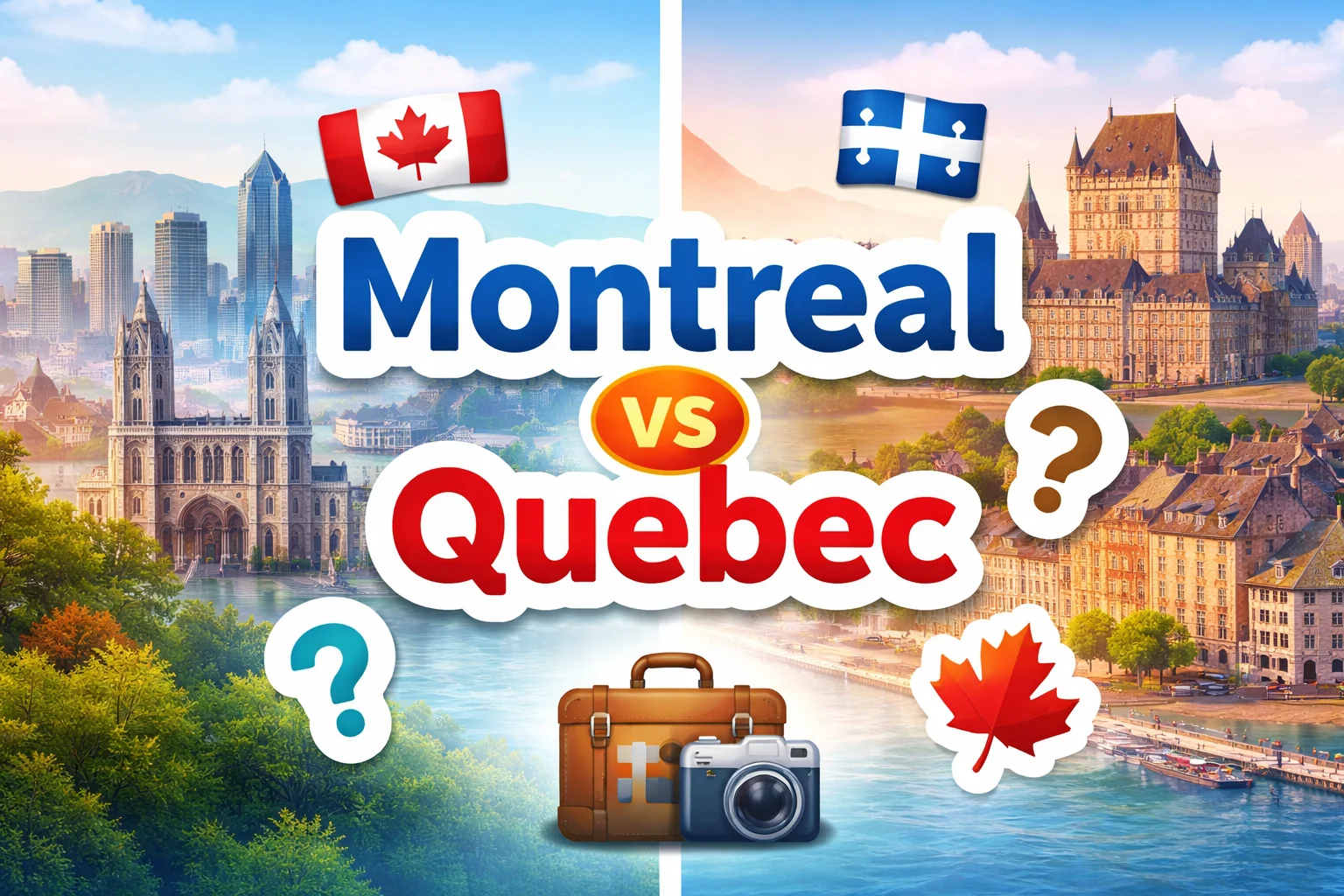
Have you ever heard someone say, “I’m going to Montreal, Quebec” and wondered why both names are used together? 🤔 You’re not alone. Many people around the world confuse Montreal and Quebec because they often appear side by side in conversations, addresses, and travel guides.
Some assume they are the same place. Others think one is just another spelling of the other. The confusion grows because both names are deeply connected, share the same language roots, and belong to the same region in Canada.
Although they look/sound similar, they serve completely different purposes.
Understanding Montreal vs Quebec is important for travelers, students, writers, and anyone interested in Canadian geography and culture. In this guide, we’ll break everything down clearly, simply, and practically—so by the end, you’ll never mix them up again.
What Is Montreal?
Montreal is a city, not a country, province, or language.
Meaning & Identity
Montreal is the largest city in the province of Quebec and the second-largest city in Canada after Toronto. It is a major urban center known for its culture, food, education, and business opportunities.
When people talk about Montreal vs Quebec, Montreal always refers to a specific city.
How Montreal Is Used
Montreal is used when:
- Talking about travel destinations
- Referring to jobs, universities, or events
- Mentioning sports teams like the Montreal Canadiens
- Giving addresses or locations
Where Montreal Is Used
- Country: Canada
- Province: Quebec
- Language environment: Mostly French, but bilingual (French & English)
Examples in Sentences
- “I’m moving to Montreal for work.”
- “Montreal has an amazing food scene.”
- “She studies engineering at a university in Montreal.”
- “The winters in Montreal can be very cold.”
Short Historical Note
Montreal was founded in 1642 by French settlers and quickly became a cultural and economic hub. Its French roots strongly influence its architecture, language, and lifestyle, which is why it often gets confused with Quebec in the Montreal vs Quebec debate.
What Is Quebec?
Quebec is not a city only—this is where confusion usually starts.
Meaning & Identity
Quebec has three meanings, depending on context:
- A province in Canada
- Quebec City, the capital city of the province
- A cultural and linguistic identity tied to French heritage
In the Montreal vs Quebec comparison, Quebec most often refers to the province.
How Quebec Is Used
Quebec is used when:
- Referring to a province
- Talking about laws, politics, or education systems
- Discussing French culture in Canada
- Mentioning Quebec City
Where Quebec Is Used
- Country: Canada
- Role: One of Canada’s 10 provinces
- Official language: French
Examples in Sentences
- “Quebec is the largest province in Canada by area.”
- “French is the official language of Quebec.”
- “He lives in Quebec, but not in Montreal.”
- “Quebec City is the capital of the province.”
Regional & Linguistic Notes
Unlike other Canadian provinces, Quebec strongly protects the French language through laws and education policies. This cultural uniqueness is why Montreal vs Quebec often becomes confusing for outsiders.
Key Differences Between Montreal and Quebec
Bullet Point Summary
- Montreal is a city
- Quebec is a province
- Montreal is inside Quebec
- Quebec includes many cities, including Montreal
- Montreal is more bilingual
- Quebec is officially French-speaking
- Montreal is known for urban life
- Quebec represents regional governance and culture
Comparison Table (Mandatory)
| Feature | Montreal | Quebec |
|---|---|---|
| Type | City | Province |
| Located In | Quebec | Canada |
| Capital Status | ❌ Not the capital | ✔️ Quebec City |
| Language | French & English | Mostly French |
| Population Scope | City population | Entire provincial population |
| Usage | Travel, lifestyle, jobs | Government, region, culture |
| Example | “I live in Montreal.” | “I live in Quebec.” |
Real-Life Conversation Examples
Dialogue 1
A: “Are you from Montreal or Quebec?”
B: “Montreal is in Quebec. I’m from Montreal.”
🎯 Lesson: Montreal is a city within Quebec.
Dialogue 2
A: “Is Quebec just another name for Montreal?”
B: “No, Quebec is the province. Montreal is just one city.”
🎯 Lesson: Quebec covers much more than Montreal.
Dialogue 3
A: “Do people in Quebec all live in Montreal?”
B: “Not at all. Quebec has many cities and towns.”
🎯 Lesson: Montreal is only one part of Quebec.
Dialogue 4
A: “Why do people say Montreal, Quebec?”
B: “It’s like saying Paris, France—city and region.”
🎯 Lesson: Both names give full location clarity.
Dialogue 5
A: “Is Quebec City the same as Montreal?”
B: “No, Quebec City is the capital. Montreal is the largest city.”
🎯 Lesson: Size and capital status are different things.
When to Use Montreal vs Quebec
Use Montreal When:
- Talking about a specific city
- Mentioning travel plans
- Referring to universities or companies
- Discussing city lifestyle or events
Examples:
- “I’m visiting Montreal next summer.”
- “She works in downtown Montreal.”
Use Quebec When:
- Talking about the province
- Referring to laws, taxes, or politics
- Discussing French culture in Canada
- Comparing provinces
Examples:
- “Quebec has unique language laws.”
- “Healthcare in Quebec works differently.”
Simple Memory Trick 🧠
- Montreal = City
- Quebec = Province
- If it sounds big → Quebec
- If it sounds specific → Montreal
US vs UK Writing Note
There is no spelling difference between US and UK English for Montreal vs Quebec. The usage rules remain the same globally.
Fun Facts & History
1️⃣ Montreal Isn’t the Capital
Despite being the largest city, Montreal is not the capital of Quebec. That title belongs to Quebec City, which surprises many people.
2️⃣ Quebec Was Once a Country
Before becoming part of Canada, Quebec was a French colony, which explains its strong cultural identity today.
Conclusion
The confusion between Montreal vs Quebec is completely understandable, but the difference is actually simple. Montreal is a city, while Quebec is a province that includes Montreal and many other cities. Montreal represents urban life, diversity, and culture, while Quebec represents regional identity, governance, and French heritage. Once you remember that Montreal exists inside Quebec, everything becomes clear.
Next time someone uses these two words, you’ll know exactly what they mean! 😊