Introduction
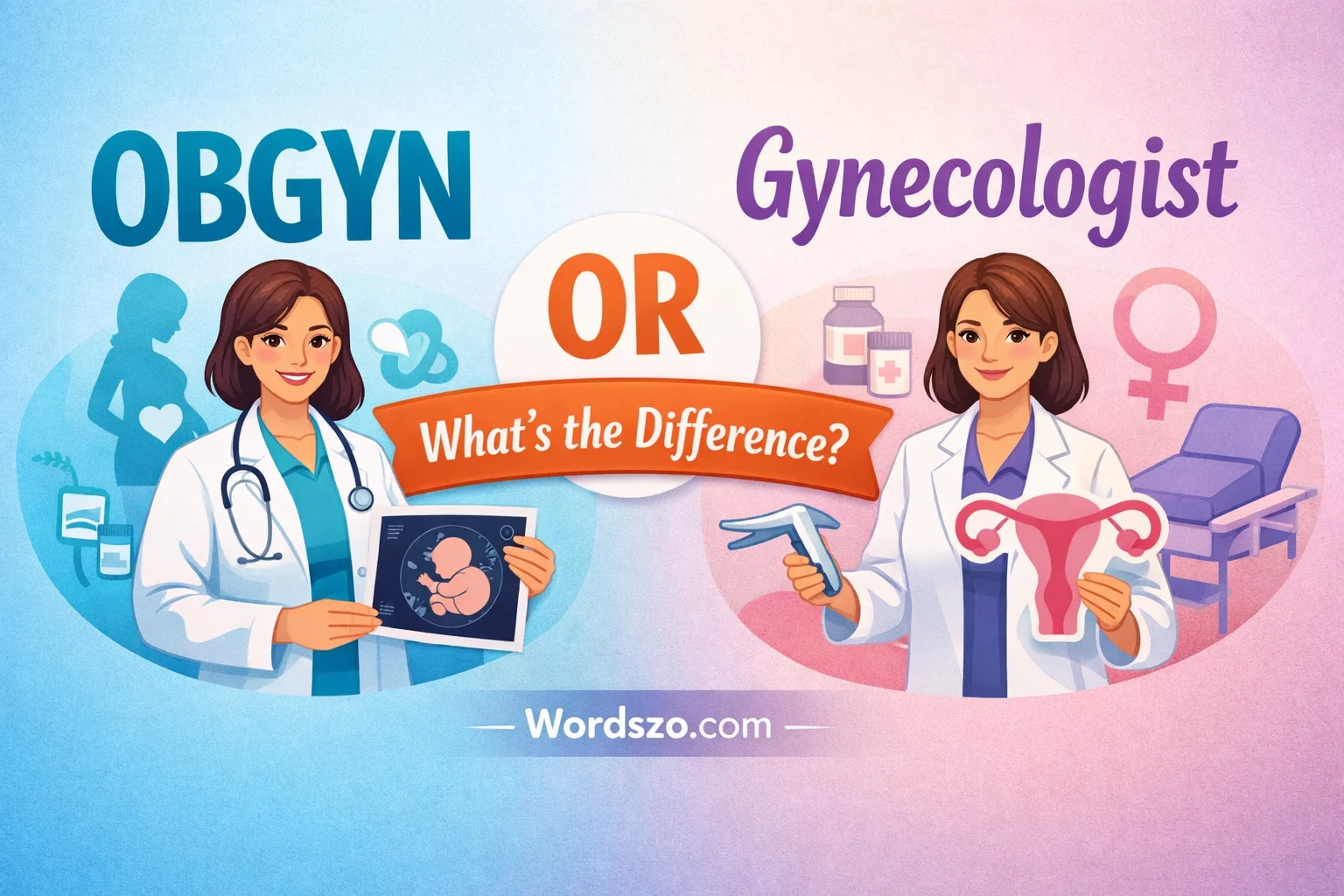
Have you ever wondered whether you should book an appointment with an OBGYN or gynecologist? Many people use these two terms interchangeably, assuming they mean the same thing. After all, both deal with women’s health, right?
Here’s where the confusion begins. While both specialists focus on the female reproductive system, their training and scope of practice can differ. Some doctors handle pregnancy and childbirth, while others focus only on reproductive health outside of pregnancy.
Although they look/sound similar, they serve completely different purposes.
Understanding the difference between an OBGYN or gynecologist helps you choose the right doctor for your needs—whether it’s a routine Pap smear, fertility support, or prenatal care. Let’s break it down clearly and simply.
What Is an OBGYN?
An OBGYN is a medical doctor who specializes in both obstetrics and gynecology.
The term OBGYN (sometimes written as OB-GYN or OB/GYN) combines two fields:
- Obstetrics (OB): Care related to pregnancy, childbirth, and postpartum health
- Gynecology (GYN): Care related to the female reproductive system
So when comparing OBGYN or gynecologist, remember that an OBGYN covers both pregnancy-related and general reproductive health care.
How It’s Used
The term OBGYN is commonly used in the United States and Canada. It refers to a doctor trained and certified in both specialties. In everyday conversation, people often say:
- “I have an appointment with my OBGYN.”
- “My OBGYN delivered my baby.”
- “My OBGYN also does annual exams.”
In professional settings, it may appear as:
- OB-GYN
- OB/GYN
- Obstetrician-gynecologist
All versions mean the same thing.
Where It’s Used
In the US, most doctors who practice women’s health are dual-trained as OBGYNs. It’s considered standard to complete a residency program in both obstetrics and gynecology.
In the UK and some other countries, doctors may specialize separately as obstetricians or gynecologists, but many are also trained in both.
Example Sentences
- “My OBGYN monitored my pregnancy from the first trimester to delivery.”
- “She recommended seeing an OBGYN for fertility advice.”
- “The OBGYN performed my C-section.”
Short Historical Note
Obstetrics and gynecology became formally combined as a medical specialty in the early 20th century. Before that, midwives handled most childbirths, and gynecological surgery was separate. Today, the dual specialty makes care more integrated and continuous.
When deciding between OBGYN or gynecologist, choose an OBGYN if you need pregnancy care along with general reproductive health support.
What Is a Gynecologist?
A gynecologist is a doctor who specializes in the female reproductive system, but does not necessarily provide pregnancy or childbirth care.
Gynecology focuses on:
- Menstrual health
- Hormonal issues
- Pap smears and pelvic exams
- Birth control
- Menopause
- Ovarian cysts
- Fibroids
- Reproductive disorders
So when comparing OBGYN or gynecologist, the key distinction is that a gynecologist may not practice obstetrics.
How It’s Used
The word gynecologist is widely used around the world. It comes from the Greek words:
- gynē (woman)
- logos (study)
You may hear people say:
- “I need to see a gynecologist.”
- “My gynecologist prescribed birth control.”
- “The gynecologist diagnosed PCOS.”
Spelling & Usage Notes
The spelling differs slightly between American and British English:
- Gynecologist (American English)
- Gynaecologist (British English)
Both spellings are correct depending on location. When writing professionally, match the spelling to your audience.
In many countries, doctors may specialize strictly as gynecologists without delivering babies.
Example Sentences
- “My gynecologist performed my annual Pap smear.”
- “The gynecologist helped manage my menopause symptoms.”
- “She was referred to a gynecologist for fibroid treatment.”
Regional Notes
In the US, most gynecologists are also trained as OBGYNs, even if they don’t actively deliver babies. In contrast, in parts of Europe and Asia, specialists may practice only gynecology without obstetrics.
When choosing between OBGYN or gynecologist, a gynecologist is ideal if you are not pregnant and need care related to reproductive health only.
Key Differences Between OBGYN and Gynecologist
Let’s simplify the comparison.
Main Differences (Bullet Points)
- OBGYN treats pregnancy and reproductive health.
- Gynecologist treats reproductive health only.
- OBGYN training includes childbirth and prenatal care.
- A gynecologist may not deliver babies.
- In the US, many doctors are dual-certified as OBGYNs.
- In other countries, the specialties may be separate.
When deciding between OBGYN or gynecologist, your needs determine the right choice.
Comparison Table: OBGYN vs Gynecologist
| Feature | OBGYN | Gynecologist |
|---|---|---|
| Full Name | Obstetrician-Gynecologist | Gynecologist |
| Pregnancy Care | Yes | Usually No |
| Childbirth | Yes | No |
| Pap Smears | Yes | Yes |
| Birth Control | Yes | Yes |
| Menopause Care | Yes | Yes |
| US Usage | Very common | Also common |
| UK Spelling | Same | Gynaecologist |
| Training | Dual specialty | Single specialty (sometimes dual in US) |
This table makes it easier to understand the difference between OBGYN or gynecologist at a glance.
Real-Life Conversation Examples
Dialogue 1
Sara: I need to book an appointment with my gynecologist.
Lina: Are you pregnant?
Sara: Yes, 12 weeks.
Lina: Then you probably need your OBGYN!
🎯 Lesson: If you’re pregnant, an OBGYN is usually the right choice.
Dialogue 2
Mark: My wife’s OBGYN prescribed birth control.
Alex: I thought OBGYNs only delivered babies?
Mark: Nope, they handle regular reproductive health too.
🎯 Lesson: An OBGYN also provides routine gynecological care.
Dialogue 3
Emma: I’m seeing a gynecologist for hormone issues.
Mia: Does she deliver babies too?
Emma: No, she focuses only on gynecology.
🎯 Lesson: A gynecologist may specialize only in reproductive health.
Dialogue 4
Nora: Is there a difference between an OBGYN or gynecologist?
Doctor: Yes. An OBGYN handles pregnancy and general care. A gynecologist may not do obstetrics.
Nora: That makes sense now!
🎯 Lesson: OBGYN includes obstetrics; gynecologist may not.
When to Use OBGYN vs Gynecologist
Choosing between OBGYN or gynecologist depends on your medical needs.
Use an OBGYN If:
- You are pregnant
- You plan to conceive
- You need prenatal care
- You require delivery services
- You want one doctor for everything
Use a Gynecologist If:
- You need routine exams
- You have menstrual issues
- You need birth control
- You are managing menopause
- You are not pregnant
Simple Memory Trick
Think of it this way:
- OB = Baby
- GYN = General women’s health
If a baby is involved, choose an OBGYN.
US vs UK Writing Tips
- In the US: Use gynecologist
- In the UK: Use gynaecologist
- OBGYN spelling remains consistent globally
When writing professionally about OBGYN or gynecologist, tailor spelling and terminology to your target audience.
Fun Facts & History
1️⃣ In many hospitals, OBGYN departments are among the busiest because they handle both surgeries and childbirth.
2️⃣ The word “midwife” literally means “with woman,” reflecting the historical roots of obstetrics before formal OBGYN training existed.
Medicine has evolved, but the goal remains the same: supporting women’s health at every stage of life.
Conclusion
Understanding the difference between OBGYN or gynecologist helps you make smarter healthcare decisions. An OBGYN is trained in both pregnancy care and reproductive health, while a gynecologist focuses mainly on the reproductive system without handling childbirth.
Although the terms are often used interchangeably, they are not identical. Your specific needs—whether it’s prenatal monitoring or a routine exam—determine which specialist you should see.
Now that you know the difference, choosing the right doctor becomes much easier.
Next time someone uses these two words, you’ll know exactly what they mean!