Introduction
Words that sound the same often cause the biggest confusion, especially when they’re used in emotional or personal contexts. Papa and pappa are perfect examples. Both refer to a father figure, both sound almost identical, and both appear online—sometimes interchangeably. This leads many people to wonder: Is pappa just a spelling mistake of papa? Or do they mean different things?
The confusion grows even more when people encounter these words in different countries, languages, or family traditions.
Although they look/sound similar, they serve completely different purposes.
Understanding the real difference between papa vs pappa will help you use the correct word based on language, region, and context—without second-guessing yourself.
What Is “Papa”?
Clear Meaning
Papa is a common and widely accepted word meaning father or dad. It is used as an affectionate or informal term, especially by children.
How It’s Used
Papa is used:
- As a noun
- As a term of endearment
- In both spoken and written English
Where It’s Used
- English-speaking countries worldwide
- Many other languages (French, Spanish, German, etc.)
- Common in family, literature, and pop culture
Examples in Sentences
- “Papa is coming home early today.”
- “She hugged her papa tightly.”
- “Papa taught me how to ride a bike.”
Short Historical or Usage Note
The word papa comes from early child speech sounds (pa-pa), which naturally evolved across many cultures. That’s why versions of “papa” appear in dozens of languages worldwide.
What Is “Pappa”?
Clear Meaning
Pappa also means father, but it is not standard English spelling. Instead, it comes from other languages, most commonly Scandinavian ones.
How It’s Used
Pappa is used:
- As a noun
- Primarily in non-English languages
- Informally within families
Where It’s Used
- Swedish
- Norwegian
- Danish
- Sometimes Italian dialects
In English, pappa is considered:
- ❌ Non-standard
- ❌ Incorrect spelling (unless quoting another language)
Examples in Sentences
- “Min pappa är snäll.” (Swedish: “My dad is kind.”)
- “His book uses the word pappa because it’s translated from Swedish.”
Regional or Grammatical Notes
If you write in English, pappa should only be used:
- When quoting another language
- In names, titles, or cultural references
Key Differences Between Papa and Pappa
Bullet Point Differences
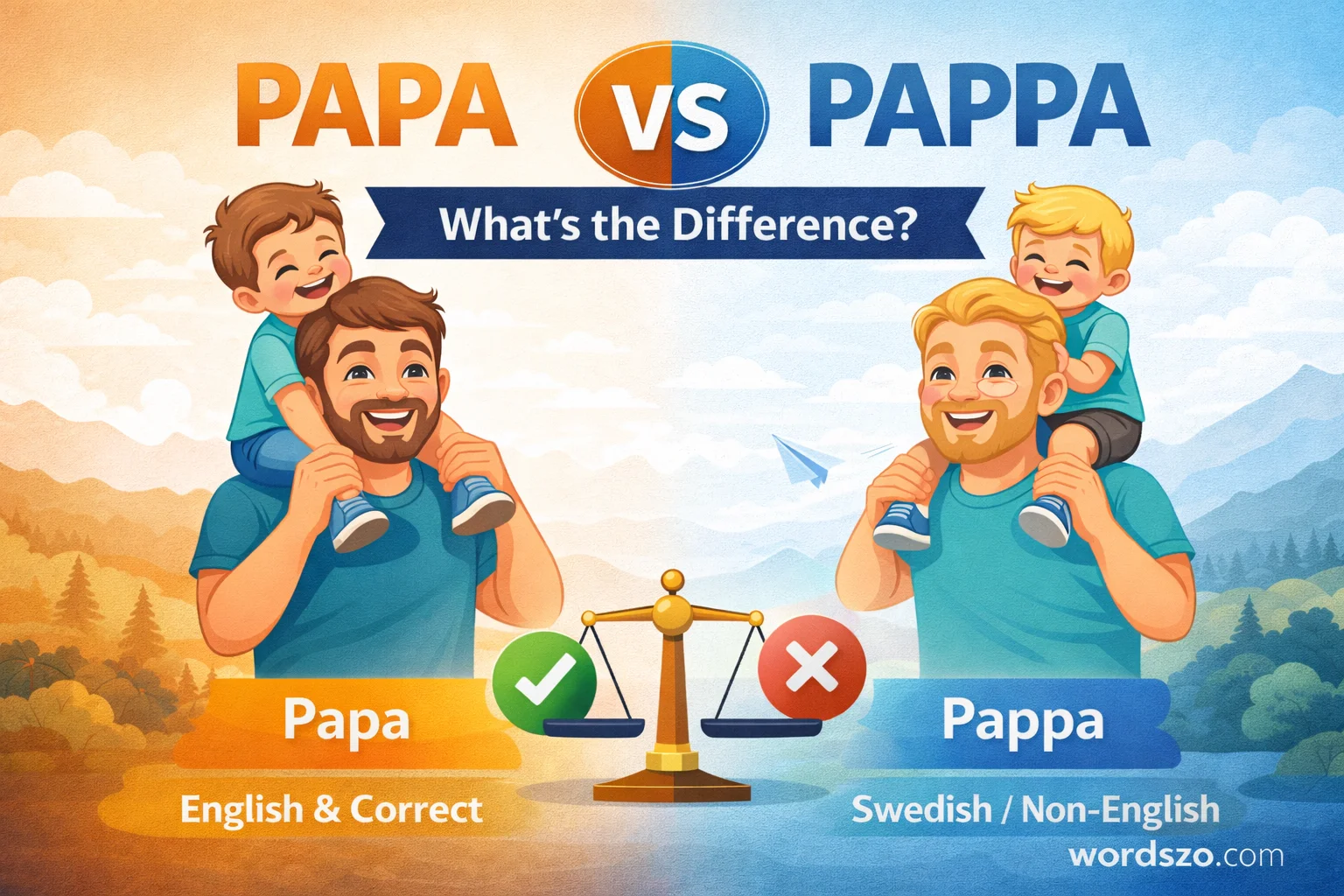
- Papa is standard English
- Pappa is foreign-language spelling
- Papa is globally accepted in English
- Pappa appears mainly in Scandinavian languages
- Papa is correct for SEO and formal writing
- Pappa may confuse English readers
Comparison Table
| Feature | Papa | Pappa |
|---|---|---|
| Language | English & many others | Scandinavian languages |
| English Correctness | ✅ Correct | ❌ Not standard |
| Meaning | Father / Dad | Father / Dad |
| Usage | Global | Regional |
| SEO Friendly | ✅ Yes | ❌ No |
| Example | “My papa is here.” | “Min pappa…” |
This table clearly explains papa vs pappa at a glance.
Real-Life Conversation Examples
Dialogue 1
A: “Is pappa the right spelling in English?”
B: “No, papa is correct.”
🎯 Lesson: Papa is the standard English form.
Dialogue 2
A: “Why does this book use pappa?”
B: “It’s translated from Swedish.”
🎯 Lesson: Pappa reflects language origin, not English grammar.
Dialogue 3
A: “Should I write papa or pappa in my blog?”
B: “Use papa—your audience is English-speaking.”
🎯 Lesson: Always match your audience’s language.
Dialogue 4
A: “My grandfather was called Pappa.”
B: “That could be a family or cultural name.”
🎯 Lesson: Personal names don’t follow grammar rules.
When to Use Papa vs Pappa
Use “Papa” When:
- Writing in English
- Addressing or referring to a father
- Creating content for blogs, books, or SEO
- Speaking casually or affectionately
Memory Trick:
One P = Proper English
Use “Pappa” When:
- Writing in Swedish, Norwegian, or Danish
- Quoting foreign text
- Referring to a cultural or personal name
Memory Trick:
Double P = Different language
US vs UK Usage
There is no difference between US and UK English here.
Both use papa, not pappa.
Fun Facts or History
- Many languages independently created words like papa, baba, and dada.
- Children naturally form “pa” sounds early in speech development.
- Despite different spellings, papa-like words often mean father worldwide.
Conclusion
The difference between papa vs pappa is not about meaning—it’s about language and correctness. Papa is the proper and widely accepted English word for father, while pappa belongs to specific non-English languages. Using the correct form ensures clarity, professionalism, and better communication, especially in writing.
Next time someone uses these two words, you’ll know exactly what they mean!