Introduction
Have you ever stood in the grocery aisle or scrolled through a recipe and wondered whether pecans and walnuts are basically the same thing? You’re not alone. These two nuts look alike, taste somewhat similar, and often appear in the same desserts, salads, and baked goods. Because of that, many people casually swap one for the other without thinking twice. But here’s the truth: while they may seem interchangeable at first glance, they are not identical at all. Although they look/sound similar, they serve completely different purposes. From flavor and texture to nutrition and culinary uses, the debate of pecan vs walnut is more interesting than you might expect. In this guide, we’ll break everything down in a clear, friendly way so you can finally understand what sets them apart and when to use each one with confidence.
Section 1: What Is “Pecan”?
A pecan is a type of tree nut that comes from the pecan tree (Carya illinoinensis), which is native to North America. Pecans are especially popular in the United States, where they are a key ingredient in many traditional recipes.
Meaning and Description
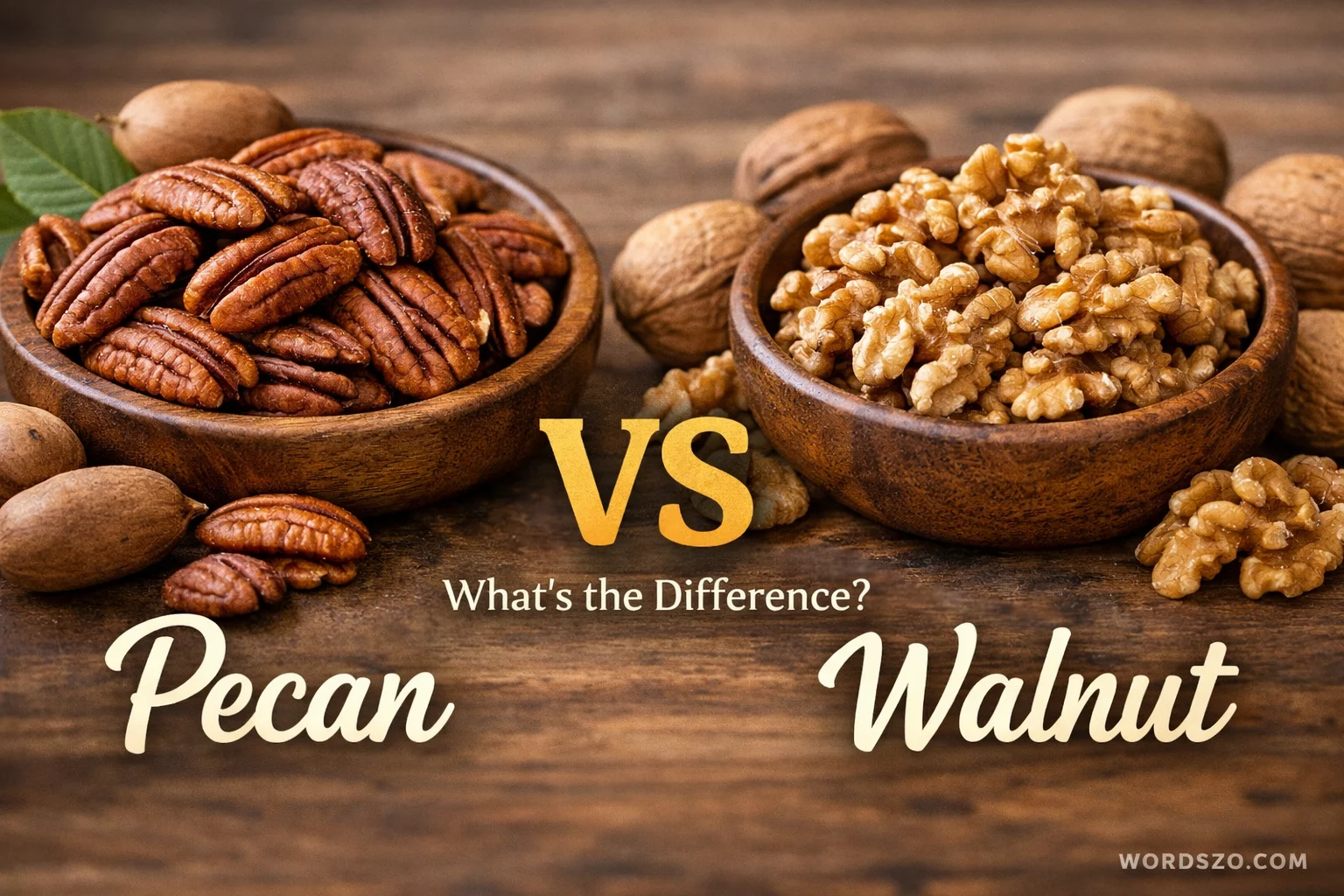
Pecans are elongated, oval-shaped nuts with a smooth brown shell and a rich, buttery interior. When shelled, they have a golden-brown color and a slightly soft texture compared to other nuts. In the discussion of pecan vs walnut, pecans are often described as sweeter and milder.
How Pecans Are Used
Pecans are widely used in baking and desserts. Their natural sweetness makes them perfect for pies, cookies, pralines, and pastries. They’re also eaten raw, roasted, or candied and are sometimes added to salads or savory dishes for crunch.
Where Pecans Are Commonly Used
Pecans are most closely associated with American cuisine, especially in the Southern United States. Famous dishes like pecan pie have made the nut a cultural staple. While pecans are available worldwide, their strongest culinary identity remains in the U.S.
Examples in Sentences
- “I added chopped pecans to the brownie batter for extra richness.”
- “Nothing beats a slice of homemade pecan pie during the holidays.”
- “She topped her salad with roasted pecans and goat cheese.”
Short Historical Note
Native American tribes were using pecans long before European settlers arrived. The word “pecan” comes from an Algonquin term meaning “a nut that requires a stone to crack.” This long history is one reason pecans hold such a strong place in American food culture, especially when comparing pecan vs walnut traditions.
Section 2: What Is “Walnut”?
A walnut is another popular tree nut, most commonly from the English walnut tree (Juglans regia). Walnuts are known for their distinctive brain-like shape and slightly bitter taste.
Meaning and Description
Walnuts are rounder and more compact than pecans, with a hard, ridged shell. Inside, the nut is pale beige and divided into two lobes that resemble a human brain. In the pecan vs walnut comparison, walnuts stand out for their bold, earthy flavor.
How Walnuts Are Used
Walnuts are incredibly versatile. They’re used in both sweet and savory dishes, including cakes, breads, sauces, salads, and even meat alternatives. Walnuts are also commonly pressed into walnut oil or eaten raw for their health benefits.
Where Walnuts Are Commonly Used
Walnuts have a strong presence in European, Middle Eastern, and Asian cuisines. They are also widely used in the United States, but their global footprint is broader than that of pecans. In many countries, walnuts are the default nut in recipes where Americans might choose pecans.
Examples in Sentences
- “She sprinkled crushed walnuts over her oatmeal.”
- “Walnuts add a deep flavor to this traditional sauce.”
- “The recipe calls for toasted walnuts, not pecans.”
Historical and Regional Notes
Walnuts have been cultivated for thousands of years and were prized in ancient Persia and Rome. Because of their long history and wide distribution, walnuts are often seen as a more traditional or old-world nut in the pecan vs walnut discussion.
Key Differences Between Pecan and Walnut
When comparing pecan vs walnut, several important differences stand out. These differences affect flavor, texture, nutrition, and how each nut is used in cooking.
Key Points at a Glance
- Flavor: Pecans are sweeter; walnuts are more bitter and earthy
- Texture: Pecans are softer; walnuts are firmer and slightly dry
- Shape: Pecans are elongated; walnuts are round and brain-like
- Cuisine: Pecans are common in American desserts; walnuts are used worldwide
- Price: Pecans are often more expensive than walnuts
Comparison Table
| Feature | Pecan | Walnut |
|---|---|---|
| Taste | Sweet, buttery | Earthy, slightly bitter |
| Texture | Soft and tender | Firm and crunchy |
| Shape | Long and oval | Round, brain-like |
| Common Uses | Desserts, pies, candies | Salads, sauces, baking |
| Culinary Reach | Mostly American | Global |
| Cost | Usually higher | Usually lower |
This table makes it clear that the pecan vs walnut debate isn’t just about appearance—it’s about purpose and preference.
Real-Life Conversation Examples
Dialogue 1
A: “I used walnuts in my pecan pie recipe.”
B: “That explains why it tasted less sweet.”
🎯 Lesson: Pecans are sweeter and better suited for classic pecan pie.
Dialogue 2
A: “Can I swap pecans for walnuts in this salad?”
B: “Yes, but the flavor will be milder.”
🎯 Lesson: Pecans can replace walnuts, but the taste changes.
Dialogue 3
A: “Why does this cake taste slightly bitter?”
B: “You used walnuts instead of pecans.”
🎯 Lesson: Walnuts add a stronger, more bitter flavor.
Dialogue 4
A: “Which is healthier, pecan vs walnut?”
B: “Walnuts usually win because of omega-3s.”
🎯 Lesson: Walnuts are often considered more heart-healthy.
When to Use Pecan vs Walnut
Knowing when to choose pecan vs walnut can instantly improve your cooking and baking results.
Use Pecans When:
- You want a sweet, buttery flavor
- You’re making desserts like pies, tarts, or cookies
- You want a softer texture
- You’re cooking traditional American recipes
Memory Trick: Pecans = Pie. If it’s sweet, pecans usually win.
Use Walnuts When:
- You want a bold, nutty taste
- You’re cooking savory dishes or salads
- You want added nutritional benefits
- You’re following European or Middle Eastern recipes
Memory Trick: Walnuts = Worldwide. They work almost everywhere.
Regional Writing or Cooking Notes
In American recipes, pecan vs walnut substitutions are common, but many international recipes specifically expect walnuts. Paying attention to the original cuisine helps you choose correctly.
Fun Facts or History
- Walnuts and the Brain: Walnuts have long been associated with brain health because their shape resembles a human brain.
- Pecan Pride: Pecans are the only major tree nut native to North America, which is why they’re so closely tied to U.S. food culture.
These small details add personality to the pecan vs walnut story and explain why both nuts are so beloved.
Conclusion
The difference between pecan vs walnut goes far beyond appearance. Pecans are sweet, soft, and closely tied to American desserts, while walnuts are bold, firm, and used across global cuisines. Each nut has its own flavor profile, texture, and ideal use. Understanding these differences helps you cook smarter, bake better, and choose the right ingredient every time. Whether you’re making a holiday pie or a healthy salad, knowing when to use pecans or walnuts makes all the difference. Next time someone uses these two words, you’ll know exactly what they mean! 🌰😊