If you have ever found yourself stuck between choosing problema or problemo, you are likely experiencing a classic case of “Mock Spanish” versus actual linguistic rules. While these words look and sound almost identical, they serve completely different purposes in communication.
Understanding the nuance between these two is essential for anyone looking to sound natural or respectful of language origins. Although they look similar, they serve completely different purposes. In this guide, we will break down the grammar, the slang, and the social context of these two terms.
What Is “Problema”?
Problema is the genuine, grammatically correct word for “problem” in the Spanish language. Despite ending in the letter “a,” which usually signifies a feminine noun in Spanish, problema is a masculine noun inherited from Greek roots.
How It’s Used
In any professional, academic, or authentic conversational setting involving Spanish, problema is the only correct choice. It is used to describe a challenge, a mathematical puzzle, or a difficult situation. Because it is masculine, it is always paired with masculine articles like el or un.
Where It’s Used
You will find this word used throughout Spain, Latin America, and within the global Spanish-speaking community. In English contexts, it is often used by bilingual speakers or those seeking to be linguistically accurate when borrowing a term.
Examples in Sentences
- “Hay un problema con el motor del coche.” (There is a problem with the car engine.)
- “No tengo ningún problema con ese plan.” (I have no problem with that plan.)
- “El mayor problema es la falta de tiempo.” (The biggest problem is the lack of time.)
Historical Note
The word comes from the Ancient Greek problēma. This Greek origin is the reason it retains its masculine gender in Spanish (el problema), even though most words ending in “a” are feminine (la mesa, la casa).
What Is “Problemo”?
Problemo is a “pseudo-Spanish” or “Mock Spanish” term. It does not actually exist in the Spanish language. It is an English-created variation that adds an “o” to the end of the English word “problem” to make it sound “Spanish-ish.”
How It’s Used
Problemo is used almost exclusively in English slang, most famously in the phrase “No problemo.” It is used to convey a casual, laid-back, or even ironic tone. While it sounds friendly to some, it is linguistically incorrect and can sometimes be perceived as mocking the Spanish language.
Where It’s Used
This term is primarily used in the United States and other English-speaking countries. It became a pop-culture staple in the late 20th century, appearing in movies (like Terminator 2: Judgment Day) and TV shows to show a character’s “cool” or informal attitude.
Examples in Sentences
- “I can help you move those boxes, no problemo!”
- “Looks like we have a bit of a problemo here.”
- “No problemo, I’ll have the report ready by five.”
Usage Note
In actual Spanish, the phrase “no problemo” would be “no hay problema” or “ningún problema.” Using problemo with a native Spanish speaker might lead to confusion or a polite correction!
Key Differences Between Problema and Problemo
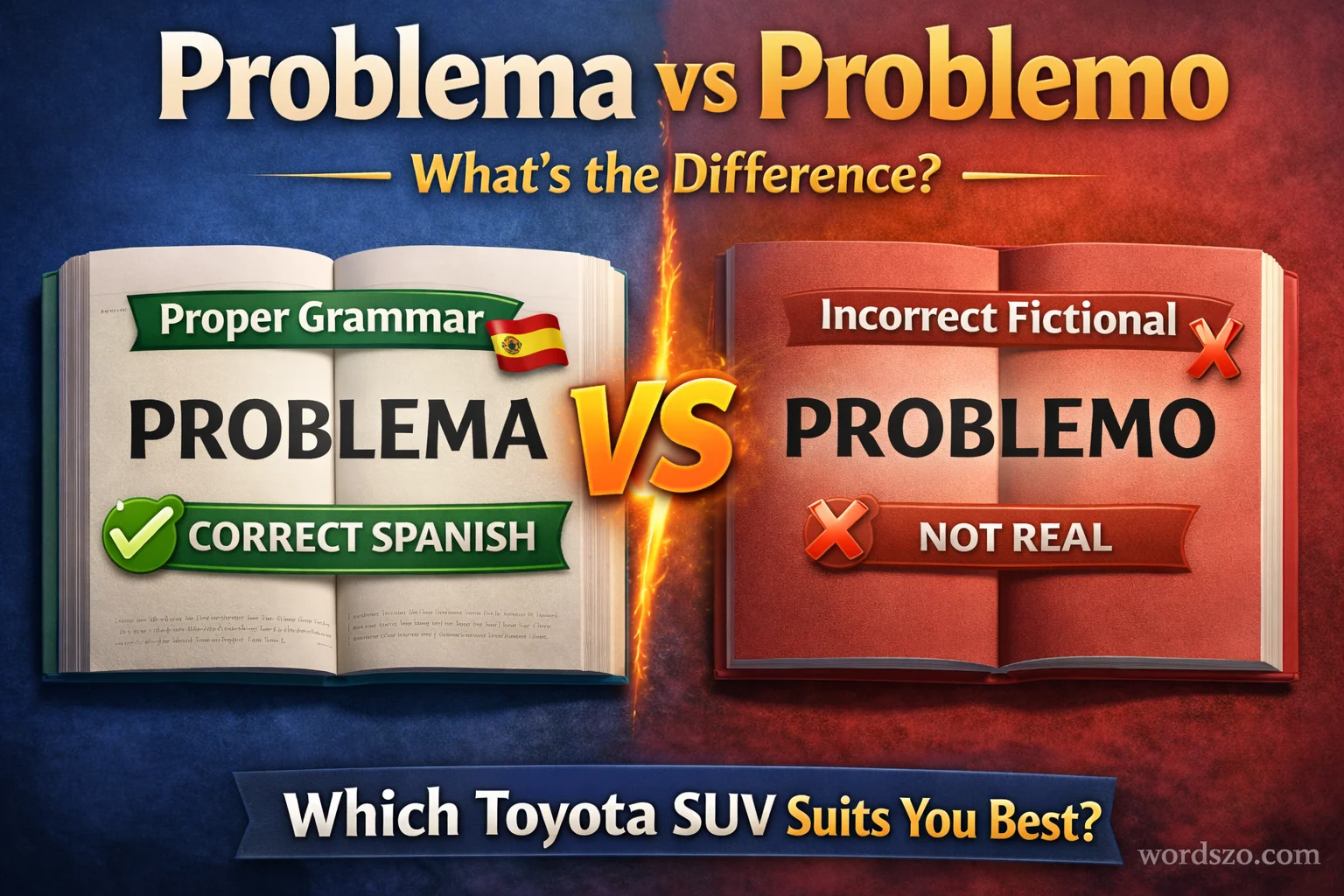
- Problema is a real word; problemo is a slang invention.
- Problema is masculine (el problema); problemo has no grammatical gender because it isn’t a real Spanish word.
- Problema is used for accuracy; problemo is used for humor or informality.
- Spanish speakers use problema; English speakers use problemo as a joke or catchphrase.
Comparison Table
| Feature | Problema | Problemo |
| Status | Real Spanish Word | Slang / Mock Spanish |
| Grammar | Correct (Masculine Noun) | Incorrect (English invention) |
| Tone | Formal, Neutral, or Accurate | Casual, Ironic, or Humorous |
| Best Used In | Spanish conversation / Formal writing | Casual English slang |
| Common Phrase | “No hay problema.” | “No problemo.” |
| Meaning | A challenge or difficulty | A “cool” way to say no trouble |
Real-Life Conversation Examples
Dialogue 1
A: “Can you check the grammar in my Spanish essay? I wrote ‘el problemo’.”
B: “You should change that to ‘el problema’. Problemo isn’t a real Spanish word.”
A: “Oh! I thought all masculine words ended in ‘o’.”
🎯 Lesson: Problema is a rare masculine “a” word; problemo is a mistake in Spanish.
Dialogue 2
A: “Thanks for the lift to the airport!”
B: “No problemo, man. Happy to help.”
A: “You sound like a character from a 90s movie!”
🎯 Lesson: “No problemo” is an English slang catchphrase.
Dialogue 3
A: “Is there a problema with the reservation?”
B: “Yes, they don’t have our names on the list.”
🎯 Lesson: Use problema when discussing actual issues seriously.
When to Use Problema vs Problemo
Practical Usage Rules
- Use “Problema” if you are speaking Spanish, writing a formal paper, or want to avoid sounding like a tourist.
- Use “Problemo” only if you are among friends and using the specific English slang phrase “no problemo.”
Simple Memory Trick
- A = Authentic. (Problema ends in A).
- O = Off-brand. (Problemo ends in O).
Fun Fact: The Pop Culture Influence
The phrase “No problemo” exploded in popularity in 1991 thanks to the movie Terminator 2. The character John Connor teaches the Terminator how to speak like a “normal” person, using that exact phrase. Since then, it has remained a staple of American English slang, even though it remains linguistically non-existent in the Spanish-speaking world!
Conclusion
The difference between problema and problemo comes down to authenticity versus slang. Problema is the real-deal Spanish word, essential for anyone wanting to speak the language correctly. Problemo is a fun, albeit incorrect, English invention used for casual flair. While “no problemo” might be a common sight in movies and casual texts, using the correct problema shows a much higher level of linguistic skill and respect for the language. Next time someone uses these two words, you’ll know exactly what they mean!