Choosing the right surface for your kitchen or bathroom is one of the most significant decisions you’ll make during a renovation. If you have ever stood in a showroom feeling torn between a shimmering slab of engineered stone and a classic piece of natural rock, you aren’t alone. Homeowners and designers frequently find themselves caught in the quartz vs marble debate because both materials offer stunning aesthetics that can elevate any room. However, choosing the wrong one for your specific lifestyle can lead to maintenance headaches or unexpected costs.
Although they look similar, they serve completely different purposes when it comes to durability, upkeep, and long-term value. While one is a masterpiece of nature formed over millennia, the other is a triumph of modern engineering designed for the rigors of a busy household. In this guide, we will break down the chemistry, the costs, and the daily reality of living with these two popular surfaces to help you decide which is the perfect fit for your home.
What Is Quartz?
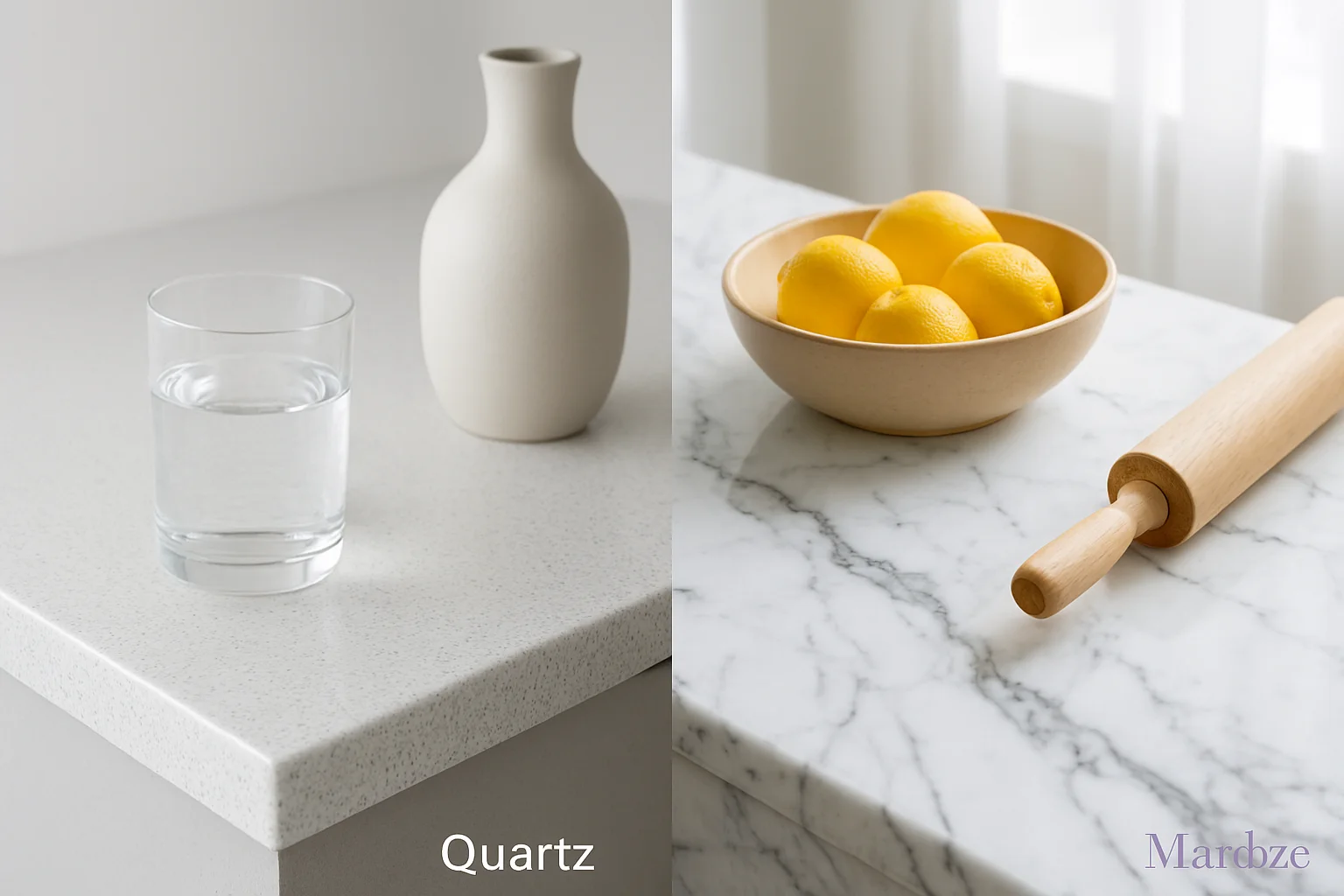
Quartz is an engineered stone surface that has become the gold standard for modern kitchen countertops. Unlike natural stone slabs that are quarried directly from the earth, quartz countertops are manufactured in a factory. They are typically composed of roughly 90% to 94% crushed natural quartz crystals mixed with 6% to 10% polymer resins and pigments.
How It’s Used
Because it is man-made, quartz is incredibly versatile. It is primarily used for kitchen countertops, bathroom vanities, backsplashes, and even flooring. Because the manufacturing process allows for total control over the appearance, you can find quartz that looks like concrete, solid white, or even realistic imitations of high-end marble.
Where It’s Used
Quartz is the preferred choice for high-traffic areas. In a busy family kitchen where spills, dropped pans, and “homework stations” are common, quartz excels. Because it is non-porous, it does not require sealing and is highly resistant to bacteria and staining.
Examples of Usage
- “We chose quartz for the kitchen island because we didn’t want to worry about wine stains.”
- “The developer installed quartz in all the apartment bathrooms to ensure long-term durability.”
- “You can find quartz patterns that perfectly mimic the grey veins of Carrara stone.”
Historical & Usage Note
While quartz has been around since the 1960s (pioneered by the Breton company in Italy), its popularity exploded in the early 2000s. It was specifically developed to provide the beauty of stone without the “weaknesses” of natural rock, such as porosity and brittleness.
What Is Marble?
Marble is a metamorphic rock that forms when limestone is subjected to intense heat and pressure over millions of years. It is a 100% natural product, harvested in massive blocks from quarries in places like Italy, Greece, and Vermont. It is prized for its natural veining and a “glow” that no man-made material can perfectly replicate.
How It’s Used
Marble is synonymous with luxury. It is used for statement islands, fireplace surrounds, tiling, and furniture tops. In the world of baking, marble is a favorite because it stays naturally cool, making it the perfect surface for rolling out pastry dough.
Where It’s Used
Marble is best suited for “low-impact” luxury areas or for homeowners who appreciate a “patina.” Because marble is made of calcium carbonate, it is chemically sensitive to acids (like lemon juice or vinegar). Over time, marble will age, develop small scratches, and lose some shine—a look many purists actually prefer.
Examples of Usage
- “The master bathroom features floor-to-ceiling marble for a spa-like atmosphere.”
- “Be careful with that lemon slice on the marble countertop; it might cause etching.”
- “Every slab of marble is unique, so no two kitchens will ever look exactly the same.”
Historical & Usage Note
Marble has been the stone of choice for royalty and artists for centuries. From the Parthenon in Greece to Michelangelo’s David, it represents timeless elegance. In modern homes, using marble is often seen as an investment in a “forever” material that never goes out of style.
Key Differences Between Quartz and Marble
Understanding the technical differences is essential before you swipe your credit card. While they might look alike from a distance, their “personalities” in the kitchen are opposites.
The Breakdown:
- Composition: Quartz is man-made (engineered); Marble is 100% natural.
- Durability: Quartz is nearly indestructible and scratch-resistant. Marble is soft and prone to scratching and “etching” (dull spots caused by acid).
- Maintenance: Quartz requires zero sealing. Marble must be professionally sealed every 6–12 months to prevent deep stains.
- Heat Resistance: Marble is very heat-resistant. Quartz can actually be damaged by high heat because the resins inside can melt or discolor.
Comparison Table
| Feature | Quartz | Marble |
| Material Type | Engineered Stone | Natural Metamorphic Rock |
| Porosity | Non-porous (Stain resistant) | Porous (Stains easily) |
| Maintenance | Low (Soap and water) | High (Needs regular sealing) |
| Uniqueness | Uniform patterns | Every slab is 100% unique |
| Heat Resistance | Moderate (Use trivets!) | High |
| Best For | Busy families, rentals | Luxury aesthetics, bakers |
Real-Life Conversation Examples
Dialogue 1: The Maintenance Reality
A: “I’m obsessed with this white marble for the kitchen!”
B: “It’s beautiful, but do you mind the ‘aged’ look? You have three kids who love making lemonade.”
A: “Wait, will lemonade ruin it?”
B: “It won’t ruin it, but it will leave dull spots. If you want it to stay perfect forever, maybe look at a quartz that looks like marble.”
🎯 Lesson: Choose your material based on how you actually live, not just how you want the room to look.
Dialogue 2: The “Unique” Factor
A: “Why is this slab of marble so much more expensive than the one next to it?”
B: “Because nature only made one of those. The veining is rare.”
A: “Can I get the same look in quartz for less?”
B: “You can get close, but the quartz pattern will repeat. The marble is a one-of-a-kind original.”
🎯 Lesson: You pay a premium for the unique artistry of natural stone.
Dialogue 3: The Heat Test
A: “Can I put my hot pasta pot directly on the quartz counter?”
B: “I wouldn’t. The resin in the quartz might scorch.”
A: “What about the marble?”
B: “Marble handles heat like a champ, but it’s much easier to stain with the sauce!”
🎯 Lesson: Every material has a “weak point”—heat for quartz, acids for marble.
When to Use Quartz vs Marble
Choose Quartz if:
- You want a “set it and forget it” countertop.
- You have a busy kitchen with children, frequent cooking, and potential spills.
- You prefer a consistent, modern look without “surprises” in the stone pattern.
- You are designing a rental property and need something durable.
Choose Marble if:
- You view your home as a piece of art and want the highest tier of luxury.
- You are an avid baker who needs a cold surface for dough.
- You appreciate the “soul” of natural materials and don’t mind a few scratches or signs of use over time.
- You are installing surfaces in a low-traffic area like a guest bathroom or a formal library.
Pro Memory Trick: * Quartz = Quiet Maintenance (Easy).
- Marble = More Maintenance (Tougher).
Fun Facts
- The “Fake” Marble Test: If you aren’t sure if a stone is marble or quartz, look at the price tag and the “feel.” Marble will usually feel colder to the touch than quartz.
- Quartz isn’t just for counters: The mineral quartz is one of the most common minerals on Earth, but the “quartz” in your kitchen is a high-tech composite that didn’t exist in its current form 60 years ago!
Conclusion
The quartz vs marble debate ultimately comes down to a choice between convenience and character. If you want a worry-free surface that stays looking brand new with nothing more than a damp cloth, quartz is your winner. However, if you want a timeless, natural masterpiece that tells a story and offers unmatched elegance, marble is worth the extra effort. Both materials are excellent investments that will add significant value to your home.
By understanding the grammar of stone—how it reacts to heat, acid, and daily life—you can shop with confidence. Next time someone uses these two words, you’ll know exactly what they mean!