
Introduction
If your car feels bouncy, unstable, or rough over bumps, chances are you’ve heard a mechanic mention struts vs shocks. For many drivers, these two terms sound interchangeable. They’re both part of the suspension system, both affect ride comfort, and both wear out over time. That overlap is exactly why people confuse them so often.
But here’s the catch: while struts and shocks work toward similar goals, they are not the same part—and choosing the wrong one can affect safety, handling, and repair costs. Although they look/sound similar, they serve completely different purposes.
In this guide, we’ll break down struts vs shocks in simple, conversational English. You’ll learn what each component does, how they’re used, when to replace them, and how to tell which one your vehicle actually has. By the end, you’ll understand suspension like a pro—no mechanical jargon required.
Section 1: What Is Struts?
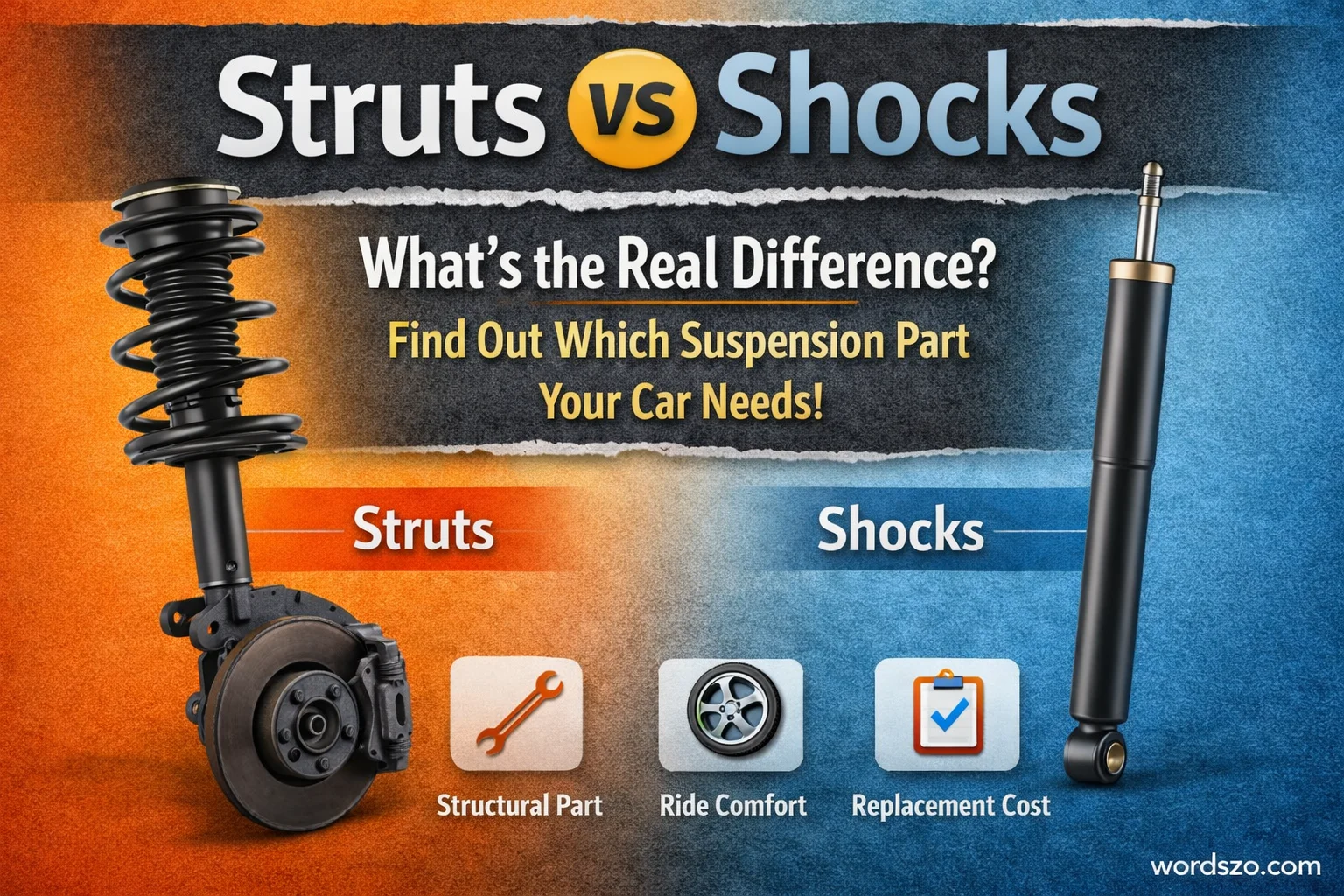
Struts are a major structural component of a vehicle’s suspension system. Unlike shocks, struts don’t just absorb bumps—they also help support the vehicle’s weight and maintain proper wheel alignment.
Clear Meaning
A strut is a combined suspension unit that includes a shock absorber, coil spring, and mounting hardware. It plays both a damping role and a structural role in the vehicle.
How It’s Used
In the struts vs shocks discussion, struts are more complex. They:
- Absorb road impacts
- Support vehicle weight
- Maintain tire alignment
- Affect steering and handling
Because of this, worn struts can cause uneven tire wear and poor steering response.
Where It’s Used
Struts are most commonly used in:
- Front suspension systems
- Front-wheel-drive vehicles
- Many modern sedans and compact cars
There are no regional spelling differences—struts is universally used in automotive terminology.
Examples in Sentences
- My car pulls to one side because the front struts are worn.
- Replacing struts improved both ride comfort and steering.
- In the struts vs shocks debate, struts handle more than bumps.
Short Historical or Usage Note
Struts became popular with the rise of MacPherson strut suspension systems in the mid-20th century. Automakers favored them because they reduced weight, saved space, and simplified front-end design.
Section 2: What Is Shocks?
Shocks, short for shock absorbers, are simpler components designed specifically to control motion and absorb impacts from the road.
Clear Meaning
A shock absorber is a hydraulic device that reduces bouncing, swaying, and vibration by controlling the movement of the suspension springs.
How It’s Used
In the struts vs shocks comparison, shocks:
- Smooth out bumps
- Improve ride comfort
- Help tires stay in contact with the road
They do not support vehicle weight or affect alignment directly.
Where It’s Used
Shocks are commonly found in:
- Rear suspension systems
- Trucks and SUVs
- Older vehicle designs
Again, there are no spelling variations—shocks is the standard term worldwide.
Examples in Sentences
- The rear shocks are leaking and need replacement.
- New shocks made the ride much smoother.
- Shocks focus on comfort in the struts vs shocks comparison.
Regional or Grammatical Notes
“Shocks” is often used casually to describe all suspension parts, but mechanically speaking, it refers only to shock absorbers, not struts.
Key Differences Between Struts and Shocks
Understanding struts vs shocks comes down to structure, function, and cost.
Bullet Point Differences
- Struts support vehicle weight; shocks do not
- Struts affect wheel alignment; shocks don’t
- Struts are structural components; shocks are not
- Struts cost more to replace than shocks
- Shocks focus mainly on ride comfort
Struts vs Shocks Comparison Table
| Feature | Struts | Shocks |
|---|---|---|
| Structural Role | Yes | No |
| Supports Vehicle Weight | Yes | No |
| Affects Alignment | Yes | No |
| Replacement Cost | Higher | Lower |
| Common Location | Front suspension | Rear suspension |
| Complexity | High | Low |
Real-Life Conversation Examples
Dialogue 1
A: My mechanic says I need new shocks.
B: Does your car actually have struts instead?
🎯 Lesson: Always confirm struts vs shocks before repairs.
Dialogue 2
A: Why is replacing struts so expensive?
B: Because they’re structural and affect alignment.
🎯 Lesson: Struts involve more labor and parts.
Dialogue 3
A: My car feels bouncy—shocks or struts?
B: Depends on your suspension setup.
🎯 Lesson: Symptoms overlap in the struts vs shocks debate.
Dialogue 4
A: Can I replace shocks myself?
B: Usually yes—struts are more complex.
🎯 Lesson: Shocks are DIY-friendlier than struts.
When to Use Struts vs Shocks
Practical Usage Rules
Choose struts if:
- Your vehicle uses a strut-based suspension
- You notice alignment or steering issues
- Tires wear unevenly
Choose shocks if:
- Ride feels bouncy or unstable
- Rear suspension feels loose
- There’s visible fluid leakage
Simple Memory Tricks
- Struts = Structure
- Shocks = Smoothness
US vs UK Usage
In both the US and UK, struts vs shocks terminology is the same. However, UK drivers may hear “dampers” used interchangeably with shocks.
Fun Facts or History
- A single worn strut can increase braking distance by several feet.
- Shock absorbers don’t actually “absorb” shocks—they dampen motion.
Conclusion
The difference between struts vs shocks is more than just a technical detail—it directly affects your car’s safety, handling, and repair costs. Struts are structural components that support weight and alignment, while shocks focus purely on smoothing out the ride.
Knowing which one your vehicle uses helps you make smarter repair decisions and avoid unnecessary expenses. Whether you’re talking to a mechanic or diagnosing ride issues yourself, this knowledge gives you confidence behind the wheel.
Next time someone uses these two words, you’ll know exactly what they mean!