Introduction
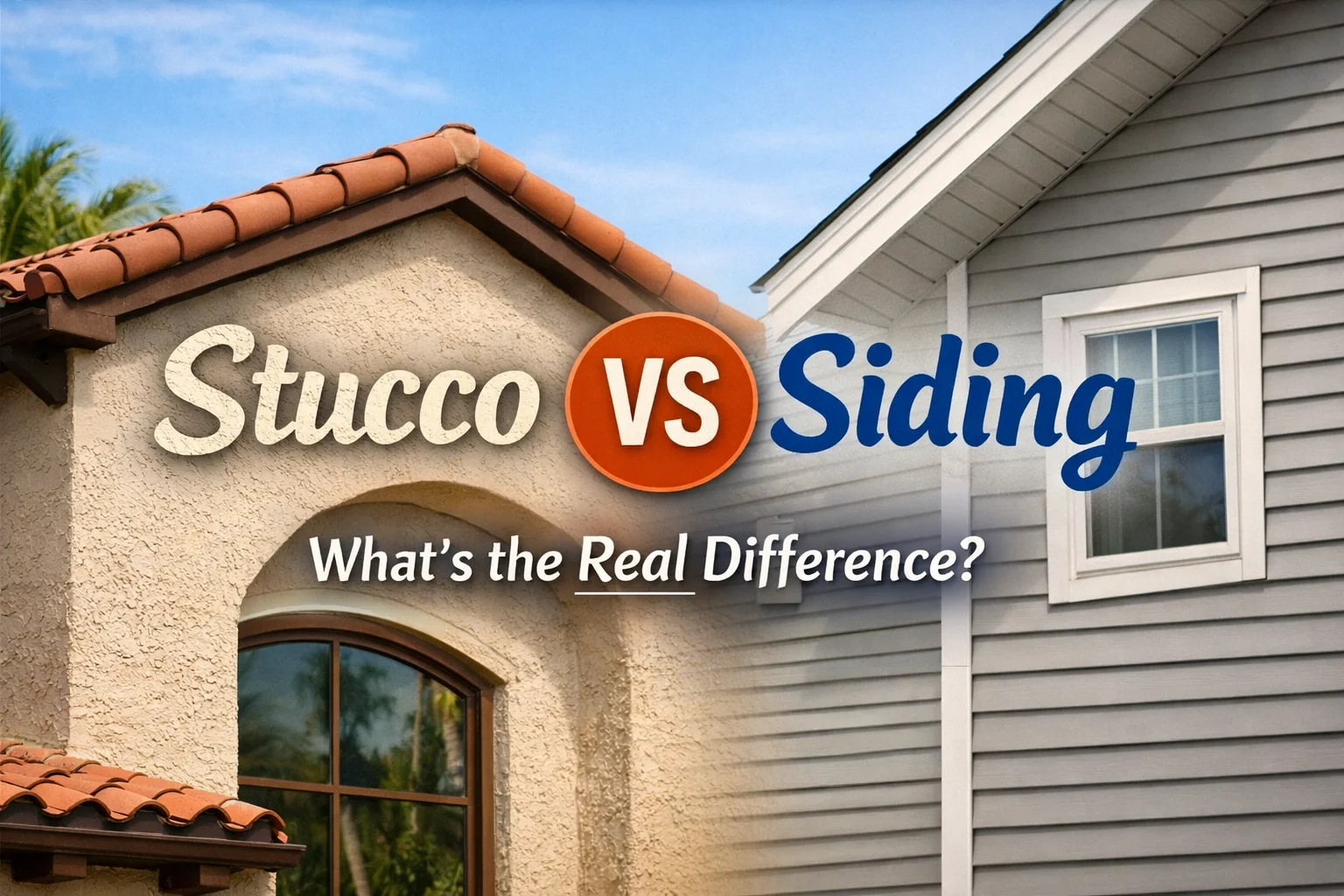
When choosing an exterior finish for a home, stucco vs siding is one of the most common comparisons homeowners make. At first glance, both seem to serve the same purpose—covering and protecting the outside of a building. That’s why so many people use these two terms interchangeably. Contractors mention them in the same breath, real estate listings mix them up, and homeowners often assume they’re just different styles of the same thing.
Although they look/sound similar, they serve completely different purposes. One is a specific material, while the other is a broad category of exterior coverings. Understanding the difference matters because it affects cost, durability, maintenance, energy efficiency, and even resale value. In this guide, we’ll break down stucco vs siding in simple, practical terms so you can confidently choose the right option for your home—without the confusion.
Section 1: What Is “Stucco”?
Stucco is a cement-based exterior wall finish made from cement, sand, lime, and water. It’s applied wet in layers and then hardens into a solid, textured surface. In the stucco vs siding debate, stucco stands out because it’s a single material, not a category.
How It’s Used
Stucco is applied directly over masonry, concrete, or a lath system attached to wood framing. Once cured, it becomes a rigid, seamless exterior shell.
Where It’s Used
Stucco is especially popular in:
- Southwestern United States
- Mediterranean-style homes
- Spanish and Adobe architecture
- Dry, warm climates
In American English, “stucco” is used the same way everywhere—there are no spelling or grammar variations.
Examples in Sentences
- “The house features a smooth stucco exterior.”
- “Stucco homes stay cooler in hot climates.”
- “They repaired cracks in the aging stucco wall.”
Short Historical Note
Stucco dates back thousands of years and was widely used in ancient Roman architecture. Its durability and fire resistance made it a preferred choice long before modern siding materials existed.
Section 2: What Is “Siding”?
Siding is a general term that refers to any material installed on the exterior of a building to protect it from weather and improve appearance. In the stucco vs siding comparison, siding is the umbrella category.
How It’s Used
Siding is installed in panels or boards that overlap or interlock. It creates a protective barrier while allowing flexibility in design and materials.
Types of Siding
Common siding options include:
- Vinyl siding
- Wood siding
- Fiber cement siding
- Metal siding
- Engineered wood siding
Where It’s Used
Siding is used globally, especially in:
- North America
- Europe
- Areas with varied or wet climates
There are no spelling differences between US and UK English for “siding,” but usage is more common in American construction terminology.
Examples in Sentences
- “Vinyl siding is low maintenance.”
- “They replaced the old siding with fiber cement.”
- “Siding helps insulate the home.”
Regional Note
In the US, “siding” is a standard real estate and construction term. In some countries, similar materials may be referred to as “cladding.”
Key Differences Between Stucco and Siding
Quick Comparison Points
- Stucco is a single material; siding is a category
- Stucco is applied wet; siding is installed in panels
- Siding offers more design variety
- Stucco performs best in dry climates
- Maintenance requirements differ significantly
Comparison Table
| Feature | Stucco | Siding |
|---|---|---|
| Type | Cement-based material | Category of exterior materials |
| Installation | Applied wet in layers | Installed in panels or boards |
| Flexibility | Rigid surface | Flexible options |
| Climate Suitability | Best for dry climates | Suitable for all climates |
| Maintenance | Crack repair required | Depends on material |
| Design Options | Limited textures/colors | Wide variety |
| Cost Range | Medium to high | Low to high |
Real-Life Conversation Examples
Dialogue 1
A: “Is stucco just another type of siding?”
B: “Not exactly. Stucco is a material—siding is the category.”
🎯 Lesson: Stucco is one option within exterior finishes, not all siding.
Dialogue 2
A: “Should we choose stucco or siding for rain?”
B: “Siding handles moisture better than stucco.”
🎯 Lesson: Climate plays a big role in stucco vs siding decisions.
Dialogue 3
A: “Our realtor says the house has siding, but it looks solid.”
B: “That’s probably stucco.”
🎯 Lesson: Visual texture often reveals the difference.
Dialogue 4
A: “Why is stucco more expensive?”
B: “Labor costs are higher than installing siding panels.”
🎯 Lesson: Installation method affects price.
When to Use Stucco vs Siding
Use Stucco When:
- You live in a dry or warm climate
- You want a seamless, solid exterior
- Fire resistance is a priority
- You prefer classic Mediterranean aesthetics
Memory Trick:
👉 Stucco = Solid Shell
Use Siding When:
- You need flexibility in weather conditions
- You want many design options
- Easy repairs and replacements matter
- You’re working within a budget
Memory Trick:
👉 Siding = Many Choices
Fun Facts or History
- Stucco was used in ancient Rome and is one of the oldest exterior finishes still in use today.
- Modern siding became popular in the 20th century as homes shifted toward faster, modular construction.
Conclusion
The debate between stucco vs siding becomes simple once you understand the core difference. Stucco is a specific, cement-based exterior material, while siding is a broad category that includes many materials, including alternatives to stucco. Each has strengths depending on climate, budget, design goals, and maintenance expectations. Stucco offers durability and a classic look, while siding provides versatility and adaptability. By knowing when and why to use each, you can make a confident, informed choice. Next time someone uses these two words, you’ll know exactly what they mean! 😊