
Introduction
If you’ve ever paused while writing the word targeting and wondered whether it should have one “t” or two, you’re not alone. The confusion between targetting vs targeting is extremely common—especially among writers, marketers, students, and non-native English speakers. Both spellings look believable, and you’ll even see targetting used online from time to time. That makes people assume both forms might be correct. However, Although they look/sound similar, they serve completely different purposes. In reality, only one spelling is grammatically correct in standard English. In this guide, we’ll clearly explain what targeting means, why targetting exists, which spelling you should use, and how this choice affects professional writing, SEO, and credibility.
What Is “Targetting”?
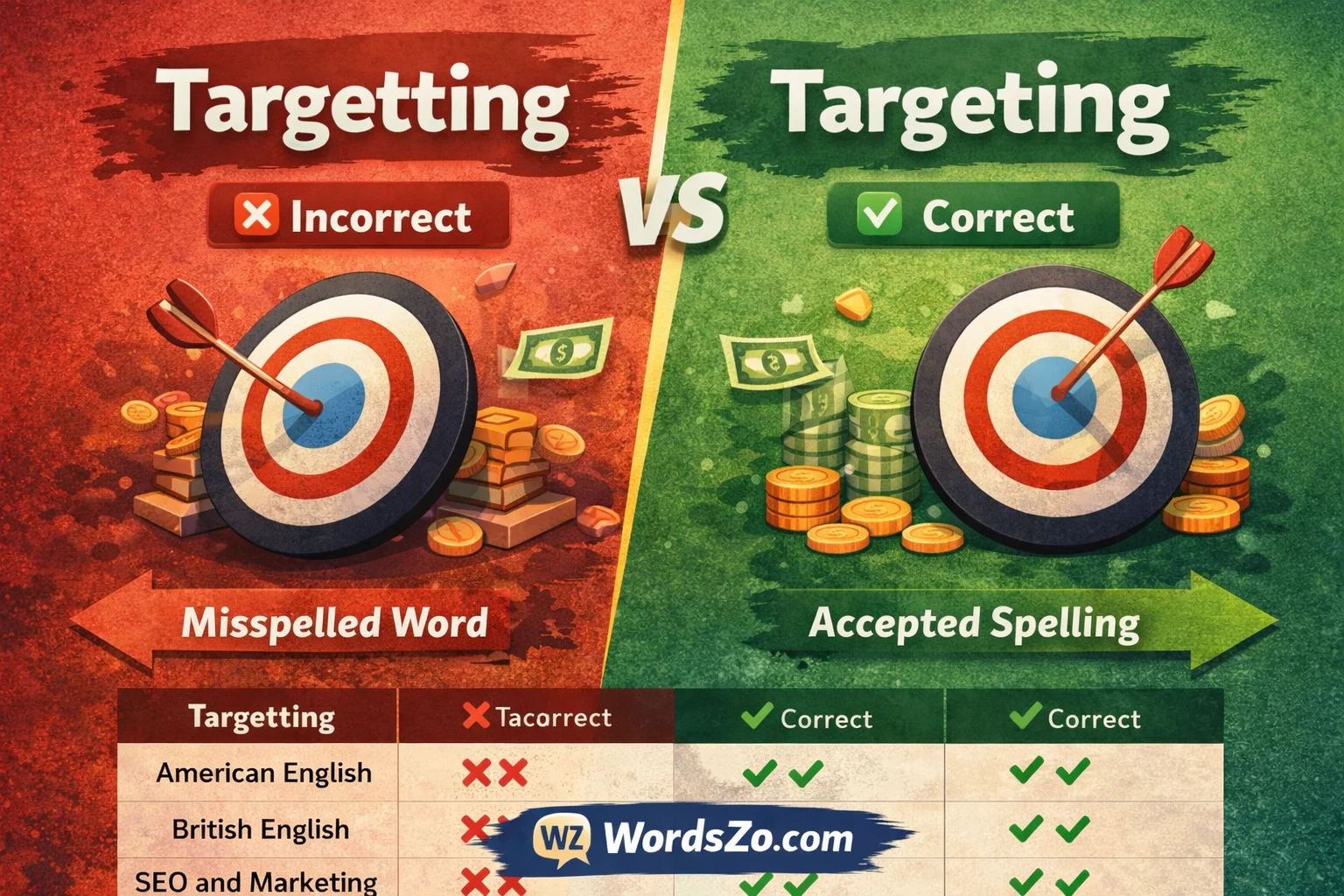
Targetting is a misspelling of the word targeting. It is not recognized as correct in standard American or British English.
How It’s Used
Targetting usually appears due to confusion about English spelling rules—specifically consonant doubling. Some writers assume the “t” should be doubled when adding -ing, similar to words like admit → admitting.
Where It’s Used
- Informal writing
- Typos in blogs or social media
- Non-native English usage
It is not accepted in professional, academic, or SEO-focused content in any English-speaking country.
Examples (Incorrect Usage)
- ❌ “We are targetting a new audience.”
- ❌ “This ad is targetting young professionals.”
Short Usage Note
Even though targetting may look logical, English spelling rules do not support doubling the “t” in target. That’s why this form is incorrect.
In the targetting vs targeting debate, targetting should always be avoided.
What Is “Targeting”?
Targeting is the correct spelling and standard form of the word. It means focusing efforts, actions, or strategies toward a specific goal, group, or outcome.
How It’s Used
Targeting is commonly used as a verb and gerund, especially in marketing, business, psychology, and everyday language.
Where It’s Used
Targeting is universally accepted in:
- American English
- British English
- Australian English
- Global professional writing
There are no regional spelling differences.
Examples in Sentences
- “The company is targeting a younger audience.”
- “This campaign focuses on targeting customer needs.”
- “They are targeting specific keywords for SEO.”
Historical or Grammar Note
According to English spelling rules, verbs ending in -et like target do not double the final consonant when adding -ing. This is why targeting keeps a single “t”.
In targetting vs targeting, targeting is always correct.
Key Differences Between Targetting and Targeting
Bullet Point Summary
- Targetting is incorrect spelling
- Targeting is the correct spelling
- Targeting follows English grammar rules
- Targetting appears due to spelling confusion
- Only targeting should be used in professional writing
Comparison Table (Mandatory)
| Feature | Targetting | Targeting |
|---|---|---|
| Spelling Status | ❌ Incorrect | ✅ Correct |
| Accepted in English | No | Yes |
| Used in US English | ❌ | ✅ |
| Used in UK English | ❌ | ✅ |
| Suitable for SEO | ❌ | ✅ |
| Professional Usage | ❌ | ✅ |
This table clearly shows why targetting vs targeting is not a true spelling choice.
Real-Life Conversation Examples
Dialogue 1
A: “Is it targetting or targeting?”
B: “Targeting—with one ‘t’.”
🎯 Lesson: Only one spelling is correct.
Dialogue 2
A: “My editor corrected ‘targetting’.”
B: “Because it’s a spelling mistake.”
🎯 Lesson: Editors always reject targetting.
Dialogue 3
A: “Why doesn’t target double the ‘t’?”
B: “English rules don’t allow it here.”
🎯 Lesson: Grammar rules decide spelling.
Dialogue 4
A: “Will using targetting hurt SEO?”
B: “Yes, it looks unprofessional.”
🎯 Lesson: Correct spelling matters for credibility.
When to Use Targetting vs Targeting
Use “Targeting” When:
- Writing marketing or SEO content
- Creating ads or campaigns
- Writing academic or professional material
- Communicating clearly and correctly
Memory Trick:
👉 Target + ing = targeting (no extra “t”)
Never Use “Targetting” When:
- Writing blogs or articles
- Publishing business content
- Submitting assignments
- Optimizing for search engines
US vs UK Usage
Unlike words such as travelling vs traveling, targeting is spelled the same in US and UK English.
Fun Facts or History
- Target comes from archery. The word originally referred to a shield or mark aimed at in medieval practice.
- Not all verbs double letters. Only short vowel + consonant verbs do—target doesn’t qualify.
These facts explain why targetting vs targeting causes confusion.
Conclusion
The confusion between targetting vs targeting is understandable, but the rule is simple. Targeting is the only correct spelling in both American and British English. Targetting is always a mistake and should never be used in professional, academic, or SEO writing. Knowing this difference improves clarity, credibility, and search engine performance. Once you understand the grammar rule behind it, you’ll never second-guess this word again. Next time someone uses these two words, you’ll know exactly what they mean!