Introduction
Life has a strange way of surprising us—sometimes beautifully, sometimes painfully. When something unexpected happens, people often say, “It was a tragedy” or “It was destiny.” But are these two ideas really the same? Many people confuse tragedy or destiny because both are often used during emotional moments, life-changing events, or deep conversations about fate. Movies, books, and social media quotes mix them freely, which adds to the confusion.
Although they look/sound similar, they serve completely different purposes.
Understanding the difference between tragedy or destiny isn’t just about vocabulary. It’s about how we interpret life, responsibility, loss, and meaning. In this article, we’ll break down both words in simple terms, explore how they’re used, compare them clearly, and show you exactly when—and why—you should use one instead of the other.
What Is “Tragedy”?
Meaning of Tragedy
A tragedy is a deeply sad, painful, or disastrous event that causes suffering, loss, or emotional shock. It often involves death, failure, injustice, or irreversible damage. When something terrible happens unexpectedly and leaves people grieving, it’s usually called a tragedy.
In discussions about tragedy or destiny, tragedy focuses on loss and sorrow, not purpose.
How Tragedy Is Used
The word tragedy is commonly used to describe:
- Personal loss (death, illness, accidents)
- Natural disasters
- Social or historical disasters
- Emotional or moral failures
It highlights what went wrong, not why it happened.
Where Tragedy Is Used
- Used globally in both British and American English
- Functions mainly as a noun
- Common in news, literature, psychology, and everyday speech
Examples in Sentences
- The earthquake was a national tragedy.
- Losing her child was the greatest tragedy of her life.
- The play ends in tragedy, with the hero’s downfall.
- What happened to them was a pure tragedy, not a choice.
In the tragedy or destiny debate, tragedy emphasizes pain without implying meaning.
Short Historical Note
The word tragedy comes from ancient Greek theater, where tragic stories showed the downfall of heroes due to flaws or fate. Originally, tragedies were meant to teach moral lessons through suffering—a concept that still influences how we use the word today.
What Is “Destiny”?
Meaning of Destiny
Destiny refers to a pre-determined course of events that is believed to be meant to happen. It suggests purpose, design, or fate—often beyond human control. Unlike tragedy, destiny focuses on meaning, not loss.
When people discuss tragedy or destiny, destiny frames events as part of a larger plan.
How Destiny Is Used
The word destiny is often used when talking about:
- Life paths
- Love and relationships
- Career success or failure
- Spiritual or philosophical beliefs
It implies that events happen for a reason, even if that reason is unclear.
Where Destiny Is Used
- Used worldwide in formal and informal English
- Mostly a noun
- Common in philosophy, religion, literature, and motivational speech
Examples in Sentences
- They believed it was their destiny to meet.
- He accepted his destiny without fear.
- Some people think success is written in destiny.
- She felt that helping others was her destiny.
In tragedy or destiny, destiny suggests purpose behind events, not randomness.
Spelling and Usage Notes
- No spelling differences between US and UK English
- Related words include: fate, calling, future, purpose
- Often paired with belief systems or personal values
Historical Note
The concept of destiny dates back to ancient civilizations, where people believed gods or cosmic forces controlled human lives. This belief still shapes how modern cultures talk about success, failure, and meaning.
Key Differences Between Tragedy and Destiny
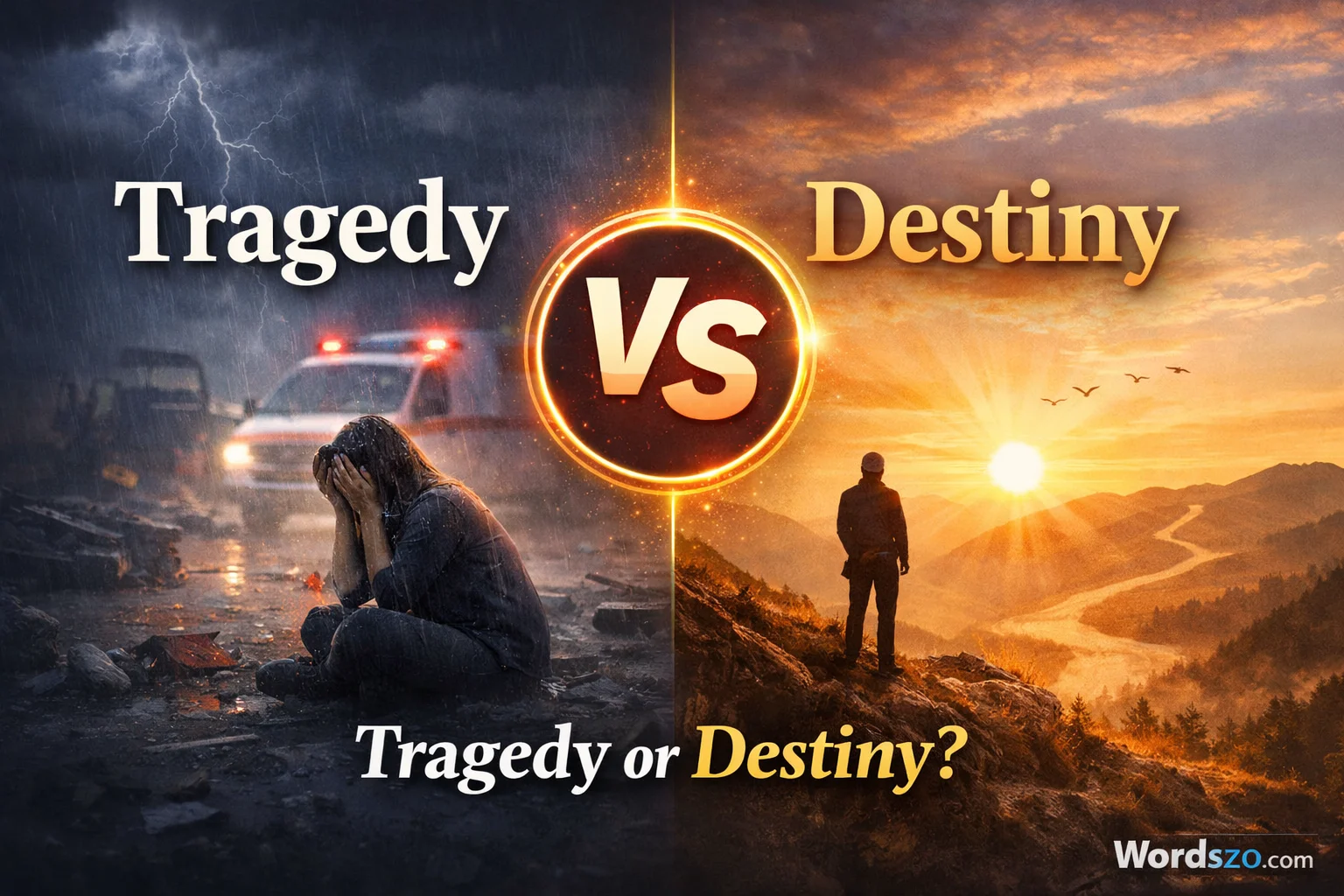
Understanding tragedy or destiny becomes easy when you focus on emotion vs meaning.
Quick Difference Highlights
- Tragedy = sorrow, loss, pain
- Destiny = purpose, fate, direction
- Tragedy looks backward at loss
- Destiny looks forward to meaning
- Tragedy asks “What went wrong?”
- Destiny asks “What was meant to happen?”
Comparison Table
| Feature | Tragedy | Destiny |
|---|---|---|
| Core Idea | Loss and suffering | Purpose and fate |
| Emotional Tone | Sad, painful, negative | Meaningful, hopeful, neutral |
| Focus | What was lost | What is meant |
| Common Usage | Accidents, death, disasters | Life paths, love, goals |
| Control | Often random or accidental | Often believed to be pre-written |
| Grammar | Noun | Noun |
| Role in “tragedy or destiny” | Emotional reaction | Philosophical interpretation |
Real-Life Conversation Examples
Dialogue 1
A: Losing his job like that was a tragedy.
B: Or maybe it was destiny pushing him toward something better.
🎯 Lesson: Tragedy describes the pain; destiny reframes it as purpose.
Dialogue 2
A: Why did this happen to us?
B: It feels like a tragedy now, but maybe it’s destiny in disguise.
🎯 Lesson: Destiny is often used to soften tragedy emotionally.
Dialogue 3
A: The accident ruined her life.
B: Yes, it was a tragedy—but it also changed her destiny.
🎯 Lesson: Both words can describe the same event from different angles.
Dialogue 4
A: Do you believe everything happens for a reason?
B: I don’t know. Some things are just tragedies, not destiny.
🎯 Lesson: Not everyone believes tragedy has meaning.
Dialogue 5
A: Meeting you felt unreal.
B: That’s destiny—not tragedy!
🎯 Lesson: Destiny is often used positively, tragedy negatively.
When to Use Tragedy vs Destiny
Use “Tragedy” When:
- Describing loss, death, or disaster
- Talking about unfair or painful events
- Reporting news or historical events
- Expressing grief or sympathy
Examples:
- The fire was a terrible tragedy.
- It’s a tragedy when talent goes to waste.
Use “Destiny” When:
- Talking about life purpose or fate
- Explaining beliefs about the future
- Describing meaningful connections
- Writing motivational or philosophical content
Examples:
- She believes teaching is her destiny.
- Their meeting felt like destiny.
Easy Memory Trick 🧠
- Tragedy = Tears
- Destiny = Direction
If it hurts → tragedy
If it explains → destiny
US vs UK Usage
There is no difference in usage between American and British English for tragedy or destiny. Both words are used the same way in all regions.
Fun Facts or History
1. Tragedy Was Meant to Teach
In ancient Greek drama, tragedies weren’t just sad stories—they were designed to teach moral lessons through suffering.
2. Destiny Isn’t Always Fixed
In modern philosophy, destiny is often debated. Some believe it’s fixed, while others think humans shape their own destiny through choices.
Conclusion
The difference between tragedy or destiny lies in how we understand life’s events. A tragedy focuses on loss, pain, and what went wrong. Destiny, on the other hand, looks for purpose, meaning, and direction—even in difficult moments. While the same event can be seen as both, the words themselves serve very different roles. Knowing when to use each helps you communicate clearly, emotionally, and thoughtfully. Next time someone uses these two words, you’ll know exactly what they mean!