
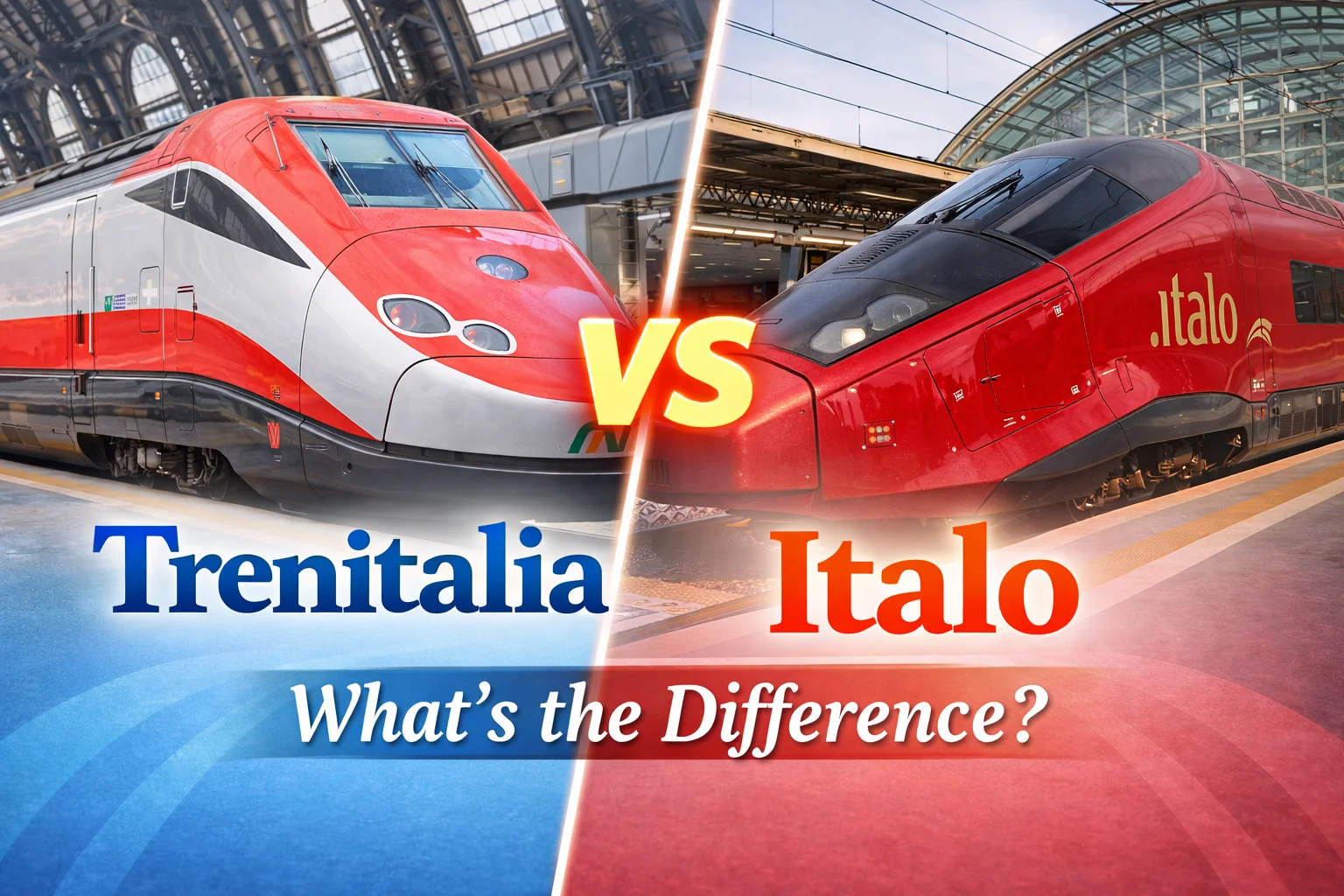
Introduction
If you’re planning a trip across Italy, chances are you’ve come across Trenitalia vs Italo while booking train tickets. At first glance, both seem to offer fast, comfortable rail services—but which one should you choose?
The confusion is completely normal. Both companies operate high-speed trains, cover major cities, and offer similar travel times. Yet, they differ in pricing, comfort, service style, and booking flexibility.
Although they look similar, they serve completely different purposes.
In this guide, you’ll learn the real difference between Trenitalia vs Italo, how each works, and which one is better for your travel needs.
What Is Trenitalia?
Trenitalia is the national railway company of Italy, owned by the government through Ferrovie dello Stato Italiane.
Meaning & Role
➡️ Trenitalia operates a wide range of trains, including:
- High-speed trains (Frecciarossa, Frecciargento, Frecciabianca)
- Regional trains
- Intercity trains
It’s essentially the backbone of Italy’s rail system.
Where Trenitalia Is Used
When comparing Trenitalia vs Italo, Trenitalia is used for:
- Nationwide travel, including small towns
- Budget-friendly regional trips
- Long-distance and high-speed routes
Examples in Sentences
- “We booked Trenitalia for our trip to Florence.”
- “Regional trains by Trenitalia are cheaper.”
- “The Frecciarossa by Trenitalia is very fast.”
Historical Note
Founded in 2000, Trenitalia carries forward Italy’s long railway history and remains the largest rail operator in the country.
What Is Italo?
Italo is a private high-speed train company operated by NTV (Nuovo Trasporto Viaggiatori).
Meaning & Role
➡️ Italo focuses only on high-speed travel, using modern trains for fast connections between major cities.
Unlike Trenitalia, it does NOT operate regional or slower trains.
Where Italo Is Used
In the Trenitalia vs Italo comparison, Italo is best for:
- Fast travel between major cities (Rome, Milan, Venice, Naples)
- Comfort-focused journeys
- Competitive pricing on high-speed routes
Examples in Sentences
- “We took Italo from Rome to Milan.”
- “Italo trains are very modern.”
- “I found a cheaper deal on Italo.”
Usage Notes
- Italo trains are known for sleek design and modern interiors
- They often compete directly with Trenitalia’s high-speed services
- No regional coverage—only major routes
Key Differences Between Trenitalia and Italo
Bullet Point Differences
- Trenitalia is government-owned; Italo is private
- Trenitalia offers regional + high-speed trains; Italo offers only high-speed
- Italo focuses on comfort and modern design
- Trenitalia has wider coverage across Italy
- Pricing varies—Italo often has competitive deals, while Trenitalia offers more flexibility
Comparison Table
| Feature | Trenitalia | Italo |
|---|---|---|
| Ownership | State-owned | Private company |
| Train Types | High-speed + regional + intercity | High-speed only |
| Coverage | Nationwide (small towns + cities) | Major cities only |
| Comfort | Good to premium | Modern and premium-focused |
| Pricing | Flexible, varies widely | Often competitive deals |
| Booking Options | More ticket types | Simpler pricing structure |
| Popular Routes | All across Italy | Rome–Milan, Venice, Naples |
Real-Life Conversation Examples
Dialogue 1
A: “Should we take Trenitalia or Italo to Milan?”
B: “Both are fast, but Italo might be cheaper today.”
🎯 Lesson: Prices can vary—compare before booking.
Dialogue 2
A: “Does Italo go to small towns?”
B: “No, only major cities. Use Trenitalia for smaller places.”
🎯 Lesson: Trenitalia has wider coverage.
Dialogue 3
A: “Which one is more comfortable?”
B: “Italo feels more modern, but Trenitalia’s premium class is also great.”
🎯 Lesson: Both offer comfort, but styles differ.
Dialogue 4
A: “I missed my train—can I change the ticket?”
B: “Trenitalia usually has more flexible options.”
🎯 Lesson: Trenitalia often provides more flexibility.
Dialogue 5
A: “Why are there two train companies?”
B: “Competition improves service and prices.”
🎯 Lesson: Choice benefits travelers.
When to Use Trenitalia vs Italo
Choosing between Trenitalia vs Italo depends on your travel needs.
Use Trenitalia When:
✔️ You’re traveling to small towns or rural areas
✔️ You need regional or slower trains
✔️ You want more ticket flexibility
✔️ You prefer a single system for all routes
Examples:
- “Trenitalia to Cinque Terre”
- “Regional train from Florence to Pisa”
Use Italo When:
✔️ You’re traveling between major cities
✔️ You want a modern, comfortable ride
✔️ You’re looking for competitive high-speed prices
✔️ You prefer a simpler booking experience
Examples:
- “Italo from Rome to Milan”
- “Italo high-speed train to Naples”
Simple Memory Trick
- Trenitalia = Total coverage (all trains)
- Italo = Intercity speed (fast routes only)
Fun Facts or History
1. Italy Was One of Europe’s First High-Speed Rail Leaders
Italy introduced high-speed trains early, making travel between cities like Rome and Milan incredibly fast—often under 3 hours.
2. Competition Improved Prices
Before Italo launched in 2012, Trenitalia dominated the market. After competition began, ticket prices dropped and service quality improved.
Conclusion
The difference between Trenitalia vs Italo comes down to coverage vs specialization. Trenitalia offers a complete rail network across Italy, making it ideal for all types of travel. Italo, on the other hand, focuses on high-speed routes between major cities, offering a modern and competitive alternative.
Both are excellent choices, and the best option depends on your route, budget, and preferences.
Next time someone asks about Trenitalia vs Italo, you’ll know exactly which one to choose!