If you’ve ever wondered whether it’s “vineyard” or “vinyard,” you’re definitely not alone. These two words look nearly identical, and their similarity has confused countless writers, wine enthusiasts, and students alike. The truth is, one spelling is correct, and the other is simply a common mistake that slips into writing more often than it should.
Although they look similar, they don’t serve the same purpose at all. One is the correct English spelling used worldwide, while the other is a frequent misspelling that even spell-checkers might flag. In this comprehensive guide, you’ll learn the exact difference between vineyard and vinyard, discover why people confuse them, explore real-life examples, and gain practical tips to never make this mistake again. Let’s clear up this spelling confusion once and for all. ✍️
What Is “Vineyard”? (The Correct Spelling)
Vineyard is the correct and standard spelling of this English word. It’s used consistently across all English-speaking countries, including the United States, United Kingdom, Australia, Canada, and beyond.
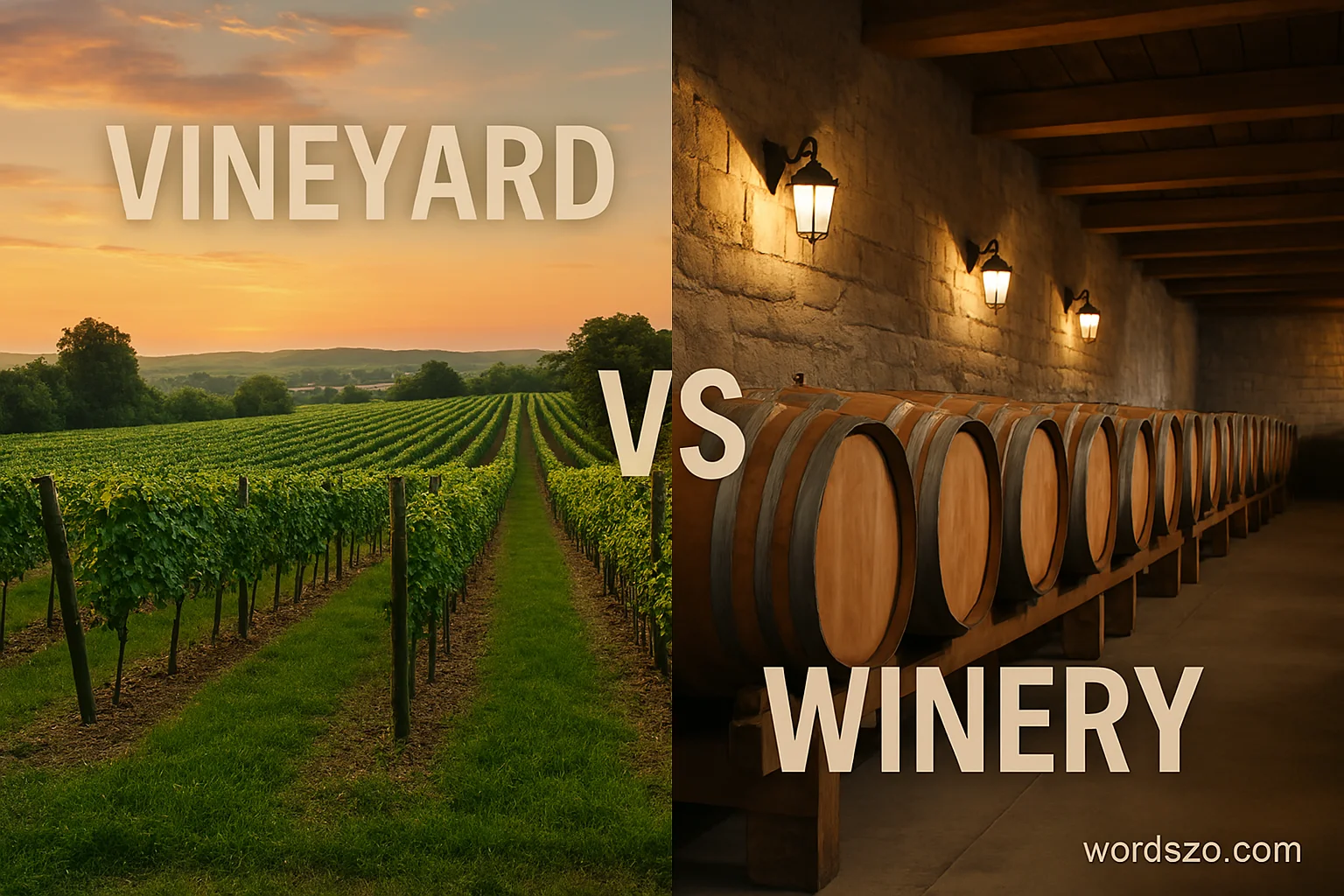
Meaning: ➡️ Vineyard = an area of land where grapevines are cultivated for wine or juice production.
A vineyard is essentially a farm dedicated to growing grapes. It’s a physical place where grapevines thrive under careful management, with rows of plants stretching across fields or hillsides. The word appears in official documents, educational materials, business names, wine labels, and professional writing everywhere.
Where “Vineyard” Is Used
Vineyard is the universal spelling accepted worldwide:
- United States
- United Kingdom
- Canada
- Australia
- New Zealand
- All English-speaking nations
- International business and trade
- Wine industry standards
- Educational institutions
There’s no regional variation here. Whether you’re writing American English, British English, or Australian English, vineyard with an ‘e’ is always the correct spelling.
Examples (Correct Usage)
- “We visited a beautiful vineyard in Napa Valley last summer.”
- “This vineyard produces award-winning Pinot Noir wines.”
- “The family owns a small vineyard in the Tuscany region.”
- “That vineyard tour included wine tasting and lunch.”
- “California’s wine country is famous for its numerous vineyard locations.”
Origins & Notes
The word vineyard comes from Old English and Middle English origins, combining “vine” (the plant) and “yard” (an enclosed area or piece of land). The “e” in the middle has been part of the correct spelling for centuries. Despite its age, people still struggle with remembering that crucial vowel. The word entered common English usage during medieval times when grape cultivation became widespread in England and Europe.
What Is “Vinyard”? (The Common Misspelling)
Vinyard is not a correct spelling in English. It’s a frequent mistake that appears in casual writing, social media posts, and occasionally in professional content. Despite how often this misspelling appears online, it’s considered incorrect by all major English dictionaries and style guides.
The Issue: ➡️ Vinyard = a common misspelling missing the ‘e’ vowel from the correct spelling.
Many people drop the ‘e’ when writing this word, creating “vinyard” instead of “vineyard.” This happens because when we speak, we don’t always pronounce every vowel clearly, making it easy to forget about that middle ‘e’ when spelling. Our brains sometimes autocorrect based on pronunciation patterns, and since “vineyard” contains two vowels close together, writers unconsciously omit one.
Why “Vinyard” Is Incorrect
Vinyard doesn’t appear in any major English dictionary as a legitimate word. Spell-checkers, grammar tools, and style guides like AP, Chicago, and MLA all flag “vinyard” as an error. If you submit writing with this misspelling to editors, teachers, or professional publications, they will correct it.
Examples (Incorrect Usage – Avoid These)
- ❌ “We visited a beautiful vinyard in Napa Valley.” (wrong)
- ❌ “This vinyard produces excellent wines.” (wrong)
- ❌ “The family owns a small vinyard in Tuscany.” (wrong)
- ❌ “That vinyard tour was amazing.” (wrong)
Why People Make This Mistake
The confusion stems from several factors. First, when pronounced naturally, the word sounds like “VIN-yard” with the middle vowel less prominent. Second, our brains work quickly when typing, and we might not consciously register every letter we’re writing. Third, similar English words like “standard” or “lanyard” have different vowel patterns, which can create mental interference. Finally, seeing the misspelling repeatedly online normalizes it in our minds, making us more likely to reproduce it ourselves.
Key Differences Between Vineyard and Vinyard
Quick Summary Points
- Vineyard = the correct spelling used universally in English
- Vinyard = a common misspelling that lacks the middle ‘e’
- Vineyard appears in all English dictionaries
- Vinyard is flagged as incorrect by spell-checkers and editors
- Both pronunciations sound identical when spoken aloud
- The difference is purely spelling-based, not grammatical
- Vineyard is the only acceptable form in professional writing
Comparison Table
| Feature | Vineyard | Vinyard |
|---|---|---|
| Spelling | Correct (with ‘e’) | Incorrect (missing ‘e’) |
| Dictionary Status | All major dictionaries | No dictionary entry |
| Usage | Universal and standard | Common mistake only |
| Pronunciation | VIN-yard | VIN-yard (identical) |
| Example (Correct) | “The vineyard produced great wine.” | N/A |
| Acceptance | ✅ Always correct | ❌ Always incorrect |
| Regions | Used everywhere | Appears in casual writing only |
| Professional Use | Required in all formal writing | Never acceptable |
Real-Life Conversation Examples
Dialogue 1
A: “I’m writing about a California vineyard, but I keep second-guessing my spelling.”
B: “Is it v-i-n-e-y-a-r-d? That’s the correct way.”
A: “Oh, I was dropping the ‘e’ and writing it as v-i-n-y-a-r-d!”
B: “That’s the most common mistake people make with this word.”
🎯 Lesson: Remember the ‘e’ – it’s vine-yard, not vin-yard.
Dialogue 2
A: “My spell-checker keeps underlining my wine article. What am I doing wrong?”
B: “Let me see… oh, you’re spelling vineyard as vinyard throughout.”
A: “Really? I thought that was just a style variation.”
B: “Nope, there’s only one correct spelling for this word.”
🎯 Lesson: Spell-checkers catch this error because vinyard isn’t a real word.
Dialogue 3
A: “I visited this amazing vineyard last week and took photos.”
B: “That sounds wonderful! Which vineyard was it?”
A: “The one in Sonoma County – wait, I just realized I spelled it wrong in my text!”
B: “Happens to everyone. Just remember: v-i-n-e-y-a-r-d.”
🎯 Lesson: The word “vine” is inside “vineyard” – use that as your spelling guide.
Dialogue 4
A: “Why is there no such thing as a ‘vinyard’ with one ‘e’?”
B: “The word comes from Old English combining ‘vine’ plus ‘yard,’ so the ‘e’ has always been there.”
A: “So it’s historical, not just random?”
B: “Exactly. The ‘e’ is fundamental to the word’s etymology.”
🎯 Lesson: Understanding word origins helps you remember correct spelling.
Dialogue 5
A: “I submitted my wine blog and got feedback about spelling errors.”
B: “Let me guess – vineyard spelled as vinyard?”
A: “How did you know? Is that really that common?”
B: “It’s one of the most frequently misspelled words in food and wine writing.”
🎯 Lesson: Many people misspell this word, but professionals always correct it.
When to Use Vineyard (And Never Use Vinyard)
Use “Vineyard” (Correct Spelling) When:
✔️ Writing any professional or formal content ✔️ Creating wine blog posts or articles ✔️ Describing actual grape-growing locations ✔️ Writing for newspapers, magazines, or journals ✔️ Creating business content or wine labels ✔️ Writing academic papers or educational materials ✔️ Posting on social media if quality matters ✔️ Submitting work to editors or publishers
Examples:
- “This vineyard specializes in organic grape production.”
- “The prestigious vineyard has been family-owned for generations.”
- “Wine enthusiasts travel to this vineyard for exclusive tastings.”
- “Our vineyard tour includes lunch and wine pairings.”
Never Use “Vinyard”
❌ Vinyard is incorrect in all contexts ❌ Never acceptable in professional writing ❌ Flagged by spell-checkers and grammar tools ❌ Will be corrected by editors ❌ Damages credibility in wine industry writing ❌ Should never appear in published work
Simple Memory Tricks
Here are foolproof ways to remember the correct spelling:
Trick 1: Think of the plant ➡️ Vine + yard = vineyard
The word literally combines “vine” (the plant producing grapes) and “yard” (an enclosed piece of land). When you write vineyard, you’re writing vine-yard, which helps you remember both the ‘e’ and the structure.
Trick 2: Count the vowels ➡️ The correct spelling has three vowels: i, e, a
Say the word aloud and count: VIN-E-YARD. That middle ‘e’ is crucial and easy to forget when typing quickly.
Trick 3: Associate with the product ➡️ Wine comes from vineyards with an ‘e’
Think about wine bottles you’ve seen labeled with vineyard names. Professional wine labels always use the correct spelling with the ‘e’, which reinforces proper spelling through visual memory.
Trick 4: Remember common mistakes ➡️ You’re not writing “vin-yard” (missing an ‘e’)
Acknowledge that your brain might want to drop that vowel. Consciously check for it when proofreading.
Fun Facts & History
Fact 1: The ‘E’ Is Ancient
The word “vineyard” has contained that middle ‘e’ since at least the 1300s in English. Medieval documents about farming and agriculture used the correct spelling consistently. The ‘e’ isn’t a modern addition – it’s been there for over 700 years. This means the misspelling “vinyard” is relatively recent, likely emerging as typing and informal writing became more common.
Fact 2: One of the Most Misspelled Wine Words
Language experts and editors report that “vineyard” ranks among the top misspelled words in food, wine, and agriculture writing. Despite being a commonly used word in these industries, people consistently forget the ‘e’. Wine bloggers, food writers, and wine enthusiasts struggle with this spelling more than any other agriculture-related term. Understanding this helps you feel less alone if you’ve made this mistake – you’re in good company!
Conclusion
The difference between vineyard and vinyard is straightforward once you understand the rule. Vineyard with an ‘e’ is the only correct English spelling, accepted universally across all English-speaking countries and industries. Vinyard without the ‘e’ is a common misspelling that appears frequently but is never acceptable in professional, academic, or published writing.
Remember the simple trick: vine + yard = vineyard. The plant (vine) grows in an enclosed area (yard), and together they form vineyard with that crucial middle vowel. Whether you’re writing a wine blog, describing a vacation, or creating professional content, always use vineyard with the ‘e’. Next time someone uses these two words, you’ll know exactly which spelling is correct – and you’ll never second-guess yourself again!