Introduction
English is full of informal words that sound similar but carry different tones, meanings, and levels of correctness. One such confusing pair is ya vs yeah. You’ve probably seen both used in texts, social media comments, and casual conversations — sometimes even interchangeably.
That’s where the confusion starts. Many people assume ya and yeah mean the same thing and can be used anywhere. In reality, their usage depends heavily on context, tone, and formality.
Although they look/sound similar, they serve completely different purposes.
Understanding the difference between ya vs yeah is especially important if you’re writing professionally, learning English, or trying to sound natural in conversations. In this guide, we’ll break down what each word means, how they’re used, where they’re appropriate, and how to avoid common mistakes — all in simple, clear language.
What Is “Ya”?
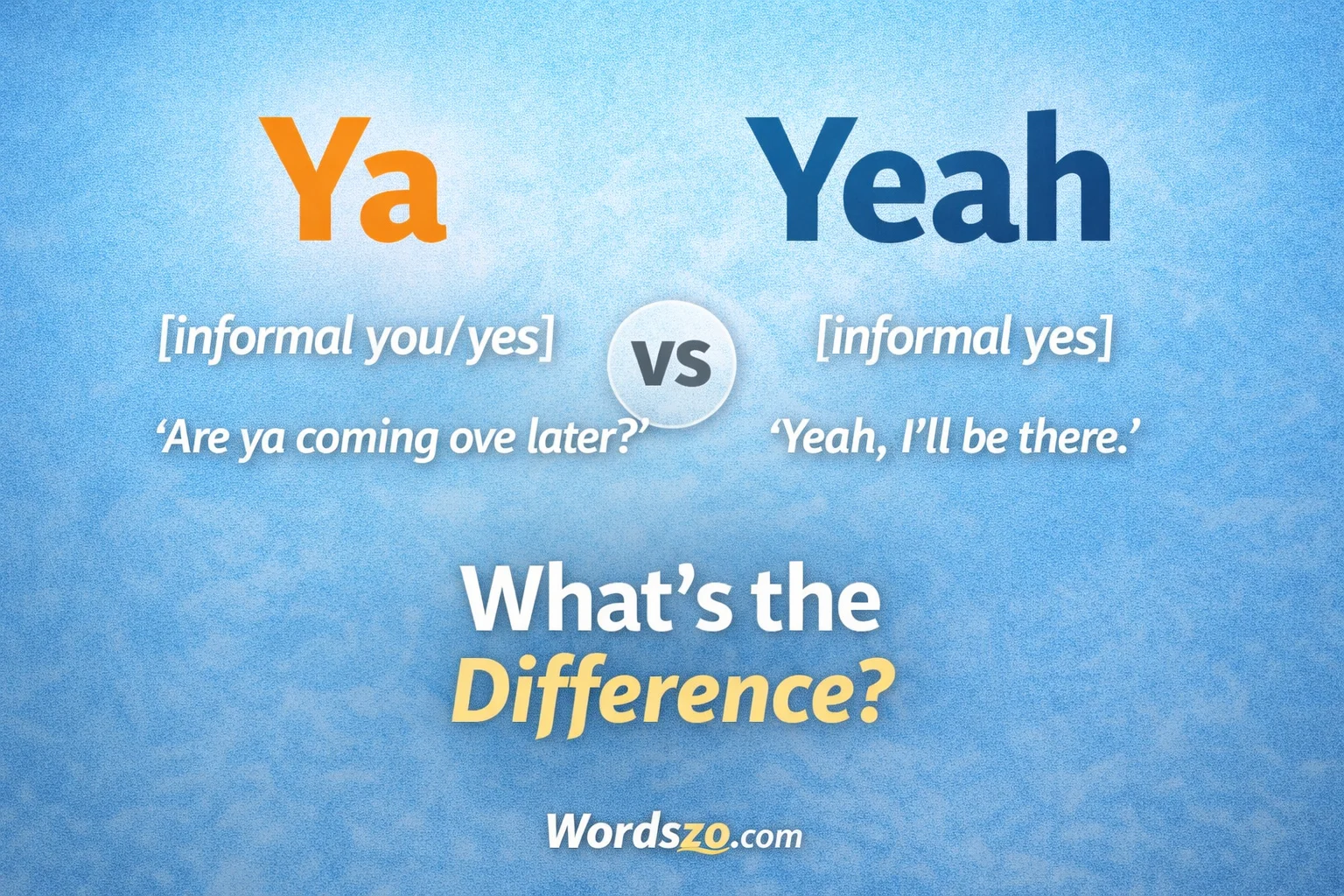
Ya is an informal, casual variation of the word you or yes, depending on context. It is mostly used in spoken English, texting, and informal writing.
Meaning & Usage
- As a pronoun, “ya” often replaces you
- As a response, it can loosely mean yes
- It carries a relaxed, conversational tone
In the ya vs yeah comparison, “ya” is less standard and more slang-based.
Where It’s Used
- Casual conversations
- Text messages
- Social media
- Informal dialogue
- Some regional dialects (especially British, Australian, and casual American speech)
“Ya” is not recommended for formal writing, academic work, or professional communication.
Examples in Sentences
- How are ya doing today?
- See ya later!
- Ya, I guess we can go.
Short Usage Note
“Ya” evolved as a spoken shortcut in fast or relaxed speech. While common in dialogue, it should be avoided in polished writing unless you’re intentionally showing casual tone or character voice.
What Is “Yeah”?
Yeah is an informal but widely accepted word meaning yes. Unlike “ya,” it is considered more standard and clearer in meaning.
Meaning & Usage
- “Yeah” = yes
- Used to agree, confirm, or respond positively
- Tone can change meaning (neutral, excited, sarcastic)
In the ya vs yeah comparison, “yeah” is more versatile and socially accepted.
Where It’s Used
- Spoken English
- Informal writing
- Emails with a casual tone
- Dialogues and storytelling
While still informal, “yeah” is safer than “ya” in semi-professional settings.
Examples in Sentences
- Yeah, that sounds good.
- Yeah, I’ve already finished the work.
- Oh yeah, I remember now.
Regional Note
“Yeah” is commonly used in American, British, Australian, and global English, making it universally understood — unlike “ya,” which can feel overly casual or regional.
Key Differences Between Ya and Yeah
Quick Differences (Bullet Points)
- Meaning: “Ya” can mean you or yes; “yeah” means yes only
- Formality: “Ya” is very informal; “yeah” is mildly informal
- Clarity: “Yeah” is clearer and less ambiguous
- Writing: “Yeah” is more acceptable in writing than “ya”
- Professional use: Neither is formal, but “yeah” is safer
Comparison Table (Mandatory)
| Feature | Ya | Yeah |
|---|---|---|
| Meaning | You / Yes (context-based) | Yes |
| Formality | Very informal | Informal |
| Writing Use | Rarely recommended | Common in casual writing |
| Spoken Use | Common | Very common |
| Professional Use | ❌ No | ⚠️ Limited |
| Global Understanding | Moderate | High |
This table clearly shows why ya vs yeah shouldn’t be treated as identical.
Real-Life Conversation Examples
Dialogue 1
A: “Are ya coming tonight?”
B: “Yeah, I’ll be there.”
🎯 Lesson: “Ya” replaces you; “yeah” confirms yes.
Dialogue 2
A: “Did you finish the task?”
B: “Yeah, it’s done.”
🎯 Lesson: Use “yeah” for clear agreement.
Dialogue 3
A: “Ya sure about this?”
B: “Yeah, totally.”
🎯 Lesson: Both are casual, but “yeah” sounds clearer.
Dialogue 4
A: “Can I call ya later?”
B: “Yeah, that’s fine.”
🎯 Lesson: “Ya” works as a pronoun; “yeah” works as a response.
Dialogue 5
A: “Why did the editor remove ‘ya’?”
B: “Because it’s too informal for writing.”
🎯 Lesson: “Ya” is best kept for speech and dialogue.
When to Use Ya vs Yeah
Use “Ya” When:
- You’re texting or chatting casually
- Writing informal dialogue
- Speaking naturally with friends
- Replacing “you” in speech
- Tone is relaxed and personal
❌ Avoid “ya” in:
- Professional emails
- Academic writing
- SEO content
- Business communication
Use “Yeah” When:
- Agreeing or confirming something
- Writing casual but clear responses
- Speaking naturally in conversation
- Writing dialogue in stories
⚠️ Replace “yeah” with yes in:
- Formal writing
- Legal or academic content
- Professional communication
Easy Memory Trick 🧠
- Ya = You (casual shortcut)
- Yeah = Yes (clear agreement)
This makes choosing between ya vs yeah simple and mistake-free.
Fun Facts & Usage Notes
- “Yeah” has been used in English since the early 1900s
- “Ya” became popular due to texting and informal speech
- Tone changes meaning — “Yeah…” can show doubt or sarcasm
- Neither word should replace yes in formal writing
Conclusion
The difference between ya vs yeah comes down to clarity and formality. “Ya” is extremely casual and works best in speech, texting, or informal dialogue. “Yeah” is also informal but clearer, more accepted, and more versatile in everyday English.
Knowing when to use each helps you sound natural without appearing careless — especially in writing. When in doubt, choose “yeah” over “ya,” and switch to yes when formality matters.
Next time someone uses these two words, you’ll know exactly what they mean!