
Introduction
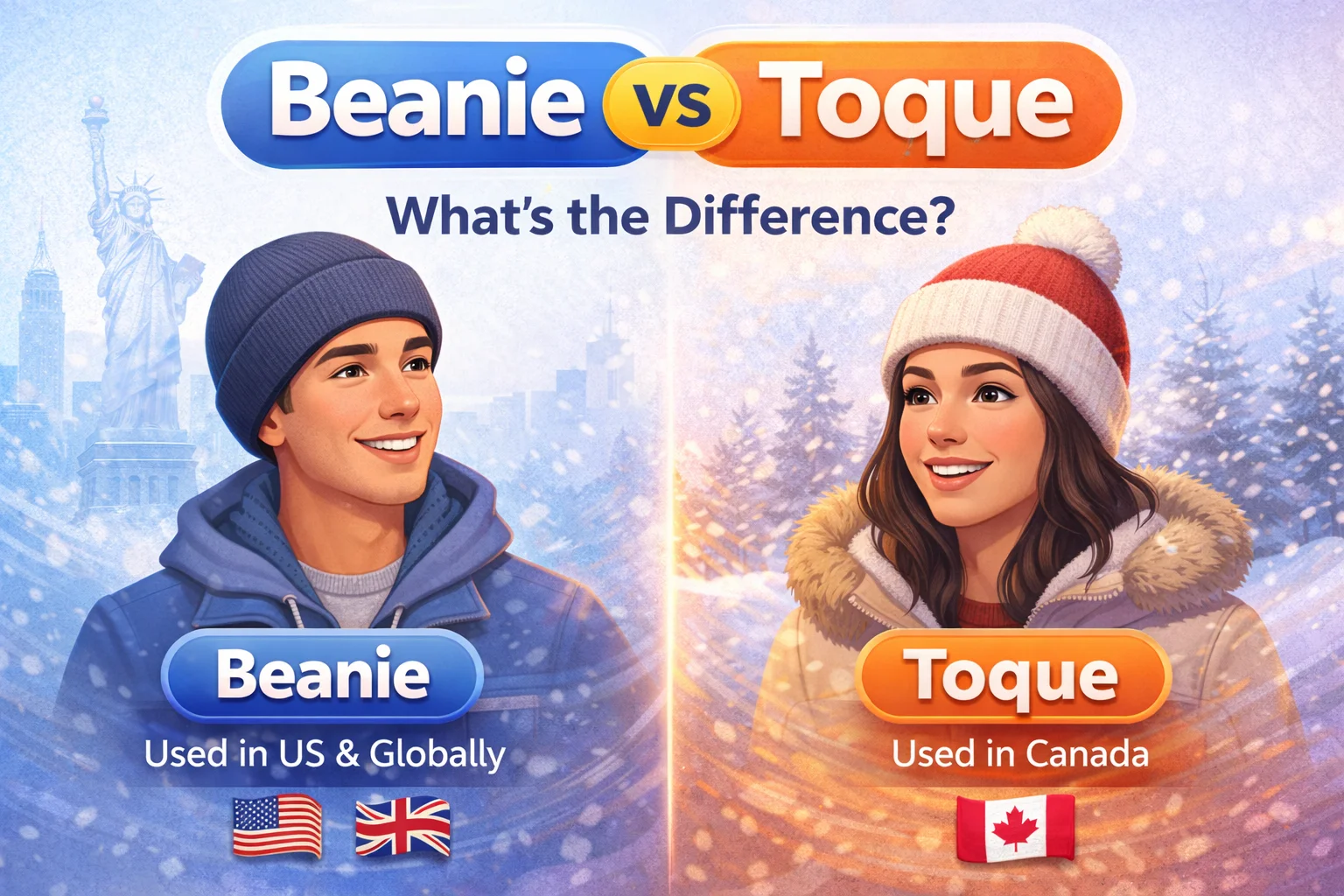
If you’ve ever shopped for winter clothing or talked to someone from a different country, you may have heard the words beanie and toque used to describe what looks like the exact same hat. That’s where the confusion begins.
Both terms refer to a snug, knitted cap worn in cold weather, but depending on where you are, one word might sound completely unfamiliar—or even incorrect. This often leaves people wondering which term they should use.
Although they look/sound similar, they serve completely different purposes.
In this complete guide on beanie vs toque, you’ll learn what each term means, where it’s used, how they differ, and which one to use in different situations.
What Is “Beanie”?
Meaning of Beanie
A beanie is a soft, close-fitting knitted cap that covers the head and keeps it warm. It’s one of the most popular winter accessories worldwide.
How Beanie Is Used
The term beanie is widely used in casual conversation, fashion, and retail. It often refers to hats that are:
- Knit or wool-based
- Stretchy and snug
- Sometimes cuffed or slouchy
Beanies are also worn as a style accessory, not just for warmth.
Where Beanie Is Used
- United States
- United Kingdom (increasingly common)
- Global fashion industry
- Online shopping platforms
Examples in Sentences
- “I bought a black beanie for winter.”
- “He always wears a beanie with his hoodie.”
- “This beanie is super warm and comfortable.”
Short Historical / Usage Note
The word beanie dates back to early 20th-century American slang. It originally referred to small caps worn by workers and students, eventually evolving into the modern winter hat we know today.
What Is “Toque”?
Meaning of Toque
A toque (pronounced tuke) is also a knitted winter hat, essentially the same item as a beanie—but with a different name.
How Toque Is Used
The word toque is used in everyday conversation to describe:
- Woolen winter hats
- Thick knitted caps for cold climates
- Headwear often worn in snowy conditions
Unlike “beanie,” toque is less associated with fashion trends and more with practicality.
Where Toque Is Used
- Canada (primary usage)
- Some parts of northern US regions
- Cold-weather communities
Examples in Sentences
- “Don’t forget your toque—it’s freezing outside.”
- “I wear a toque every winter morning.”
- “She knitted a red toque for her brother.”
Regional / Usage Notes
In Canada, the word toque is the standard and preferred term. Many Canadians may not commonly use “beanie” at all, even though they refer to the same type of hat.
Key Differences Between Beanie and Toque
Quick Summary
- Beanie = widely used global term
- Toque = mainly used in Canada
- Both refer to the same type of hat
- Difference is based on region and culture, not design
- Beanie leans more toward fashion
- Toque leans more toward practicality
Comparison Table
| Feature | Beanie | Toque |
|---|---|---|
| Meaning | Knitted winter hat | Knitted winter hat |
| Region | US, UK, global | Canada (primarily) |
| Usage Style | Fashion + casual | Practical + everyday |
| Popularity | Worldwide | Regional (Canada) |
| Design | Can be slouchy or cuffed | Usually snug and warm |
| Pronunciation | Bee-nee | Took |
| Difference | Naming preference | Naming preference |
Real-Life Conversation Examples
Dialogue 1
A: “Nice beanie!”
B: “Thanks—but we call it a toque here in Canada.”
🎯 Lesson: Beanie vs toque depends on where you are.
Dialogue 2
A: “Do you have a toque?”
B: “What’s that?”
A: “A winter hat—like a beanie.”
🎯 Lesson: Different regions use different terms for the same item.
Dialogue 3
A: “I love wearing beanies in winter.”
B: “Same! I never go out without mine.”
🎯 Lesson: “Beanie” is widely understood globally.
Dialogue 4
A: “It’s -10°C—grab your toque!”
B: “Already wearing it!”
🎯 Lesson: In cold regions, “toque” is the everyday word.
Dialogue 5
A: “Is there any difference between a beanie and a toque?”
B: “Not really—just the name.”
🎯 Lesson: The item is the same; the terminology changes.
When to Use Beanie vs Toque
Use “Beanie” When:
- You’re speaking to a global or American audience
- Writing about fashion or style
- Shopping online or creating content
Examples:
- “This beanie is trending this winter.”
- “Pair your jacket with a stylish beanie.”
Use “Toque” When:
- You’re in Canada
- Speaking with a Canadian audience
- Referring to everyday winter wear in cold regions
Examples:
- “Wear a toque—it’s snowing.”
- “I lost my favorite toque yesterday.”
Simple Memory Trick
- Beanie = Broad (used everywhere)
- Toque = Territory (Canada)
US vs UK Usage
- US: Beanie is standard
- UK: Beanie is common (though other terms like “woolly hat” exist)
- Canada: Toque is the preferred term
Fun Facts or History
1. Toque Has French Origins
The word toque comes from French and originally referred to different types of hats, including chef hats. Over time, in Canada, it became associated specifically with knitted winter caps.
2. Beanies Became a Fashion Trend
Beanies gained massive popularity in streetwear and pop culture, making them a year-round accessory—not just for winter.
Conclusion
The difference between beanie vs toque is all about location and language, not design. Both words describe the same warm, knitted cap that protects you from the cold.
If you’re speaking globally or in the US, “beanie” is your go-to term. If you’re in Canada, “toque” is the correct and natural choice.
Understanding this simple distinction helps you communicate clearly no matter where you are. Next time someone uses these two words, you’ll know exactly what they mean!